Jack Stands

Why can’t Jack Stands be placed under Control Arms?

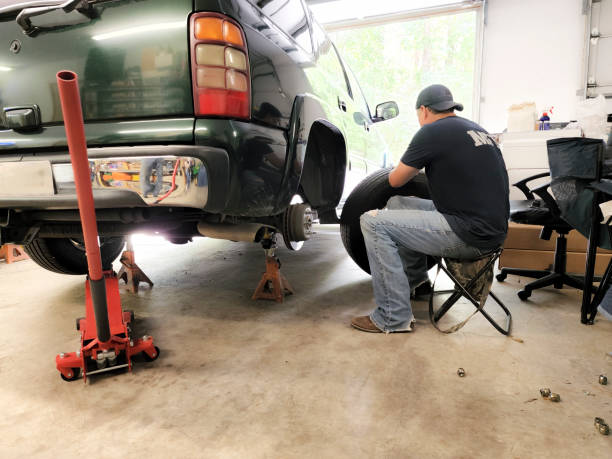
Man changing a truck tire, supported safely by reliable jack stands.

The “Convenience” Pitfalls and Hidden Deadly Risks of DIY Repair

Performing maintenance or repairs on your car in your own garage is something to be proud of. However, behind this hands-on approach often lie some overlooked “convenience” traps.

One of the most common mistakes is placing jack stands directly under the control arms when supporting the vehicle, in an effort to save time.

You might think this is “perfectly logical”—after all, the control arms look sturdy and are right next to the wheels, making jack stands seem convenient. But this isn’t just “non-standard practice”; it’s a disregard for safety. Why does this seemingly convenient approach conceal such a huge safety hazard?

Modern vehicles, especially family cars, mostly use independent suspension systems. This type of suspension differs drastically in design from traditional solid axle (leaf spring) suspensions; the stress distribution of each component is precisely calculated.

Placing jack stands under control arms can not only cause irreversible damage to the vehicle structure but could also lead to fatal accidents such as the vehicle slipping during repairs.

This article will delve into the underlying risks of placing jack stands under control arms from the perspectives of engineering mechanics and vehicle structure, and provide you with safe and correct vehicle support methods.


Understanding the suspension system and force path

To understand why jack stands cannot be placed under control arms, we must first start with the vehicle’s suspension system.

Working principle and vulnerability of independent suspension

Modern cars, especially passenger cars, generally use independent suspension systems. Unlike the solid suspension used in older trucks or some hardcore off-road vehicles, independent suspension allows the left and right wheels to move independently without interference. This design results in better handling, ride comfort, and more precise chassis tuning.

However, this “independence” also means that its structure is more complex. Each component (such as control arms, shock absorbers, springs, ball joints, bushings, etc.) has its specific design function and stress range.

They are designed to dynamically absorb vibrations and withstand steering and braking forces during vehicle operation, rather than to withstand concentrated vertical loads at a point when the vehicle is stationary.

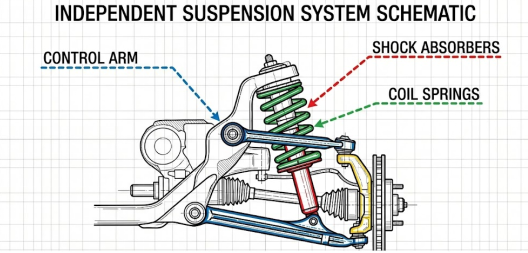
Schematic of independent suspension components: control arm, shocks, coil springs. Use jack stands for repairs.

Control Arms are not designed to support the vehicle body.

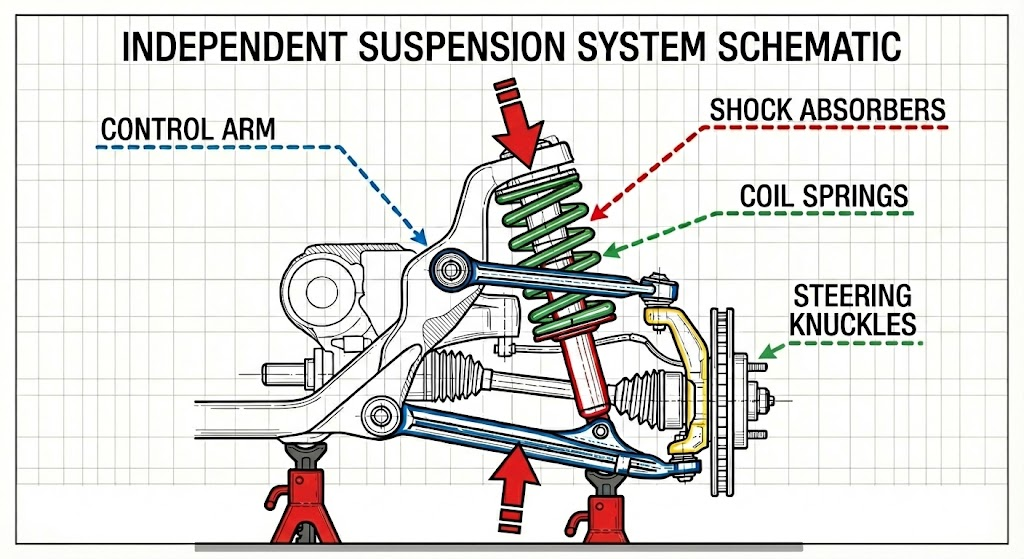
Control arms, as the name suggests, are components that “control” the movement of the wheels. They connect the wheel assembly (via ball joints) to the frame or subframe (via bushings) and are an important part of the suspension system.

When the vehicle is in motion, the control arms bear the impacts from the road surface, the weight of the vehicle body, the torque from braking and acceleration, and the lateral forces during steering.

However, control arms are typically constructed from stamped steel, cast iron, or cast aluminum, with their strength distribution optimized for dynamic stress requirements. They are designed to transfer and distribute forces during driving, rather than functioning as rigid “pillars” capable of supporting the entire vehicle’s static weight.

When you place jack stands under control arms, the load you apply is entirely different from their normal operating stress patterns, which can easily lead to component fatigue, deformation, or even breakage.

Suspension geometry variation: an overlooked mechanical trap

The most easily overlooked, yet most dangerous, aspect of placing jack stands under control arms is that it alters the vehicle‘s suspension geometry.

When the vehicle is parked on the ground, the suspension system is at its normal operating height. However, when you place the jack stands under the control arms and lift the vehicle, the suspension system is compressed, and the position of the wheels relative to the chassis changes, simulating a state where the vehicle is “fully loaded” or even “over-compressed”.

This compression alters key parameters such as wheel camber, caster, and toe. More importantly, it changes the force angles and lever arms of suspension components, especially control arms and their connections. The immense pressure applied in a non-perpendicular direction can lead to:

  1. Premature wear or tear of bushings: Bushings are rubber or polyurethane components used to absorb vibrations and allow for minor movements. Improper stress angles can cause them to withstand excessive, uneven shear forces even when static, leading to damage.
  2. Overstretching or compressing ball joints: Ball joints allow control arms to connect to the steering knuckle and provide rotational freedom. Unnatural angled support can push the ball joint to its travel limit, causing internal wear or premature failure.
  3. Deformation of the control arms themselves: Even slight deformation can lead to permanent changes in wheel alignment parameters, resulting in problems such as abnormal tire wear, vehicle drift, and poor steering feel.

Independent suspension schematic showing components and forces, securely supported by jack stands.

Four major risks of placing Jack Stands under Control Arms

Having understood the basic principles, let’s take a closer look at the real risks that placing jack stands under control arms might bring.

Risk 1: Structural damage and deformation

As mentioned earlier, control arms are not designed to withstand concentrated vertical loads in a static state. When the sharp support points of the jack stands (or the flat but finite-area top) act directly on the control arms:

  • Control arms themselves may be permanently bent or deformed. Even if it is not visible to the naked eye, their internal structure may be damaged.
  • Bushings can be subjected to abnormal shear forces, causing them to age prematurely, crack, or detach. This directly affects the vehicle’s handling stability and comfort.
  • Connection points with the frame or subframe, such as the metal around bolt holes, can also deform or even tear due to stress concentration.

Once these components deform, the vehicle’s suspension geometry will be permanently altered. This means that even if you fix the current problem, the vehicle’s tires will wear unevenly, potentially leading to instability at high speeds, significantly reduced handling, and even an increased risk of loss of control during emergency maneuvers.

Incorrect support point

Potential damage

Long-term consequences

Control Arm

Deformation, bushing tearing, excessive wear of ball joint

Uneven tire wear, poor handling, abnormal suspension noise, and potential driving safety hazards.

Oil pan/transmission housing

Oil leaks, cracked casing, damaged internal components

Powertrain failure, expensive repairs

Exhaust pipe/muffler

Deformation, breakage, and damage to the support structure

Exhaust leaks, noise, and difficulty passing annual vehicle inspections

Fuel lines/brake lines

Squeezing, cracking, leakage

Fuel leak (fire), brake failure (fatal)

Thin sheet metal (non-reinforcing point)

Dents, tears, and damage to the vehicle body structure

Reduced body strength affects resale value

Risk 2: Risk of instability and slippage

This is one of the most direct and deadly risks. Control arms are often irregularly shaped, possibly curved, or have uneven surfaces. Placing jack stands on such an unstable surface is like stacking blocks on a rickety rock—it could tip over at any moment.

  • Unstable contact surface: The top of jack stands is typically serrated or has small grooves, designed to make a tight fit with the flat and reinforced frame points. The curved or irregular surface of control arms, however, cannot provide this stable contact.
  • Vehicle swaying: When you are working under the vehicle, whether you are loosening bolts or applying torque with a wrench, the vehicle will inevitably sway. This swaying, at unstable support points, can easily cause jack stands to slip off the control arms.
  • Changes in center of gravity: Especially on independent suspension systems, placing jack stands on control arms can alter the vehicle’s actual center of gravity, making it more prone to tilting or tipping over when subjected to uneven forces.

I’ve personally witnessed serious accidents caused by improper support, with vehicles slipping off improperly placed jack stands being a major contributing factor. No DIY car owner wants to experience that firsthand.

Risk 3: Damage to suspension components and increased repair costs

Besides the control arms themselves, improper support can also damage other suspension components:

  • Shock absorbers and springs: When pushed up by jack stands, they may be under abnormal compression. Long-term or high-intensity compression may cause shock absorber oil seal leakage, spring fatigue deformation, or even breakage.
  • Ball joints and tie rods: These components change angle when the suspension is compressed. If jack stands cause them to experience excessive lateral forces or torque, it can accelerate wear on these critical steering components and increase maintenance costs.

These hidden damages may not be immediately apparent, but they gradually become apparent during future driving, affecting not only driving safety but also meaning that you will pay a higher repair cost for temporary “convenience”.

Risk 4: Complete loss of safety redundancy

In automotive repair, “safety redundancy” is crucial. The purpose of using jack stands is to provide a separate, more stable second line of defense for the jack. The jack is for “lifting,” while jack stands are for “supporting.”

If jack stands are placed at undesignated points, especially on unstable components like control arms, this “safety redundancy” becomes meaningless. If the jack malfunctions (hydraulic failure, seal breakage, slippage), the jack stands will fail to provide reliable support, and the vehicle will plummet.

This disregard for safety protocols is the root cause of all garage accidents.


The correct Jack Stands: Safety is paramount.

Since jack stands under control arm is so dangerous, where should the correct jack stand placement independent suspension be?

Support points specified by vehicle manufacturer

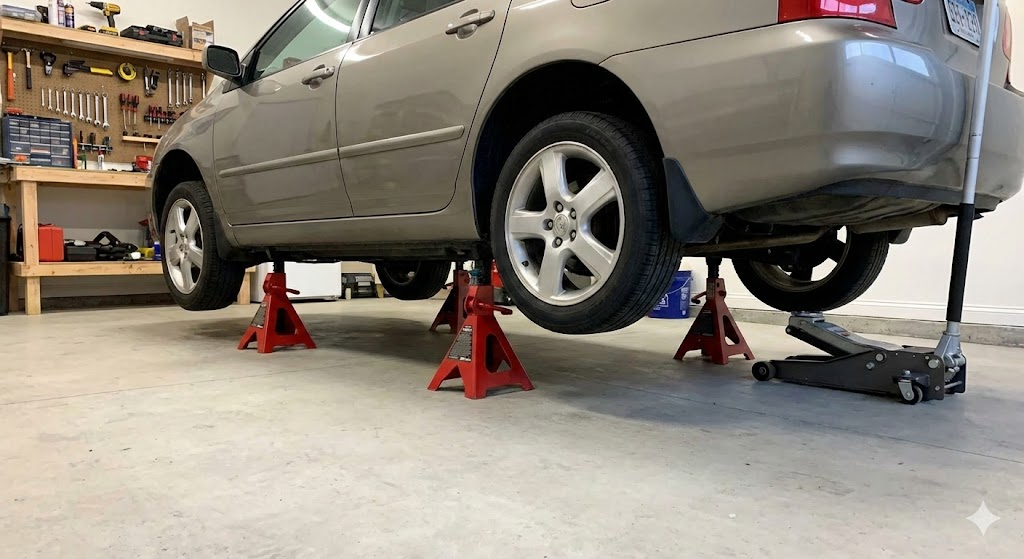
The most authoritative and safest answer is always your vehicle’s owner’s manual. The manufacturer will clearly indicate the vehicle’s official jack points and jack stands in the manual. These points are usually specially reinforced areas of the vehicle’s chassis designed to support the entire vehicle’s weight.

Common security support points include:

  • Frame Rails: Many vehicles, especially trucks or SUVs with frame rails, have sturdy metal beams on the sides, which are ideal support points.
  • Subframe: The front and rear subframes of many independent suspension vehicles are rigid structures that connect the suspension to the body, and usually have designated support positions.
  • Reinforced Pinch Welds: Located below the doors and along the chassis edge, there is usually a folded and welded reinforced metal edge. Some vehicles provide cutouts or markings at this location as a lifting point. When using these, always use dedicated jack pads to protect the welds from being flattened or damaged.
  • Solid axle: For vehicles with non-independent suspension (such as the rear axle of a rear-wheel drive vehicle), the axle housing of a solid axle is also a sturdy support point, but it is still necessary to ensure the stability of the contact surface.

Safety inspection before support

Before lifting and placing the vehicle on the jack stands, be sure to perform the following safety checks:

  1. Ground conditions: Ensure the work area has a flat, firm, and dry surface. Concrete is the best choice; asphalt may soften at high temperatures and is not suitable for long-term support. If the ground is not ideal, place sturdy wooden planks under the jack stands to distribute the pressure.
  2. Wheel chocks: Place wheel chocks under the diagonal wheel on the side you want to lift, as well as under all wheels that are not lifted, to prevent the vehicle from accidentally sliding.
  3. Jack Stands Capacity: Choose jack stands with a capacity far exceeding the weight of your vehicle. For example, if your vehicle weighs 4,000 pounds, you should use at least a pair of 3-ton (6,000-pound) jack stands. It’s better to overload than underload.
  4. Jack Stands Condition: Check the jack stands for deformation, cracks, or rust, and ensure that their locking mechanism (pin or ratchet) is working properly.
  5. Stability test: After lowering the jack completely so that the vehicle’s weight rests entirely on the jack stands, gently shake the vehicle to confirm its stability. Only proceed with work after confirming everything is secure.

DIY safety starts with properly placing Jack Stands

DIY repairs are a source of enjoyment for many car owners as they explore the mysteries of automobiles and save money. However, safety should always be the top priority. Placing jack stands under control arms is one of the most common dangerous practices in car repair.

It can not only damage the vehicle’s structure but also potentially cause a fatal skid-off accident.

Based on my years of experience in garage safety, DIY is fine, but loss of control is. A high degree of vigilance against “parameter worship” and “wishful thinking” is a quality every responsible DIY car owner should possess. We cannot only see convenience and ignore the hidden engineering and mechanical risks.

The next time you’re preparing your car for maintenance, take a few minutes to consult your owner’s manual or search online for the official jack points for your model. Ensure your jack stands are placed on sturdy, level, and specially designed support points.

This is not only for the health of your vehicle but also for the safety of you and your family. Remember, safety redundancy is not superfluous; it’s a lifeline.


FAQ

Q1: Why can’t the jack stands be placed directly on the control arms?
A1: Because control arms are not designed to withstand static vertical concentrated loads, their irregular shape can easily cause jack stands to slip, and may cause permanent damage to the control arms themselves or the suspension geometry, increasing the risk of accidents and maintenance.
Q2: Besides control arms, where else are jack stands prohibited?
A2: Never place jack stands on the oil pan, transmission housing, exhaust pipe, fuel line, brake line, or any unreinforced thin sheet metal parts, as these locations may cause serious damage or safety hazards.
Q3: How to ensure the safety of jack stand placement independent suspension?
A3: Always consult the vehicle owner’s manual and place the jack stands at the manufacturer-specified reinforced support points (such as the frame beams, subframe, and pinch welds with jack pads). Also, ensure the ground is level, use wheel chocks, and select jack stands with sufficient load-bearing capacity.
author-avatar

About Gavin Reid

Gavin Reid has been obsessively analyzing garage safety protocols and vehicle support systems for over a decade. After transitioning from a professional service bay to independent safety consulting in 2020, Gavin realized the market was flooded with confusing weight ratings and compromised designs that offered a false sense of security. His Mission: To help DIY mechanics—especially home hobbyists—identify critical failure points in vehicle lifting and ensure every project ends safely. Why Trust Gavin: Engineering Obsessive: He dissects load paths and weld integrity. From metallurgy to geometric stability, he understands the physics that keep two tons of steel from crushing a human chest. Data-Driven Testing: Gavin has stress-tested 40+ models, evaluating lateral stability and locking redundancy rather than just "marketing tonnage." In the Garage: He’s a fixture in local DIY communities, frequently inspecting frame rails for pinch weld placement and documenting metal fatigue on aging gear. Gavin believes that "a lapse in physics is a permanent mistake." He is dedicated to teaching mechanics how to maintain a "zero-trust" relationship with their equipment. Would you like me to provide Gavin’s specific checklist for identifying structural fatigue in used jack stands?