Jack Stands

Jack Stand Purchase and Usage Guide for Solo Work Beginners

Jack Stand Purchase and Usage Guide for Solo Work Beginners

Imagine you’re lying beneath a two-ton steel behemoth, the clanging of wrenches and bolts echoing in the narrow space beneath the vehicle. At that moment, the only thing preventing those thousands of kilograms of weight from instantly crushing your chest is the jack stand quietly supporting you beneath the frame.

Many new drivers, when doing their first DIY oil change or brake check, aren’t most afraid of failing to fix the car but rather that it will fall off. This fear is valid; it’s part of your survival instinct.

In today’s garage culture, independent operation has become a lifestyle, but safety is never a free gift. Today, we won’t talk about horsepower, but rather how to properly select and operate a jack stand to buy yourself real life-saving insurance.

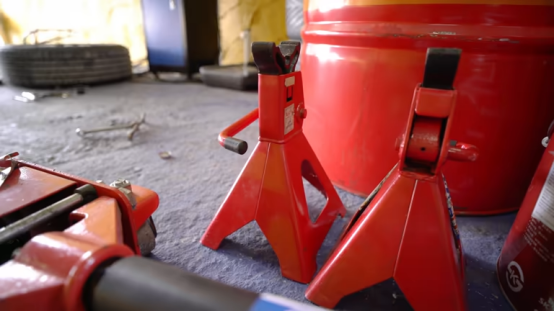
Steel base of a heavy-duty Jack Stand ensuring stability

Step out of the fog of parameters and re-examine your support and bottom lines

Jack stands on the shelves. Most people’s logic is: My car only weighs 1.5 tons, so buying a 3-ton stand is more than enough, right? This idea is only half right.

The Nominal Tonnage Myth

In industry safety standards, the nominal tonnage of a jack stand usually refers to the total load capacity of a “pair.” More importantly, static load capacity and dynamic impact are two completely different things.

The instantaneous pressure the bracket experiences when you lower the car off the jack, or when you loosen rusty bolts and cause the car to shake, far exceeds the static value.

The Rule of Redundancy

True veterans will tell you: always leave at least 1.5 to 2 times the redundancy for your stand.

  • If you drive an SUV, go for a 6-ton stand.
  • This isn’t just for the extra tons of load capacity but also for the wider, thicker cast iron base that comes with a heavy-duty stand.
  • Every centimeter of increased base width reduces the psychological trauma of crawling under your car.
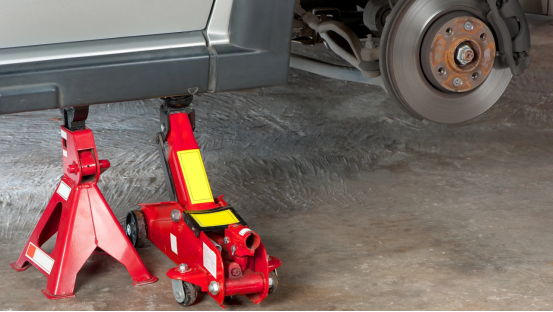
Garage setup showing Jack Stand supporting a vehicle safely

Ratchet or pin? It’s not just a matter of habit

The mainstream jack stands on the market are divided into two types: ratchet type and pin type.

FeatureRatchet TypePin Type
Adjustment SpeedIncredibly fast; “clicks” into placeSlower; requires manual alignment
Locking MechanismSmall cast iron ratchet teethThick steel physical pin
Main AdvantageConvenience for routine tasksAbsolute physical lock
Expert VerdictGood for standard maintenance“In doubt, use a pin.”

The “Double Locking” Recommendation

For beginners just starting out tinkering in their garages alone, I highly recommend the Jack Stand with its “double locking” feature. This design adds a safety pin to the ratchet mechanism, ensuring that even if the ratchet accidentally slips, the steel pin will firmly lock the mechanism in place. This redundant design is specifically for dealing with that unforeseen situation.

[Unsure which is reliable? You can also check out our carefully selected high-quality jack stands.]

Displaying the jack stand.

Don’t let the foundation ruin your safe building

Even with top-of-the-line Jack gear, if you set it up on soft asphalt or cracked concrete, you’re still risking your life.

  • Temperature Sensitivity: Summer’s high temperatures soften asphalt. There have been real-life accident cases where one leg of the stand slowly sank into the asphalt, causing the vehicle to lose its balance.
  • Surface Correction: If you must work on unpaved surfaces, be sure to place a sufficiently thick steel plate or a high-strength solid wooden block under the stand to distribute the pressure.
  • Wheel Locks: Never overlook wheel locks. When you lift the front of the vehicle, the rear wheels are the only points of contact. Without locks, even a slight incline could cause the vehicle to shift and tip the jack stand over.

Remember, support is a systemic issue, not just about the frame itself.

The final “shake to the death”: Establishing a sense of ritual

The most crucial step in the operation often occurs after the vehicle has landed. Once you have slowly lowered the jack and transferred all the weight to the jack stand, do not rush to climb in.

  1. The Vigor Test: Stand up, grab the roof rack or bumper, and shake the vehicle vigorously. Yes, vigorously!
  2. Audio/Visual Check: If the vehicle shakes or shifts, or if the rack makes a strange metallic scraping sound, immediately raise the jack and check again.
  3. Safety Redundancy: The best safety strategy is “not to put all your eggs in one basket.” After firmly supporting the vehicle on the stand, I habitually leave the jack just a few millimeters below the lifting point, without bearing any weight.

Summary and Outlook

Independent car repair is a challenge to oneself, and Jack Stand is your most silent and reliable ally. From refusing cheap, unlabeled products to meticulously aligning every support point, these seemingly tedious steps are the hallmarks that distinguish “grassroots mechanics” from professional enthusiasts.

Safety is not about “good enough,” but about “absolute safety.” As automotive technology evolves, car body structures are becoming increasingly complex, making the identification of the correct pinhole welds more important than ever.

The next time you’re about to crawl under a car, ask yourself this question: Can I really completely trust these four supports? If the answer is yes, then enjoy that uniquely manly garage time.

What did you feel when you first used a stand to prop up your car all by yourself? Feel free to share your “thrilling moments” or experiences in the comments section. Let’s build a safer DIY community together.

>>> The Ultimate Guide to Choosing a Jack Stand: In-Depth Analysis of Safety and Applicability

author-avatar

About Gavin Reid

Gavin Reid has been obsessively analyzing garage safety protocols and vehicle support systems for over a decade. After transitioning from a professional service bay to independent safety consulting in 2020, Gavin realized the market was flooded with confusing weight ratings and compromised designs that offered a false sense of security. His Mission: To help DIY mechanics—especially home hobbyists—identify critical failure points in vehicle lifting and ensure every project ends safely. Why Trust Gavin: Engineering Obsessive: He dissects load paths and weld integrity. From metallurgy to geometric stability, he understands the physics that keep two tons of steel from crushing a human chest. Data-Driven Testing: Gavin has stress-tested 40+ models, evaluating lateral stability and locking redundancy rather than just "marketing tonnage." In the Garage: He’s a fixture in local DIY communities, frequently inspecting frame rails for pinch weld placement and documenting metal fatigue on aging gear. Gavin believes that "a lapse in physics is a permanent mistake." He is dedicated to teaching mechanics how to maintain a "zero-trust" relationship with their equipment. Would you like me to provide Gavin’s specific checklist for identifying structural fatigue in used jack stands?

Leave a Reply

Your email address will not be published. Required fields are marked *