Jack Stands

Home and Commercial Jack Stands: In-depth Analysis by Senior Technicians, Eliminating Safety Hazards

Home and Commercial Jack Stands: In-depth Analysis by Senior Technicians, Eliminating Safety Hazards

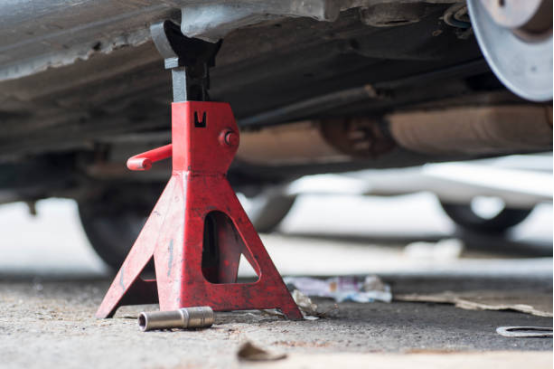
Today, we’ll delve into the fundamental differences between home and commercial jack stands from the perspectives of engineering design, materials science, and safety redundancy.

My goal is to help you develop a correct understanding of safety, enabling you to make truly safe and informed choices, ensuring peace of mind every time you build a jack. This article will guide you through understanding the lifeline role of jack stands, deconstructing the design philosophies of home and commercial stands, exploring the true safety margins behind load-bearing parameters, and providing a practical guide to ensure safety regardless of the type of stand you choose.

Deconstructing a Home Jack Stands: Convenience and Potential Limitations

The prevalence of household jack stands is mainly due to their affordable price and relatively simple operation. However, to achieve these advantages, there are often some design compromises that are not usually known to the general public.

Common types and design features

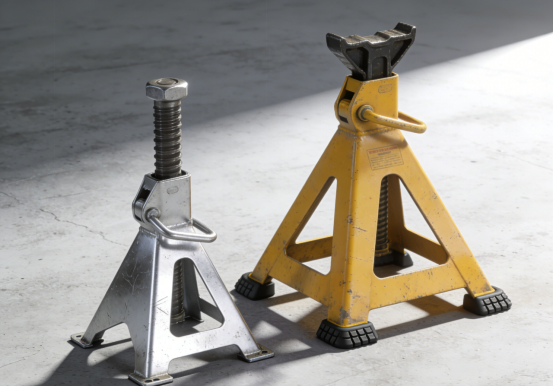
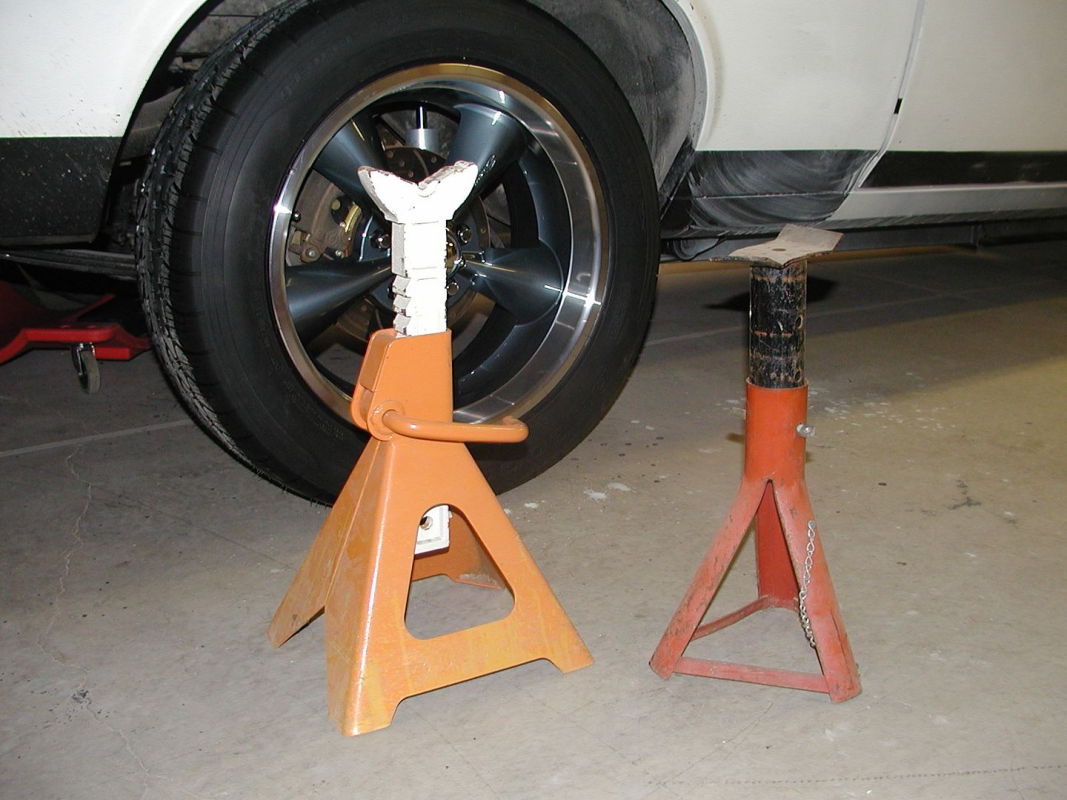
  • Type: Household jack stands are mainly the ratchet type, which uses a toothed column and locking lever to adjust the height and lock. This design is relatively lightweight and intuitive to operate.
  • Materials: Most household brackets are made of ordinary carbon steel. To control costs, the wall thickness and cross-sectional dimensions of the steel are usually relatively small.
  • Base design: Commonly used bases are H-shaped or U-shaped, which take up a moderate amount of space and are easy to store.

Potential safety hazards and design compromises

These seemingly reasonable “compromises” constitute potential security risks:

  1. Materials and welding quality: This is where corners are most easily cut. To reduce costs, some products may compromise on steel grades, heat treatment processes, and welding quality. For example, using lower-grade steel or failing to fully penetrate the weld, resulting in defects such as porosity.
  2. Base stability analysis: The relatively small area of the H-shaped or U-shaped base significantly reduces its anti-tipping ability on uneven surfaces. If the vehicle’s center of gravity shifts even slightly, or if it experiences a minor external impact, the support structure may tip over.
  3. Locking Mechanism Reliability: The ratchet teeth are the lifeline of household jack stands. Under long-term or heavy loads, the ratchet teeth are prone to wear, deformation, or even breakage due to stress concentration.
Deconstructing a Home Jack Stand

Analyzing Commercial Jack Supports: Ultimate Safety and Redundancy Design

Commercial jack stands are designed with a completely different philosophy than household products. They are created in high-intensity, high-frequency, and high-risk professional maintenance environments, thus demanding the highest standards of safety and durability.

Core design principles: heavy load, stability, and durability

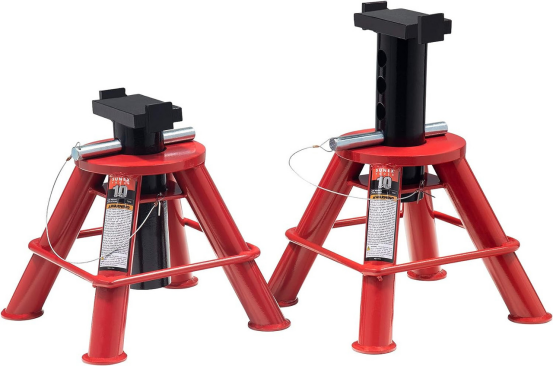
  • Types: Common types include heavy-duty pin-type, tripod-type, or box-type.
  • Materials: High-strength alloy steels, such as chromium vanadium steel or high-carbon steel, are commonly used. These materials undergo special heat treatment, resulting in superior strength, toughness, and fatigue resistance.
  • Welding process: Commercial-grade products typically employ robotic welding or high-standard certified manual welding to ensure weld strength matches the base material.

The manifestation of commercial-grade security redundancy

Commercial jack supports incorporate multiple safety redundancies:

Structural strength and rigidity: Larger cross-sectional dimensions, thicker steel plates, and multiple internal reinforcing ribs ensure that the support maintains geometric stability under ultimate loads.

  • Base design: A wide and thickened cast iron or heavy-duty steel plate base provides unparalleled anti-tipping capabilities.
  • Dual locking mechanism: Many commercial brackets employ a dual locking mechanism combining pins and ratchet. Even if the ratchet mechanism fails, the robust pin still provides reliable support.
  • Stress path optimization: Engineers optimize the structural shape to ensure uniform load transfer and avoid excessive local stress.
Analyzing Commercial Jack Supports

More than just load-bearing capacity: long-term use and fatigue resistance

Commercial environments demand more from tools than just the ability to withstand one-time heavy loads; they must also withstand high-frequency, long-term, and heavy loads.

I’ve seen far too many “home-use” tools fail due to long-term fatigue. Their rated load capacity may be sufficient on paper, but under the constant pressure of daily use, the microstructure of the materials changes, eventually leading to unpredictable and sudden failure.

This is absolutely unacceptable in a commercial environment. Commercial supports are designed to last far longer than home products, ensuring continuous and reliable support even under harsh conditions.

How to choose based on your needs

How to choose based on your needs: a balance between risk and cost

Choosing jack stands is not simply a matter of budget; it’s about risk management. You need to balance your vehicle type, repair frequency, repair scenarios, and your safety tolerance.

Considerations of vehicle type and maintenance scenario

Vehicle TypeMaintenance ScenarioRecommendation
Small Cars (< 2 tons)Occasional oil changes/tire changesHome-use (Certified brands only)
SUVs / Pickups (> 2 tons)Heavy vehicle weight / High center of gravityCommercial grade is strongly recommended
Heavy Vehicles / TrucksSignificant axle loadsCommercial-grade mandatory
Any VehicleFrequent use or prolonged supportCommercial-grade (Fatigue resistance)

Avoid “parameter worship”: Focus on manufacturing details

Warning: Do not rely solely on the tonnage rating on a jack stands. Cheap home jack stands labeled as 3 tons may have a significantly lower actual safety margin than high-quality commercial jack stands labeled as 3 tons.

Always pay attention to:

  • Product’s actual weight
  • Base dimensions
  • Steel thickness
  • Welding quality
  • Strength of the locking mechanism
  • Rigorous safety certifications (ASME, TUV, CE, etc.)

DIY is fine; getting out of control is the problem: My safety philosophy

I firmly believe that the joy and sense of accomplishment from DIY should not come at the expense of safety. Choosing a tool is not just about choosing its functions but also about choosing your attitude towards your own and your family’s safety.

Investing in security is investing in the future.

Within your capabilities, always opt for the highest level of safety redundancy; this is the most basic respect for life. Through an in-depth analysis, we can clearly see that household stands may be “barely adequate” in certain light-load scenarios, but commercial stands have an overwhelming advantage.

My core belief is: DIY is fine; loss of control is NOT. In high-risk operations like vehicle lifting, we must never entrust our lives to “barely adequate” tools. Investing in a commercially compliant jack stand is your most worthwhile and wisest investment. It not only protects your safety but also shows respect for your hard work.

author-avatar

About Gavin Reid

Gavin Reid has been obsessively analyzing garage safety protocols and vehicle support systems for over a decade. After transitioning from a professional service bay to independent safety consulting in 2020, Gavin realized the market was flooded with confusing weight ratings and compromised designs that offered a false sense of security. His Mission: To help DIY mechanics—especially home hobbyists—identify critical failure points in vehicle lifting and ensure every project ends safely. Why Trust Gavin: Engineering Obsessive: He dissects load paths and weld integrity. From metallurgy to geometric stability, he understands the physics that keep two tons of steel from crushing a human chest. Data-Driven Testing: Gavin has stress-tested 40+ models, evaluating lateral stability and locking redundancy rather than just "marketing tonnage." In the Garage: He’s a fixture in local DIY communities, frequently inspecting frame rails for pinch weld placement and documenting metal fatigue on aging gear. Gavin believes that "a lapse in physics is a permanent mistake." He is dedicated to teaching mechanics how to maintain a "zero-trust" relationship with their equipment. Would you like me to provide Gavin’s specific checklist for identifying structural fatigue in used jack stands?