Jack Stands

Jack Stand Load-Bearing Truth: Static and Dynamic Loads and Safety Factors

Jack Stand Load-Bearing Truth: Static and Dynamic Loads and Safety Factors

Hey everyone! It’s time to talk about Jack Stands again. Today, we’re not talking about speed or modifications, but about the most basic and easily overlooked topic: the load-bearing capacity of a jack stand. You might think, “What’s there to talk about? Just buy one with a big enough ‘tonnage,’ right?” But as a garage safety consultant with over a decade of experience in automotive repair and safety, I’ve witnessed far too many tragedies caused by a misunderstanding of load-bearing parameters or even blindly worshipping numbers.

What you consider “good enough” might just be a number on paper. What you perceive as “safe” could conceal deadly risks. Today, I’ll guide you through demystifying the load-bearing parameters of the Jack Stand, delving into the engineering truth behind them—static load, dynamic load, and safety factor. After reading this, you’ll not only know how to choose but also understand why you should choose, thus truly safeguarding your safety bottom line. Because I firmly believe DIY is fine; loss of control is the problem.

I. Unveiling the Mystery: The Engineering Truth Behind Jack Stand’s Load-Bearing Parameters

The jack stands we carry are usually labeled with a load-bearing capacity of 2 tons, 3 tons, or even higher. But do these numbers really represent the limit they can withstand in a garage? The answer is far more complex than that.

A. Static Load: The Meaning and Limitations of Book Figures

When we talk about the static load of a jack stand, we are referring to the maximum vertical pressure it can withstand under ideal, stable conditions without any additional impact. This is typically determined in a laboratory by applying weight slowly and evenly.

  • Definition: The maximum weight a jack stand can withstand under ideal conditions of being stationary, subjected to uniform force, and without vibration or impact.
  • Important Notes: The laboratory environment differs significantly from the garage environment. In actual operation, the vehicle may sway due to slight shifts in the center of gravity, uneven ground, or even your body touching it; these are variables that cannot be reflected by static loads.
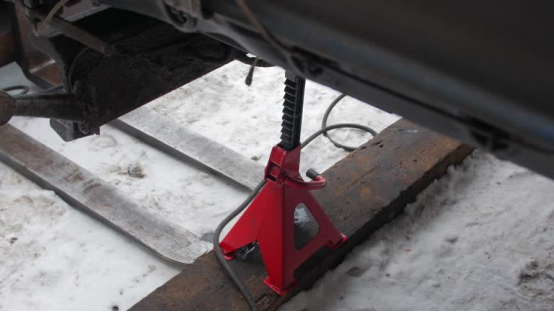
jack stand testing and load-bearing capacity

Many beginners assume that “a 2-ton jack stand can safely support a 1.5-ton car,” but they overlook the additional load generated by shifting the center of gravity and disassembly operations in actual operation.

B. Dynamic Load: The “Invisible Killer” in the Garage

Compared to static loads, dynamic loads are the real “hidden killers” that need to be guarded against when performing vehicle maintenance.

  • Definition: Additional loads generated by a momentary change in the center of gravity or impact when a vehicle is not stationary, such as during lifting or lowering, when the vehicle body is swaying, or when disassembly or installation work is being carried out on a jack stand.
  • Analysis: When you lift a car to remove a heavy wheel, the vehicle’s center of gravity shifts slightly or even wobbles, generating an impact force exceeding the vehicle’s own weight. If the jack stand can barely support the static load, this instantaneous impact could cause the stand to become unstable or even overturn.
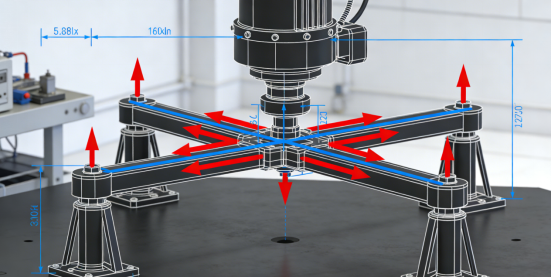
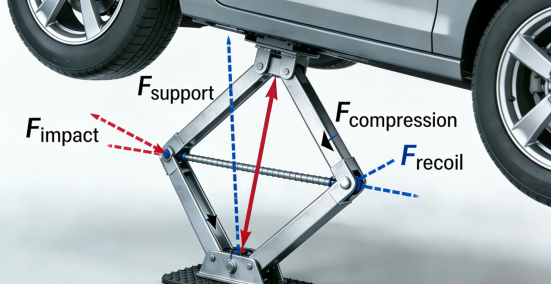
Diagram of static and dynamic load forces on a jack

In one incident, while removing a tire from an SUV, the slight swaying caused by the operation resulted in a dynamic load exceeding the jack stand’s safety limit, causing the stand to bend. Fortunately, the driver did not crawl under the vehicle; otherwise, the consequences could have been disastrous.

C. Safety Factor: The “survival margin” left for you by engineers.

How to deal with the unpredictable risks of dynamic loads? The key lies in understanding the safety factor.

  • Definition: The safety factor is the ratio of a product’s designed load-bearing capacity to its actual breaking load. For example, a jack stand with a rated load capacity of 2 tons has a safety factor of 2 if its breaking load is 4 tons. This means that after reaching the nominal load capacity, there is still a margin of safety before failure.
  • Hidden dangers of low-priced products: Inferior jack stands may cut corners in materials, welding processes, and structural design to save costs. Although they may barely pass static tests, they could quickly reach their failure limit under dynamic loads.
  • The logic of buying bigger rather than smaller: The 3-ton rated Jack Stand with a high safety factor can easily handle a 2-ton dynamic load in actual operation, providing safety redundancy for operation.

Industrial design standards typically require a safety factor between 2 and 3. Even with the same surface load-bearing capacity, the actual safety performance of different jack stands varies greatly.

Lift vs. Support: The Fatal Difference of the Jack Stand

Hydraulic jacks and jack stands are two of the most commonly used tools, but their uses are quite different. Many beginners get confused and use jacks instead of jack stands for extended periods of support, which is a fatal mistake.

A. The function of a jack: to lift, not to support for extended periods.

Hydraulic jacks use hydraulic principles to quickly lift vehicles, but they are not suitable for supporting them for extended periods.

  • Inherent weakness: Seals may age over time, and hydraulic oil may slowly depressurize.
  • Accident recap: In one incident, a car owner relied solely on a jack to support the vehicle, but while working underneath it, a pressure leak caused the vehicle to fall, resulting in serious injury.

Jacks are only for lifting; jack stands are for reliable support.

B. Jack Stand’s responsibilities: to provide stable support and redundancy.

  • Mechanical locking reliability: Once locked, the ratchet- or pin-type jack stand provides stable support far exceeding that of a jack.
  • Industrial experience reference: In industrial environments, any semi-trailer or heavy-load operation must use fixed supports. The same applies to DIY scenarios: after the vehicle is lifted, it must be immediately supported using a jack stand.
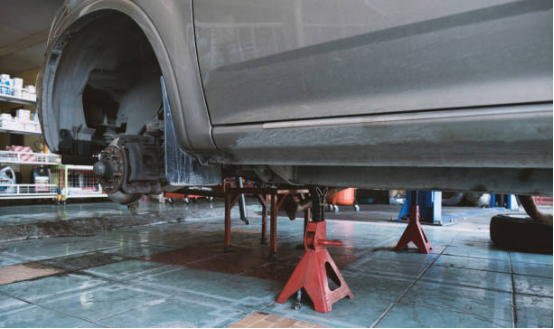
A jack supporting a car

Selection and Use: Practical Advice from Experienced Technicians

A. How to choose a suitable Jack Stand

  • Beyond “tonnage”: Considering gross vehicle weight (GVWR), modifications, and usage scenarios.
    • Total vehicle weight: The support frame should be able to support at least half the weight of the vehicle body being lifted; a higher frame is recommended.
    • Modified vehicles: Adding tires, bumpers, and toolboxes requires higher load-bearing capacity.
  • Application scenarios: SUVs, trucks, and professional repair services (choose higher tonnage).
  • Materials and Structures: Cast Steel > Welded Steel > Aluminum Alloy
  • Beware of cheap products: Jack stands with poor welding or shoddy workmanship have low safety and high risks.
load-bearing capacityRecommended vehicle typesUse casesPrecautions
2 tonssmall carsMinor repairsNot suitable for heavy load
3 tonsSUVs, mid-size carsHome DIYHigh safety rating recommended
5 tonsFull-size truckHeavy maintenancewider base
10-12 tonsCommercial vehiclesProfessional garageNote portability and storage

B. Safety Operation Checklist

  1. Check the jack stand and jacks to confirm that the locking mechanism is working properly.
  2. Site preparation: a firm, level surface.
  3. To prevent slippage, use wheel stops.
  4. Positioning jack: Official lifting point.
  5. Lift slowly and observe the contact point.
  6. Place the Jack Stand: a safety support point.
  7. Slowly lower the vehicle onto the jack stand, ensuring that the entire weight is supported.
  8. Shaking test: confirmed to be stable.
  9. Safety redundancy: wooden blocks or spare jacks.
  10. Stay vigilant, and don’t let your guard down even when working for a short period of time.

True security comes from “predictability,” not “luck.”

Today we delved into the engineering truth behind Jack Stand’s load-bearing parameters. From static loads to dynamic loads, from safety factors to operational details, every aspect is related to life safety.

DIY is fine, but losing control is not. Learning safety knowledge, choosing a high-quality jack stand, and operating it strictly are the greatest responsibilities you can take for yourself and your family. Using a jack correctly not only supports your vehicle but also your confidence and safety while operating it.

Wishing everyone a smooth and safe DIY experience!

>>> The Ultimate Guide to Choosing a Jack Stand: In-Depth Analysis of Safety and Applicability

author-avatar

About Gavin Reid

Gavin Reid has been obsessively analyzing garage safety protocols and vehicle support systems for over a decade. After transitioning from a professional service bay to independent safety consulting in 2020, Gavin realized the market was flooded with confusing weight ratings and compromised designs that offered a false sense of security. His Mission: To help DIY mechanics—especially home hobbyists—identify critical failure points in vehicle lifting and ensure every project ends safely. Why Trust Gavin: Engineering Obsessive: He dissects load paths and weld integrity. From metallurgy to geometric stability, he understands the physics that keep two tons of steel from crushing a human chest. Data-Driven Testing: Gavin has stress-tested 40+ models, evaluating lateral stability and locking redundancy rather than just "marketing tonnage." In the Garage: He’s a fixture in local DIY communities, frequently inspecting frame rails for pinch weld placement and documenting metal fatigue on aging gear. Gavin believes that "a lapse in physics is a permanent mistake." He is dedicated to teaching mechanics how to maintain a "zero-trust" relationship with their equipment. Would you like me to provide Gavin’s specific checklist for identifying structural fatigue in used jack stands?