Jack Stands

Portable Folding vs. Traditional Fixed Jack Stands: In-Depth Analysis from a Safety Consultant

Portable Folding vs. Traditional Fixed Jack Stands: In-Depth Analysis from a Safety Consultant

Your vehicle, your safety—the choice of support brackets is crucial. In the world of automotive repair, the importance of Jack Stands is self-evident. They are the last line of defense between you and your vehicle, preventing catastrophic consequences from gravity. However, faced with a dazzling array of choices on the market, especially the two mainstream forms of portable folding and traditional fixed stands, many car owners often only focus on “whether it can be lifted,” neglecting “how to support it safely.” This vague understanding of support tools is a pain point I have repeatedly emphasized in garage safety training over the years. This attitude of ignoring the inherent limitations of tools is itself a potential risk.

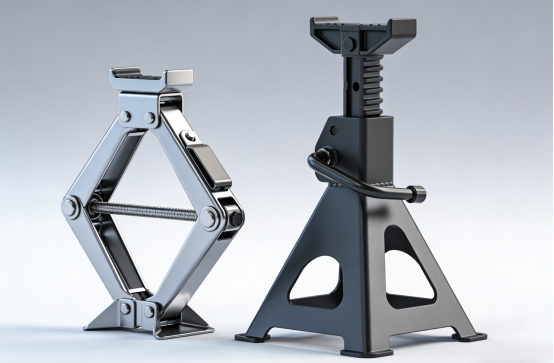
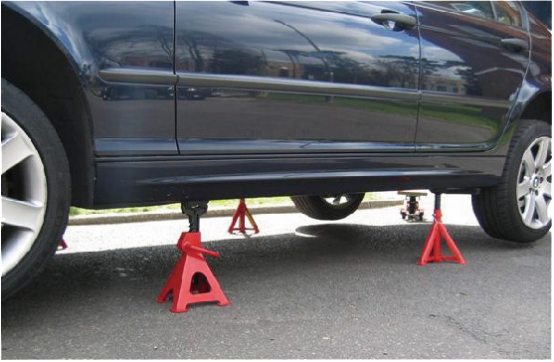
traditional fixed jack stand showing wide base and ratchet lock

Traditional fixed jack support: the cornerstone of stability and reliability

Traditional fixed jack stands are the preferred choice for most professional repair shops and experienced DIY enthusiasts. Their design philosophy has only one core element: to provide maximum stable and reliable vehicle support.

Design Principles and Structural Features

These types of jack supports are typically made of heavy steel and are structurally designed with integral molding or high-strength welding, emphasizing their overall rigidity and resistance to deformation .

  • Wide base and uprights : These form the physical basis of its stability. The wide, flat base provides the maximum contact area with the ground, effectively distributing the pressure from the vehicle’s weight and preventing the bracket from sinking into soft ground (such as asphalt). The robust uprights ensure a direct and efficient vertical force path, transferring the vehicle’s load directly and evenly to the ground, minimizing the risk of lateral swaying or overturning. From a mechanical perspective, the area of the base and the position of the bracket’s center of gravity directly determine the magnitude of its anti-overturning moment.
  • Ratchet/Pin Locking Mechanism : This is the core of the support height locking system. Whether locked by ratchet teeth or secured by inserting a solid safety pin, these mechanisms are designed to provide a mechanical, irreversible lock . The pin-type design is considered to have higher safety redundancy due to its simple, straightforward structure and fewer points of failure. While the ratchet type is more convenient to adjust, the depth of gear engagement and material strength are crucial. These locking mechanisms are key to preventing the support from accidentally dropping under load.

Core Advantages: Why is it always the first choice for professionals?

  • Exceptional stability and load-bearing capacity : Due to its simple structure and robust materials, traditional fixed jack supports exhibit extremely low deformation under heavy loads. Its force path is direct, without complex bends or connections, meaning the vehicle’s weight can be transferred and supported most effectively. This unparalleled stability and psychological certainty is unmatched by any other form of support when supporting vehicles for extended periods or performing operations requiring significant force beneath them.
  • High safety redundancy : The simpler the structure, the fewer potential points of failure. Traditional fixed supports do not have complex hinges or moving parts, which means that under normal use and maintenance, the risk of support failure due to mechanical fatigue or component failure is extremely low. I have seen too many cases where problems arise because of this detail ; usually, it’s those seemingly ingenious but structurally complex tools that, after long-term use, develop problems at some inconspicuous connection point.
  • Simple maintenance and long lifespan : Due to the lack of complex moving parts, routine maintenance of traditional fixed jack supports is very simple, usually requiring only inspection for rust or structural damage. Its robust steel structure gives it excellent fatigue resistance and durability, allowing it to be used for decades with proper care.

Limitations: The Trade-offs Behind Stability

  • Size and weight : These are the most obvious drawbacks of traditional fixed jack stands. They are usually bulky and difficult to carry, posing a significant challenge for users who need to work on the go or have limited storage space.
  • Their applicable scenarios are relatively fixed : they are more suitable for use in fixed garages or repair stations, and are not suitable for being carried in vehicles for emergency rescue, outdoor camping or competition sites, etc., where rapid deployment and storage are required.
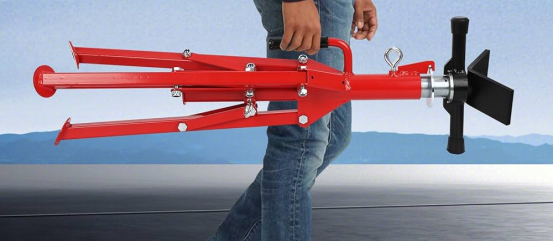
portable folding jack stand unfolded with locking mechanism

Portable Folding Jack Stands: A Modern Solution for Flexibility and Efficiency

Portable folding jack stands represent a modern engineering attempt to balance convenience and safety. They aim to address the portability limitations of traditional jack stands, providing solutions for users in emergency situations, outdoors, or where space is limited.

Design Concept and Folding Mechanism

The core of this type of bracket lies in its ingenious folding mechanism , which uses a combination of hinges, pins, and latches to transform from a sturdy support state to a compact storage state.

  • Application of lightweight materials : To achieve portability, folding stands often use aerospace-grade aluminum alloys or high-strength lightweight alloy steel. These materials significantly reduce the overall weight of the stand while ensuring sufficient strength, making it easier to handle and transport. However, the strength grade of the materials and the processing technology are crucial; lightweight does not mean weakening, but inferior products often cut corners in this area.
  • Clever hinge/locking folding design : This is key to portability. Through precise geometric design, engineers have created a stable triangular or polygonal support structure when the stand is unfolded, while minimizing its volume when folded.

Key Advantages: Born for Mobility and Space

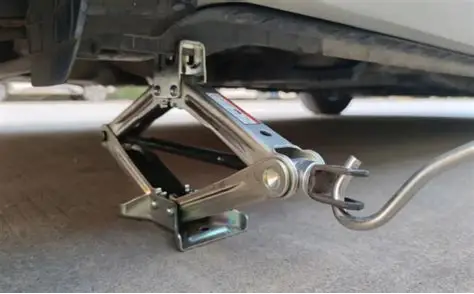
  • Ultimate portability : This is the core selling point of folding mounts. They can usually be folded into a very compact shape, and can even fit into a tool bag or the trunk of a vehicle, making them ideal for emergency repairs, outdoor camping, and carrying in the car on long trips .
  • Space saving : For users with limited garage space or those living in apartments without a fixed maintenance location, the compact size of folding brackets is a huge advantage. They can be easily stored in a corner without taking up valuable floor space.
  • Rapid deployment : Compared to traditional brackets, folding brackets are usually designed with faster unfolding and locking mechanisms, allowing them to be quickly deployed in emergency situations.

Potential Risks and Engineering Considerations: The “Why” You Must Know

The convenience of portability often comes at the cost of trade-offs regarding structural complexity and potential risks. As a security consultant, I must remind you to pay attention to the following points:

  • Potential weaknesses arising from structural complexity : The hinges, latches, and connectors of the folding bracket are crucial to its folding function, but these moving parts also become potential stress concentration points and failure points. During long-term use or repeated folding, these areas may experience metal fatigue, wear, or loosening of connections . Once these critical components fail, the entire support structure could collapse instantly.
    • I’ve seen far too many problems stemming from this detail : in one accident, a small component of the folding mechanism, due to fatigue or a design flaw, became unstable, with potentially disastrous consequences. This reminds us that when choosing a folding bracket, we must pay close attention to the material, manufacturing precision, and reliability of its connectors and locking mechanisms.
  • Trade-offs between stability and load-bearing capacity : In pursuit of lightweight and compactness, some folding brackets may have a relatively small base area, or their structural design may not be as effective as traditional fixed brackets in resisting lateral forces under extreme loads. Furthermore, the height adjustment range may not be as wide as that of traditional fixed brackets, potentially limiting their adaptability to vehicles with different chassis heights.
  • The impact of material selection on safety : As mentioned earlier, the application of lightweight materials is a double-edged sword. High-quality aerospace aluminum or special steel can balance strength and weight, but the market is also flooded with cheap products using inferior alloys or thin-walled steel. These products may perform well initially, but their structural integrity will rapidly decline after being subjected to impact, vibration, or long-term fatigue, posing serious safety hazards. When making a selection, be sure to consult the product’s material specifications and professional evaluations.

In-depth comparison: The ultimate perspective of a security consultant

After understanding the principles and characteristics of the two types of stents, we will use a comparison table to provide you with a more intuitive basis for decision-making from the perspective of a safety consultant.

Comparison Table of Core Parameters

Choosing a jack stands is not simply a matter of “good” or “bad,” but rather “suitable” or “unsuitable.”

Features/ParametersTraditional Fixed Jack StandsPortable Folding Jack StandsSecurity advisor recommendations
stabilityExtremely tall , with a wide base, integrally molded or high-strength welded, and a simple and direct force path.It is good , but the hinge is a potential weakness due to the limitations of the design and manufacturing precision of the folding mechanism.For working environments involving long-term heavy loads, high-frequency use, or vehicle vibration, fixed installations are preferred .
load-bearing capacityGenerally high, with a wide range of options (from 2 tons to 12 tons or even higher), high safety redundancy, and easy to select overload capacity.Sufficient for daily use (2-3 tons is common), but careful checking is necessary to avoid overloading, especially for lightweight products.Regardless of type, ensure that the rated load capacity far exceeds the vehicle’s heaviest axle load , leaving a safety margin of at least 25%.
PortabilityPoor quality , large size, bulky, fixed shape, not suitable for movement.Excellent , compact when folded, comes with a storage bag for easy carrying and transport.For emergency situations, outdoor activities, camping, or scenarios with limited space/storage space in a vehicle, a folding type is preferred .
storage spaceThey occupy a large area, are not easy to stack due to their fixed shape, and require garage space.It takes up little space , is easy to store, and can be placed in a toolbox or trunk, making it convenient for storage in an apartment or small garage.For those who are space-sensitive, such as apartment residents or users of small garages, a folding type is preferred .
Structural complexityLow risk , few potential failure points, focus primarily on the integrity of welds and pins.High-speed operation requires regular inspection of moving parts such as hinges, latches, and connectors, increasing the potential for failure.Simplicity is the key to reliability, which is a fundamental principle of safety tools , but folding offers unparalleled convenience.
Applicable ScenariosHome garage, professional repair shop, long-term heavy-duty repair support, engine disassembly, etc.Emergency repairs, camping, competition venues, light DIY (such as changing tires, inspecting the chassis), and short-term mobile support.Make decisions based on the main usage scenarios and maintenance requirements to avoid the misconception of “once and for all”.
priceIt is relatively stable, heavy-duty products have a high cost-performance ratio, and a high long-term return on investment.Depending on the design, materials, and brand, the cost may be higher, with additional costs going towards lightweighting and portability.Price should not be the only consideration ; safe investment is priceless.

Scenario-based Applications and Selection Recommendations: Your Needs Determine Your Choice

  • For home garages/long-term maintenance scenarios : If you have a fixed garage and plan to perform periodic maintenance or even major repairs, then traditional fixed jack stands are undoubtedly the first choice . Their superior stability and high safety redundancy give you maximum peace of mind when working under your car. Furthermore, their robust structure provides more reliable protection for heavy loads and long-term support needs.
  • Emergency/Outdoor/Camping Scenarios : For scenarios where a portable, foldable jack stands needs to be carried in the vehicle for unforeseen circumstances, such as changing a tire in the wild, checking for chassis noises, or quickly adjusting the vehicle on the side of a track, its value becomes apparent. Its lightweight and compact design allows it to easily fit into the trunk without taking up much space. However, please remember that when using it on non-standard surfaces (such as mud or grass), always place a sturdy wooden plank or steel plate under the stand to prevent it from sinking.
  • Fleet maintenance/multi-site operations : If you need to maintain multiple vehicles simultaneously or operate in different locations, consider a hybrid configuration . Use a traditional fixed unit as the primary unit in the garage, and carry a portable folding unit as a supplement when on fieldwork.

In the incident debriefings I’ve participated in , I’ve found that many incidents weren’t due to quality issues with the tools themselves, but rather because users used inappropriate tools in incorrect scenarios, or ignored the inherent limitations of the tools. Making the wrong choice is itself a risk. Therefore, please make informed decisions based on your primary use cases.


folding jack stand in compact storage position for portability

A wise choice stems from understanding and reverence.

Portable folding jack stands and traditional fixed jack stands each have their unique value and applicable scenarios. Traditional fixed jack stands, with their unparalleled stability, high safety redundancy, and durability , have become the cornerstone of professional repair and long-term heavy-duty support. Portable folding jack stands, on the other hand , offer a flexible and efficient solution for emergency situations, outdoor activities, or DIY enthusiasts in space-constrained environments, thanks to their extreme portability, space-saving design, and rapid deployment capabilities .

There is no absolute “best,” only what is “most suitable” when it comes to Jack Stands. Your choice should be based on an understanding of your specific usage scenarios, maintenance frequency, portability needs, and awareness of potential risks. Choosing a tool is essentially choosing a risk management solution. A thorough understanding of the tools and a respect for safety are prerequisites for all DIY projects.

Ultimately, based on your actual usage scenarios, frequency, and risk tolerance, and combined with the in-depth analysis in this article, make the choice that best suits you. DIY is fine; the problem is loss of control . Choosing the right tools and using them correctly is the first step in managing risk. If you want to minimize this risk, you should approach every choice and use of tools with a rigorous and responsible attitude.

Are the hinges or latches of a folding jack bracket prone to failure? How can you determine its safety?

The hinges and latches are key moving parts. Compared to fixed stands, they are more prone to issues due to metal fatigue or wear. Safety assessment requires:

  • Regular inspection: Before each use, check hinge connections and locking mechanisms for looseness, deformation, or cracks.
  • Smoothness of operation: Folding should be smooth without jamming; the locking mechanism must engage clearly and firmly.
  • Materials and Craftsmanship: Opt for high-strength alloy steel or aerospace-grade aluminum from reputable brands. Avoid flimsy materials.

⚠️ Warning: If any abnormalities are found, stop using the product immediately and replace it.

author-avatar

About Gavin Reid

Gavin Reid has been obsessively analyzing garage safety protocols and vehicle support systems for over a decade. After transitioning from a professional service bay to independent safety consulting in 2020, Gavin realized the market was flooded with confusing weight ratings and compromised designs that offered a false sense of security. His Mission: To help DIY mechanics—especially home hobbyists—identify critical failure points in vehicle lifting and ensure every project ends safely. Why Trust Gavin: Engineering Obsessive: He dissects load paths and weld integrity. From metallurgy to geometric stability, he understands the physics that keep two tons of steel from crushing a human chest. Data-Driven Testing: Gavin has stress-tested 40+ models, evaluating lateral stability and locking redundancy rather than just "marketing tonnage." In the Garage: He’s a fixture in local DIY communities, frequently inspecting frame rails for pinch weld placement and documenting metal fatigue on aging gear. Gavin believes that "a lapse in physics is a permanent mistake." He is dedicated to teaching mechanics how to maintain a "zero-trust" relationship with their equipment. Would you like me to provide Gavin’s specific checklist for identifying structural fatigue in used jack stands?