Jack Stands

Rescue scene: Principles and practical solutions for the safe use of jack stands

Rescue scene: Principles and practical solutions for the safe use of jack stands

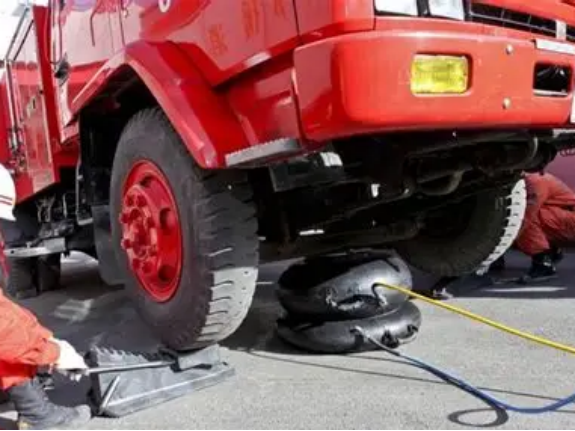
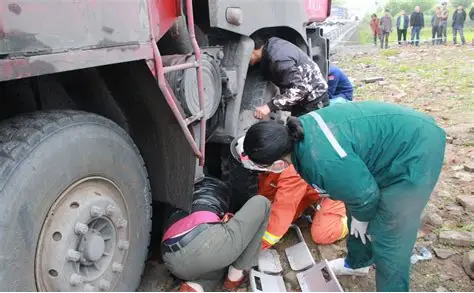
Today, we won’t discuss routine operations in an everyday garage, but rather focus on a more challenging and dangerous scenario—the correct principles for using jack stands in on-site rescue. This is not just an operation guide, but a practical safety manual that explains “why” you should do things this way from an engineering perspective. After reading it, you will not only have a clearer understanding of how to do things safely, but also a better grasp of the many overlooked risks hidden behind these seemingly simple jack stands.

This article goes beyond common sense, providing a practical , robust solution and precautions to help you safely handle every vehicle support challenge, especially in complex scenarios involving jack stands rescues , such as trailers, agricultural machinery, or light freight vehicles. After reading this, you will be able to ensure safety with the knowledge and preparation.

Jack stands Why is it the last line of defense for vehicle safety?

Jack support: Why is it the last line of defense for vehicle safety?

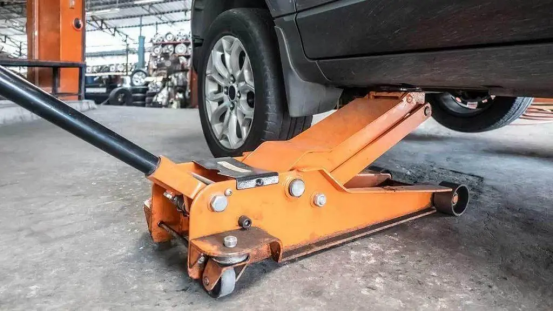
First and foremost, we must understand a core principle: a hydraulic floor jack must never be used alone to support a vehicle for any repairs or inspections!

Limitations of hydraulic jacks: Why can’t they be relied upon alone?

From an engineering perspective, hydraulic jacks are designed for lifting , not for sustained support . Their internal hydraulic seals are susceptible to slow depressurization or sudden failure under continuous high pressure. This means that even a brand-new jack cannot guarantee 100% maintenance of the lifting height over an extended period. If the hydraulic system fails, the vehicle will plummet instantly, with potentially catastrophic consequences.

In the accident debriefings I’ve participated in, unexpected failure of the hydraulic jack is one of the most common causes of vehicle falls. This isn’t a low-probability event, but rather an inherent design limitation of hydraulic systems. It’s like a muscular porter who can easily lift heavy objects, but you wouldn’t let him hold them up with one hand for an extended period, right? You need a mechanically locked support to bear the weight.

The essence of jack supports: providing mechanical locking and safety redundancy

Unlike hydraulic jacks, jack stands provide deterministic mechanical locking through physical structures such as pins or ratchet mechanisms . Once the vehicle is securely placed on the stand, its weight is directly supported by the robust metal structure and locking mechanism, eliminating the risk of hydraulic pressure release. This provides crucial safety redundancy for your life .

A deeper understanding of the "load-bearing capacity" and "stability" of stents: considerations beyond numbers.

A deeper understanding of the “load-bearing capacity” and “stability” of stents: considerations beyond numbers.

purchasing or using jack stands , many people only focus on their rated load, believing that a higher number equates to greater safety. However, this is far from sufficient. We need to understand the engineering principles behind those numbers.

Rated Load and the “3/4 Rule”: Where is your safety margin?

Typically, the rated load of a jack stands is measured in “tons,” referring to the total load-bearing capacity of a pair of stands. However, in actual use, the load-bearing capacity of a single stand and how it handles the weight distribution of the vehicle are more crucial.

A widely accepted and safer rule of thumb is the ” 3/4 rule “: the individual load-bearing capacity of a jack stands should be at least 75% of the total weight of the vehicle you are lifting. Why not 50% (lifting only half)? Because the vehicle’s center of gravity will shift, dynamic loads may be generated during maintenance work (such as the force of tightening screws), and there may be uneven ground or non-ideal support points at the rescue site. Allowing sufficient safety margin is necessary to cope with these uncertainties.

Different vehicle types and bracket load-bearing requirements

Vehicle typeTypical weight rangeRecommended support structure (single pair)Additional considerations
Sedans and small SUVs1.2 – 2.5 tons2-3 tonsFor most standard sedans and small SUVs, a 2-ton (4,000-pound) bracket is sufficient, but a 3-ton bracket provides greater margin.
Mid-to-large SUVs and light pickup trucks2.5 – 3.5 tons3-6 tonsFor example, the Ford F-150 can use a 3-ton support when unloaded, but considering modified, heavy-duty or heavier models, a 6-ton support provides a significantly higher safety margin.
Heavy trucks (F-250), trailers, agricultural machinery3.5 tons or more, and even several tons6 tons and aboveThese jack stands for heavy vehicles require extremely high load-bearing capacity. Heavy pickup trucks such as the F-250, especially the diesel version, are recommended to use 6-ton or 12-ton jack stands to ensure that each support point can withstand enormous pressure.

Important note : For heavy-duty trucks, especially check the GVWR (Gross Vehicle Weight Rating) and axle load on the vehicle’s door frame to ensure that the brackets you choose are well above these figures.

Support Structure and Stability: Engineering Significance of Wide Base, Locking Mechanism, and Materials

The importance of a wide base : The larger the base area of the support structure, the more evenly it distributes pressure on the ground. This is especially crucial on softened surfaces (such as asphalt in summer) or muddy ground, effectively preventing the support structure from sinking and significantly increasing its resistance to overturning moments. A narrow base is more prone to tipping over when subjected to uneven stress.

Reliable locking mechanism :

Pin-style : The height is fixed by inserting a solid pin. It is simple and reliable, but the adjustment is not as convenient as the ratchet type.

Ratchet-style : Height is locked via a rack and pinion mechanism, offering quick and easy adjustments, but it’s crucial to ensure the pawl is fully engaged and free from wear. Regardless of the type, regular checks of its integrity are essential.

Material and Welding Quality : Heavy-duty steel is widely favored for its strength and durability. Aluminum alloy brackets are lighter, but must be of a high strength grade and are more expensive. I’ve seen too many accidents caused by cracked welds in cheap brackets. When choosing, don’t be misled by the surface “tonnage” number; pay more attention to the overall manufacturing process, especially the smoothness and uniformity of the welds. Quality is not just about numbers.

Core principles in on-site rescue operations: stabilization measures and precautions

Core principles in on-site rescue operations: stabilization measures and precautions

At rescue sites, the complex and ever-changing environment places higher demands on the use of jack stands on-site rescue . The following are the core principles for practical application.

On-site assessment: Selecting a “controllable” support environment is the first step.

Ground conditions : This is the most easily overlooked, yet most fatal, factor.

  • Hard and flat : Concrete is the best choice.
    • Asphalt pavement : It will soften at high temperatures, and the supports may sag. Be sure to place thick plywood or hardwood blocks under the supports to distribute the pressure.
    • Soil, sand, gravel : Extremely dangerous! These surfaces cannot provide stable support. If absolutely necessary, use large, thick wooden planks and find the most solid and flat area possible.

Slope : I strongly recommend avoiding supporting the vehicle on any sloping surface. Even a slight slope can cause the vehicle’s center of gravity to shift, increasing the risk of rollover. If absolutely necessary, the vehicle should always be positioned towards the crest of the slope and secured with additional wheel chocks.

Vehicle Preparation: Fixing and Identifying Lifting Points – Top Priority

Multiple fixation :

Engage the handbrake.

Engage P gear (automatic transmission) or 1st gear/reverse gear (manual transmission).

Force the use of wheel stops to secure wheels that are not being lifted. This prevents the vehicle from accidentally slipping during the lifting process.

Designated lift points : Be sure to consult your vehicle owner’s manual to identify the manufacturer-designated lift points. These points are usually reinforced structures such as frame longitudinal beams, subframes, or axles.

  • For heavy or special vehicles , such as trailer beams, agricultural machinery chassis, or vehicles without a clearly designated mounting point, consult a professional or find a sturdy frame structure. Never place the bracket on the oil pan, differential housing, suspension rocker arms, or any non-load-bearing components.

Multi-Support Point Strategy : Providing Practical Solutions for Trailers, Agricultural Vehicles, and Light Freight Vehicles

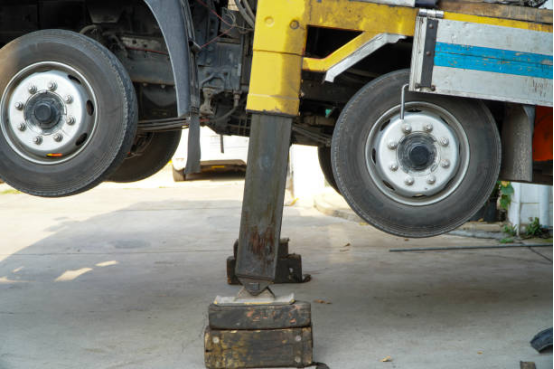
Heavy-duty, long-wheelbase vehicles, due to their high center of gravity and large mass, require single-point or double-point supports to provide sufficient stability. When using a rescue jack stands , the following is typically needed:

  • Use at least four supports : Even when repairing only one part of the vehicle, use four supports whenever possible to distribute the weight and provide greater resistance to torsion and rollover. For longer trailers or agricultural machinery, six or more supports may be required.
  • Even load distribution : Ensure all supports are securely placed on the lifting points and adjusted to the same height as much as possible to level the vehicle. This prevents individual supports from bearing excessive pressure and causing them to fail.
  • Choose appropriate support points : When standard lifting points are unavailable, carefully evaluate robust components such as the chassis beams and axles. Ensure that the support points distribute weight evenly and do not interfere with maintenance work.

The Art of Wooden Pads : A Stable Foundation in Non-Ideal Ground Conditions

At a rescue site, it’s difficult to find a perfect concrete platform. In this case, wooden platforms (such as thick plywood or hardwood) become indispensable safety equipment.

  • [Engineering/Mechanics] The core function of the wooden support plate is to distribute the ground pressure on the jack support. When the support base is placed on the wooden support plate, the plate disperses the concentrated stress of the support over a larger ground area, effectively preventing it from sinking on soft surfaces (soil, asphalt, or even cracked concrete). At the same time, wood typically provides better friction between the support base and the ground than metal, increasing overall stability .
  • Material and thickness selection : It is recommended to choose knot-free, dry hardwood (such as oak or maple) or at least 2 inches thick, multi-layered, waterproof plywood. The dimensions should be larger than the base of the support frame to provide sufficient support area.

Avoid fatal mistakes: These details cannot be ignored.

I’ve seen too many cases where problems arise from these details; a simple oversight can lead to disaster.

  • Overloading is suicide : It is emphasized again that the rated load of the jack stands must be strictly adhered to . It is better to overload (choose a support with a higher load capacity) than to underload.
  •  Improper placement :
    • The bracket was not fully engaged at the designated lifting point on the vehicle.
    • Place it at an angle on the suspension components, oil pan, or any non-load-bearing parts.
    • Inconsistent bracket heights result in uneven stress on the vehicle.
  • The wishful thinking of single-point support : Never place the vehicle on only one jack support or rely solely on hydraulic jacks for any under-vehicle work.
  • No “shaking test” was performed before working under the vehicle : This is the final confirmation step and the most critical error prevention mechanism.

Support for verification and long-term storage considerations

“Shaking Test”: Must be done every time, without compromise.

Before fully entering the vehicle to work, always perform a “shake test”: gently push and pull the vehicle to confirm that all jack stands are in place, the vehicle’s center of gravity is stable, and there is no potential swaying. If there are any signs of instability, readjust immediately! This simple action can save lives.

How long can a vehicle be parked on a jack stands?

Provided the setup is correct (appropriate bracket load-bearing capacity, placed on a firm, flat surface, and the vehicle is stably positioned), a vehicle can be stored in jack stands for extended periods, even years. Many classic car enthusiasts use this method for winter storage or long-term restoration.

Risk warning : When storing for a long period of time, it is necessary to regularly check the corrosion of the bracket and vehicle connection points, as well as the impact of external environment (such as ground subsidence, accidental collision) on stability.

Conclusion: Safety is the best form of efficiency.

“DIY is fine, loss of control is the problem”—this is the core belief I’ve gleaned from years of experience as a garage safety consultant. By deeply understanding the engineering principles of jack stands , mastering practical on-site rescue skills, and remaining vigilant at all times, you will be able to perform vehicle maintenance with greater confidence and safety. Safety is not luck, but the certainty brought about by knowledge and execution.

If you want to minimize the risks associated with vehicle support and are looking for more professional and reliable solutions, we are happy to share more error-proofing logic and product selection tips so that you can feel at ease and in control in every operation.

Frequently Asked Questions (FAQ)

Q1: Will a 2-ton jack mount be enough to support my SUV? A1: For most compact and mid-size SUVs, a 2-ton (4000 lb) jack mount might be just about enough. However, considering safety margins, vehicle weight distribution, and potential maintenance work, I generally recommend choosing a 3-ton or 6-ton jack mount for SUVs, especially for heavy-duty SUVs or light pickup trucks, where a 6-ton mount offers significantly greater safety.

Q2: Can I use a jack stands on uneven ground? A2: Strongly discouraged! Using a jack stands on uneven ground greatly increases the risk of tipping over and sinking. If you must use it, be sure to place a thick, flat wooden pad under the stand to create a relatively flat support surface, ensuring the pad evenly distributes the pressure. Also, be extremely careful and repeatedly check the vehicle’s stability.

Q3: Besides jack stands, are there other safer support tools? A3: Yes, there are several alternatives that offer greater safety. For example, car ramps are very safe for simple maintenance tasks like oil changes because they provide a larger contact area and stability. Portable hydraulic lift platforms like QuickJack offer near-professional shop safety, quickly lifting and mechanically locking the vehicle with the push of a button, making them ideal for those seeking ultimate safety and convenience.

author-avatar

About Gavin Reid

Gavin Reid has been obsessively analyzing garage safety protocols and vehicle support systems for over a decade. After transitioning from a professional service bay to independent safety consulting in 2020, Gavin realized the market was flooded with confusing weight ratings and compromised designs that offered a false sense of security. His Mission: To help DIY mechanics—especially home hobbyists—identify critical failure points in vehicle lifting and ensure every project ends safely. Why Trust Gavin: Engineering Obsessive: He dissects load paths and weld integrity. From metallurgy to geometric stability, he understands the physics that keep two tons of steel from crushing a human chest. Data-Driven Testing: Gavin has stress-tested 40+ models, evaluating lateral stability and locking redundancy rather than just "marketing tonnage." In the Garage: He’s a fixture in local DIY communities, frequently inspecting frame rails for pinch weld placement and documenting metal fatigue on aging gear. Gavin believes that "a lapse in physics is a permanent mistake." He is dedicated to teaching mechanics how to maintain a "zero-trust" relationship with their equipment. Would you like me to provide Gavin’s specific checklist for identifying structural fatigue in used jack stands?