Jack Stands

Extreme Cold Environments and Jack Stands Safety: The Secrets to Metal Toughness and Protective Strategies You Need to Know

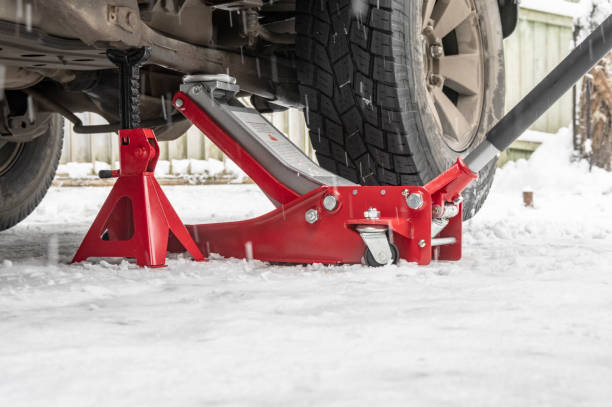
Red hydraulic jack and jack stands lifting a car on a snowy driveway.

Even in the bitter cold of winter, many car owners still choose to perform vehicle maintenance in their garages or driveways.

But when you’re about to lift your beloved car and entrust its heavy body to a few metal jack stands, a question might quietly arise: Will these jack stands become brittle and prone to breakage in sub-zero temperatures? Do their metal materials really become brittle in extremely cold environments?

Expert guide to safely using jack stands in cold weather.


1. Why do metals become brittle at low temperatures?

To understand the safety of jack stands in extremely cold environments, we first need to understand an important physical property of metallic materials, especially steel, at low temperatures—the ductile-brittle transition.

1.1 The “ductile-brittle transition temperature” of steel: a physical property that cannot be ignored

We generally consider steel to be strong yet possessing a certain degree of toughness, meaning it undergoes plastic deformation before fracturing. However, when the temperature drops to a certain level, this “toughness” of many steels decreases significantly, becoming more like glass—fractured suddenly with almost no plastic deformation. This is known as the ductile-brittle transition.

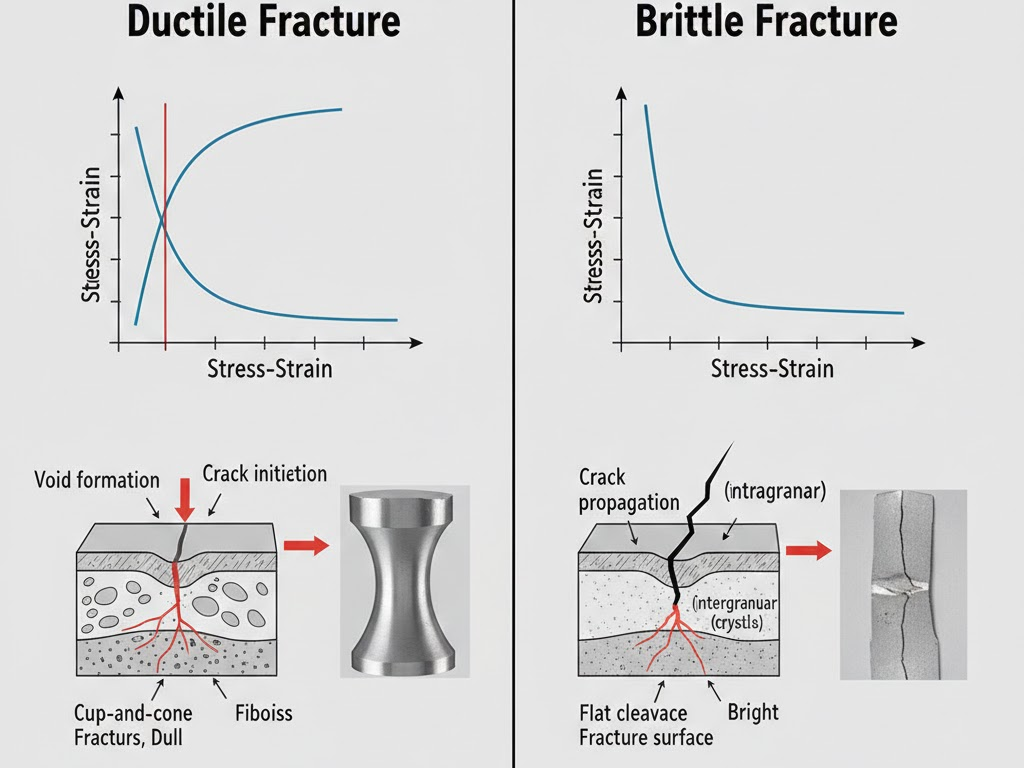
The temperature at which this transition occurs is called the ductile-brittle transition temperature (DBTT). Materials that are tough at room temperature may shatter if struck in extremely cold conditions. This is the fundamental difference between ductile fracture and brittle fracture.

  • Ductile fracture: Before fracture, there is significant plastic deformation, absorbing a large amount of energy, and the fracture surface is usually fibrous.
  • Brittle fracture: A sudden fracture with almost no plastic deformation, little energy absorption, and the fracture surface is usually crystalline or conchoidal.
Diagrams illustrating ductile and brittle fracture, relevant for understanding jack stands material.

1.2 Key Factors Affecting the Low-Temperature Toughness of Steel

Not all steels become brittle to the same extent at low temperatures; their properties are affected by a variety of factors:

  • Material composition:
    • Carbon content: The higher the carbon content, the higher the strength and hardness of the steel, but the lower the toughness and the higher the DBTT (diameter-to-toughness ratio). This means that high-carbon steel may become brittle at relatively high temperatures.
    • Alloying elements: Some alloying elements, such as nickel and manganese, can effectively reduce the DBTT (deep bottom tone) of steel and improve its low-temperature toughness. This is why these elements are added to some special steels used in cold environments.
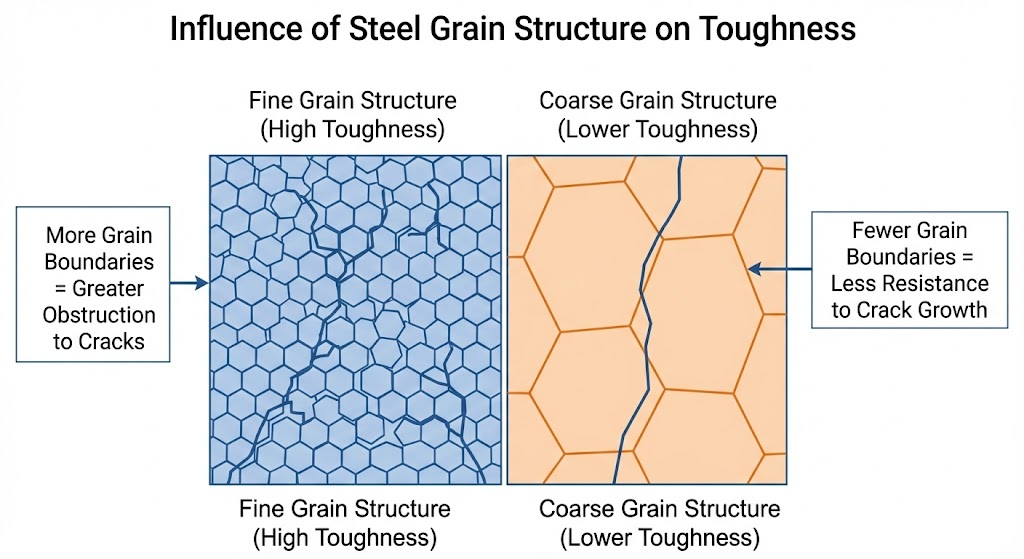
  • Grain structure: The finer the internal grains of steel, the better its toughness and the lower its DBTT. Fine grains can more effectively prevent crack propagation.
  • Heat treatment processes: Quenching, tempering, and other heat treatment processes can significantly alter the microstructure and mechanical properties of steel. Appropriate tempering can refine grains, eliminate internal stress, thereby improving the toughness of the steel and reducing DBTT (Deep Bore Tolerance).
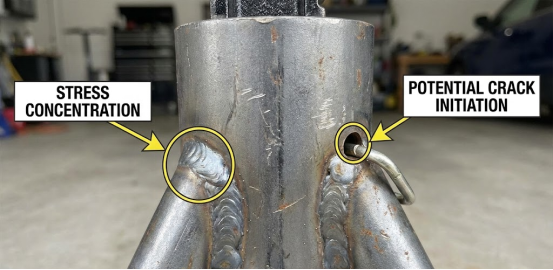
  • Surface defects and stress concentration: Any tiny crack, scratch, weld defect, or design stress concentration area can become the starting point for brittle fracture at low temperatures.
Steel grain structure diagram, showing how toughness impacts strength of jack stands.

2. Real-world risk assessment of Jack Stands in extreme cold environments

By understanding the low-temperature properties of metals, we can examine more specifically the potential risks of jack stands in extremely cold environments.

2.1 What type of steel are your Jack Stands made of? Common types and performance considerations

Most consumer-grade jack stands on the market are typically made of carbon steel or low-alloy steel. For well-designed, standard-compliant jack stands (such as ASME PALD), the selection of materials and manufacturing processes usually take into account a certain range of low-temperature use.

However, the definition of “extreme” varies from place to place. In regions such as North America and Northern Europe, where temperatures can drop to -20 or -30 degrees Celsius or even lower year-round, concerns about jack stands being cold-weather brittle are particularly real.

Cheap, unregulated jack stands often have strict cost control in material selection and heat treatment, resulting in relatively high DBTT (Dead-to-Temperature Tolerance) of their steel. This means that their toughness may decrease significantly at slightly lower temperatures, increasing the risk of steel jack stands freezing.

2.2 How do extreme low temperatures affect the safety boundaries of Jack Stands?

  • Stress concentration and crack propagation: At room temperature, when jack stands are subjected to loads, the material around any minor defects or stress concentration points (such as weld seams or hole edges) can relieve stress through plastic deformation. However, in extremely cold environments, the metal’s toughness decreases, this ability to plastically deform weakens, and stress is more likely to accumulate locally, leading to the rapid propagation of microcracks and ultimately brittle fracture. This is the core challenge of low-temperature tool safety.
  • Impact Load Risk: During maintenance, vehicles may subject jack stands to instantaneous impact loads due to shaking, component disassembly, or accidental operation. At normal temperatures, the toughness of jack stands can absorb some of the impact energy. However, in extremely cold environments, this absorption capacity decreases significantly, making impact forces more likely to cause brittle fracture. This is a crucial factor that must be considered when designing winter metal strength jack stands.
Close-up of jack stands showing stress concentration and potential crack initiation at welds.

2.3 Warning: These signals may indicate escalating risks

When using jack stands, especially in low-temperature environments, always conduct a thorough inspection. The following signs may indicate increased risk:

  • Visible cracks, deformation, and corrosion: Any crack in the weld, support column, base, or locking pin can be a potential fracture point. Severe corrosion reduces the effective cross-sectional area and overall strength of the material.
  • Unstable base surfaces: Ice, snow, frozen soil, or uneven concrete surfaces can all cause the feet of jack stands to slip and sink, thereby changing the force angle and increasing lateral loads. Even if the metal itself is not brittle, it can cause instability of the entire support system.
  • Locking mechanism malfunction: Check the ratchet mechanism or pin hole to ensure it is not worn or deformed and can lock securely, which is crucial for jack stands safety.

3. Recommendations for safe use of Jack Stands in cold weather

Now that we understand the risks, how can we use jack stands safely in cold environments? My experience tells me that safety is always a matter of paying attention to details.

3.1 Pre-use “check-up”: Special checklist for low-temperature environments

When using jack stands in a low-temperature environment, please be sure to perform the following checks:

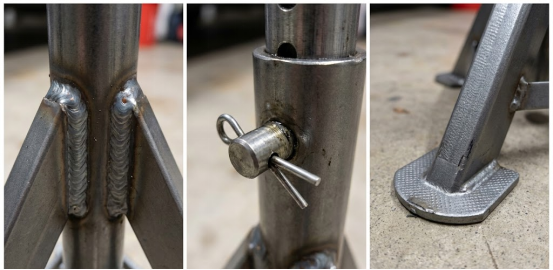
  • Visual inspection: Carefully inspect each weld, especially the connection between the support column and the base, as well as around the ratchet teeth or pin holes, for any visible cracks, deformations, or excessive wear.
  • Functional testing: Under no load, the jack stands were raised and lowered multiple times to ensure that the ratchet mechanism operated smoothly and that the locking pin could be fully inserted and securely locked without any jamming or shaking.
  • Rust assessment: Inspect all metal surfaces, especially load-bearing areas and regulating mechanisms, for severe flaky rust. Minor surface rust is usually harmless, but deep rust can weaken the structure’s strength.
Detailed views of jack stands components: welds, locking pin, and base.

3.2 Choosing the right Jack Stands: It’s not just about tonnage.

  • Materials and Craftsmanship: Invest in jack stands from well-known brands with a good reputation. These products are generally more reliable in terms of material selection (such as high-quality carbon steel or alloy steel) and manufacturing processes (such as excellent welding and heat treatment), resulting in lower DBTT and better handling at low temperatures. Don’t just go for the lowest price.
  • Structure and stability: Choose jack stands with a wide, stable base, such as a triangular base or a square base with reinforcing ribs, to increase the contact area and resistance to tipping over.
  • Anti-corrosion coating: Good powder coating or anti-rust paint can effectively extend the service life of jack stands and reduce the impact of rust on structural integrity.
  • Jack pads: Consider using high-quality jack pads. They not only protect the body paint and chassis components, such as pinch welds and car pinch welds, but also provide cushioning to some extent, reducing direct metal-to-metal impacts and thus indirectly improving car jack stand safety. Jack pads are especially important for SUV jack stands or vehicles that require support at specific pinch weld jack points.

3.3 Establish safety supports: Avoid “fatal mistakes” at low temperatures

This part is of utmost importance; my experience tells me that most accidents stem from improper operation.

  • The ground is the foundation of safety:
    • Flat, hard, and free of ice and snow: These are the primary requirements for using jack stands. Jack stands are extremely prone to slipping on icy or snowy surfaces. If you must work on a non-concrete surface, place a thick wooden plank (such as 2×10 inches) under the jack stands to distribute pressure and prevent them from sinking.
    • Remove debris: Ensure the work area is clean and free of gravel, tools, or other obstructions that could cause the jack stands to become unstable.
  • Correctly place the support points:
    • Consult the vehicle manual: Always place jack stands on the support points specified by the vehicle manufacturer. These are usually reinforced frame rails, subframes, or specific pin welds on the car.
    • Jack stand on pinch weld: Pinch welds are common support points for most sedans and some SUVs. Always use jack pads with V-grooves or rubber pads to avoid damaging the pinch weld and provide more secure support.
    • Symmetrical placement: Ensure that the jack stands on both sides are placed at the same height and that the vehicle’s center of gravity is centered to avoid uneven loading.
  • Slow and steady, avoid impact:
    • Use a hydraulic floor jack to slowly lift the vehicle to the required height.
    • After placing the jack stands in place, slowly and steadily lower the jacks, gradually transferring the vehicle’s weight onto the jack stands. This process must be done carefully and patiently; never allow the vehicle to “slam” onto the jack stands, as this will create an impact load, which is especially dangerous at low temperatures.
  • Redundant security measures:
    • Wheel chocks: Whenever you lift your vehicle, be sure to place wheel chocks in front of and behind the wheels that are not lifted. This effectively prevents the vehicle from sliding unexpectedly.
    • Hydraulic jacks as backup: After the vehicle is fully on the jack stands, hydraulic jacks can be used to slightly support the vehicle, but not to bear the full weight, as an additional safety redundancy.
  • Testing stability: Before crawling under the vehicle, I recommend gently shaking the vehicle in all corners to ensure it remains perfectly still on the jack stands. Only when the vehicle is completely stable should you safely begin work.

4. DIY is fine, the problem is getting out of control.

Jack stands do indeed face the risk of decreased toughness and increased brittleness in their metal materials—this is an undeniable physical fact. However, this risk is not uncontrollable. By deeply understanding the underlying engineering principles, selecting qualified products, and strictly adhering to safe operating procedures, you can safely perform vehicle repairs even in the cold winter.

Please remember that the value of safety tools goes far beyond their price tag. They represent your life and health. Before every DIY repair, a little extra vigilance and thorough checks are the greatest responsibility you can take to yourself and your family. DIY is fine; losing control is the problem. We advocate for prepared, knowledgeable, and respectful safe DIY.


FAQ

Q1: Can my jack stands still be used safely in temperatures tens of degrees below zero?
A1: This depends on the material, manufacturing process, and any damage to your jack stands. High-quality jack stands can usually withstand normal cold, but extremely cold environments of tens of degrees below zero can significantly increase the risk of steel becoming brittle.
It is essential to carefully inspect them and take extra precautions, or consider operating them in a warmer environment.
Q2: Besides temperature, what other factors can affect the safety of jack stands?
A2: In addition to low temperature, the safety of jack stands is also affected by factors such as their load-bearing capacity, the flatness of the ground on which they are placed, whether they are correctly placed on the vehicle support point, whether there is rust or damage, and whether they are subjected to impact loads.

Q3: How do I determine if my jack stands need to be replaced?
A3: If your jack stands show any visible cracks, severe deformation, large areas of deep corrosion, weld cracks, malfunctioning locking mechanism, or inability to lock securely, then it should be taken out of service immediately and replaced, regardless of the environment in which it is used.
author-avatar

About Gavin Reid

Gavin Reid has been obsessively analyzing garage safety protocols and vehicle support systems for over a decade. After transitioning from a professional service bay to independent safety consulting in 2020, Gavin realized the market was flooded with confusing weight ratings and compromised designs that offered a false sense of security. His Mission: To help DIY mechanics—especially home hobbyists—identify critical failure points in vehicle lifting and ensure every project ends safely. Why Trust Gavin: Engineering Obsessive: He dissects load paths and weld integrity. From metallurgy to geometric stability, he understands the physics that keep two tons of steel from crushing a human chest. Data-Driven Testing: Gavin has stress-tested 40+ models, evaluating lateral stability and locking redundancy rather than just "marketing tonnage." In the Garage: He’s a fixture in local DIY communities, frequently inspecting frame rails for pinch weld placement and documenting metal fatigue on aging gear. Gavin believes that "a lapse in physics is a permanent mistake." He is dedicated to teaching mechanics how to maintain a "zero-trust" relationship with their equipment. Would you like me to provide Gavin’s specific checklist for identifying structural fatigue in used jack stands?