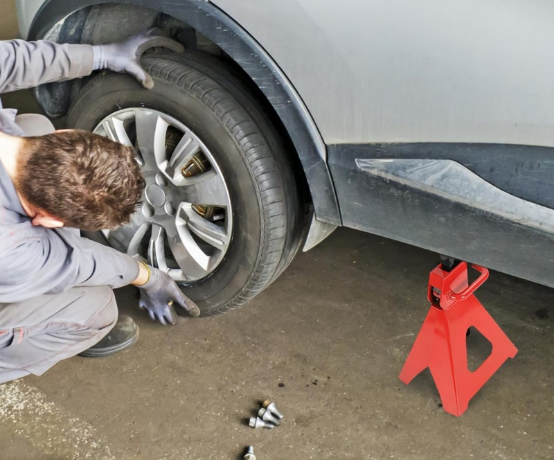
Jack Stands

Ultimate Guide to Choosing a Jack Stand: In-Depth Analysis of Safety and Applicability

Jack Stands: The Ultimate Guide

Hello, I’m your garage safety consultant. In my over ten years of experience in automotive repair safety, I’ve witnessed far too many irreparable tragedies caused by small oversights or misunderstandings about tools. Today, we won’t talk about fancy marketing terms; we’ll just discuss the partner that truly protects your life when working under a car— the jack stand.

Many people feel that DIY repairs can save money and provide a sense of accomplishment. That’s true, DIY is indeed fine, but loss of control is the real problem. Especially when you’re about to be under a vehicle weighing several tons, any slight uncertainty can turn into a fatal risk.

Don’t rush into action! How much is your safety worth when working under a car?

The “what ifs” I witnessed firsthand: the price of wishful thinking

In the countless garage safety training sessions and accident debriefings I’ve participated in, what has struck me most is often not the accidents caused by “carelessness,” but rather the tragedies resulting from wishful thinking like “it’ll only be a little while” or “it should be fine.”

I once saw a car owner who simply wanted to tighten a loose exhaust pipe bolt, thinking it would only take a few minutes, so he only used the car jack and didn’t use a support bracket. As a result, the jack suddenly slipped, and the car instantly crashed down… Fortunately, he was only injured, but the fear, the terror of that “what if” scenario becoming a reality, is still etched in his mind to this day.

This made me realize deeply why seemingly simple vehicle lifting hides huge, irreversible risks. It’s because the weight of the vehicle, the uncertain support points, and the engineering details that you and I may overlook are all silently accumulating danger.

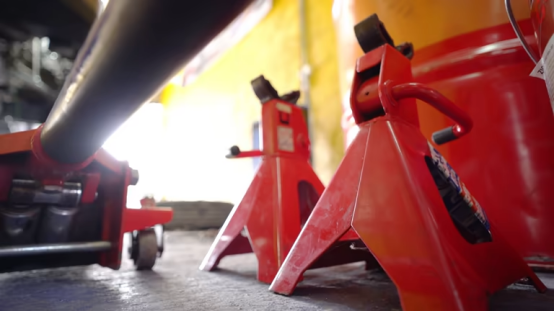
The jack stand is unstable when supporting the vehicle.

Why can’t you rely solely on the vehicle’s jack? Its design purpose and limitations.

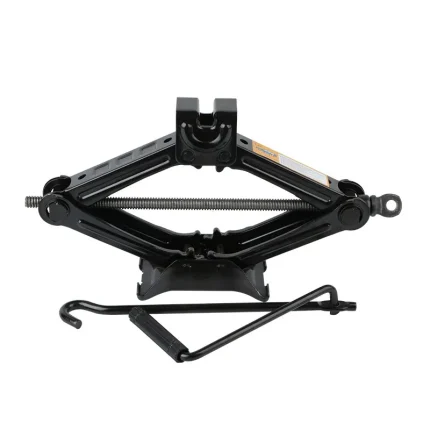
Many car owners mistakenly believe that the jack in their vehicle can be used for repairs, which is a very dangerous misconception. As the name suggests, a vehicle jack is designed solely for emergency tire changes. It typically has a simple structure and takes up little space, but its stability is extremely poor, its load-bearing capacity is limited, and it is not designed for prolonged, multi-angle support. Its support area is small and it is prone to slipping; it should never be used for any work under the vehicle.

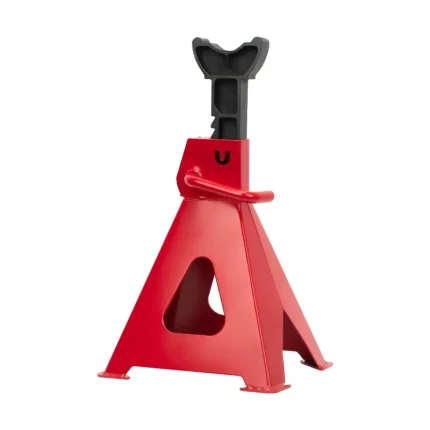
This is why our main focus today— the jack stand —exists. It’s not used to lift vehicles, but rather to provide safe and stable redundant support for lifted vehicles. Remember, safety redundancy is central to professional operation. When you entrust your life to a support system, there must be more than one line of defense.

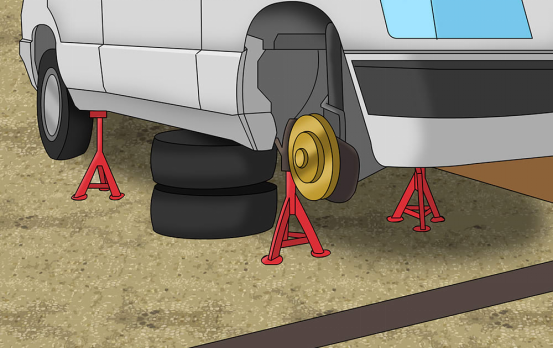
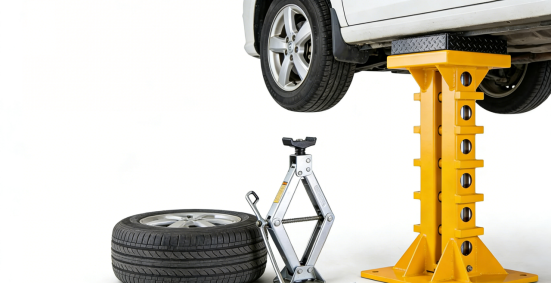
When the jack stand is stably supporting the car...

Unveiling the Secrets of “Safety”: The Truth and Engineering Logic Beyond Parameters

The “trap” of load-bearing parameters: numbers do not equal actual safety

a jack stand with a load-bearing capacity several times higher than your car’s weight , you’ll be completely safe? This is a common misconception based on specifications. My experience tells me that load-bearing capacity ≠ actual safety in use.

Why is this the case? Because the load-bearing parameters of a jack stand usually refer to its static load-bearing capacity, that is, the maximum weight it can withstand under ideal, stable, and vertical force conditions. However, in actual undercarriage operations, the situation is far more complex than this:

  • Dynamic loads and impact loads: When you tighten screws or hit parts under the car, you generate instantaneous dynamic loads. If the vehicle shakes accidentally, the bracket may bear impact loads that far exceed its static load-bearing capacity.
  • Dynamic changes in vehicle center of gravity: Disassembling heavy components such as the engine, transmission, or fuel tank can significantly alter the vehicle’s center of gravity, leading to uneven stress on the support structure and even rollover.
  • Uneven or soft ground: This will change the actual force path of the support, leading to local stress concentration, or even sinking of the bottom of the support, thereby reducing the actual load-bearing capacity.

Therefore, even if you buy an “extra-large tonnage” jack stand, the vehicle may still fall if you ignore these engineering details.

Ground Conditions: A Stealth Killer More Critical Than You Think

I can tell you with certainty that the stability of a jack stand system is highly dependent on ground conditions. Even the sturdiest jack stand can fail instantly if it is placed on the wrong terrain.

  • Flatness The support frame must rest on an absolutely flat surface. Even a slight slope can introduce uneven stress and prevent full contact between the base and the ground, which significantly reduces resistance to overturning.
  • Stability Concrete is the most reliable surface for supporting a vehicle. Supports should never be placed on asphalt, mud, grass, or any soft or loose material. Asphalt can soften under high temperatures, allowing the stand to sink, while mud and grass simply cannot provide the structural resistance needed to keep the vehicle stable.
  • Anti-slip properties The ground should be completely dry and free of oil or debris. Any reduction in friction increases the risk of the support base sliding under load.

From a mechanical perspective, the base of a jack stand is designed to distribute the vehicle’s weight evenly across the contact area. When the ground is uneven or compressible, pressure concentrates at specific points on the base, causing localized sinking or deformation. Once this happens, the entire support system becomes unstable, regardless of how strong the stand itself may be.

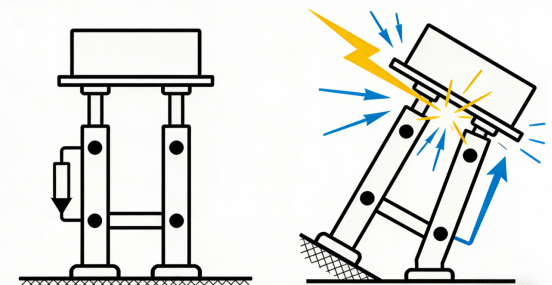
Comparison of Jack Stand performance on level ground and uneven ground.

Center of gravity shift: the most overlooked danger during vehicle lifting.

Shifting center of gravity is the direct cause of most accidents. When a vehicle is lifted, its center of gravity is much higher than when it’s on the ground, naturally reducing its stability. Even more dangerous is the dynamic shift in the vehicle’s center of gravity that occurs when you’re working under the car, disassembling heavy components such as the transmission, drive shaft, or even the wheels.

Imagine you’ve removed a gearbox weighing tens of kilograms; the vehicle’s balance is instantly disrupted. If the jack stand is barely holding it up, the shift in the center of gravity could cause the vehicle to tilt or even slip off the stand. This is why more comprehensive support systems are needed for these types of heavy repairs, and additional auxiliary supports may even be required. Understanding and anticipating changes in the vehicle’s center of gravity is a crucial step in ensuring safety.

Single-point support: a “taboo” in professional operations, and the scientific basis of multi-point support.

In professional parking garages, single-point support is a high-risk practice. This means using only one support for one side, or only two supports for one end. In the event of an accident, there is virtually no chance of recovery.

From a mechanical perspective, multiple support points (e.g., using four jacks to support the four corners of the vehicle) distribute the vehicle’s weight more evenly across multiple support points, significantly increasing the overall system’s stability and anti-rollover capability. Even if one support has a minor problem, the others can still provide some cushioning—this is what we commonly refer to as safety redundancy. Remember, never skimp on an extra layer of support; an extra layer of protection.

Examining the Core Selection Criteria for Jack Stands Like a Veteran Technician

Materials and Structure: Not Just “Strong,” but Also “Fatigue Resistant”

Jack stands on the market are mainly made of steel and aluminum, and the material choice directly affects how a jack stand behaves under long-term load.

  • Steel supports: Typically heavier, stronger, and more cost-effective. Steel structures tolerate higher impact loads, which makes them reassuring during lifting operations. Their drawbacks include susceptibility to rust and reduced convenience during handling and storage.
  • Aluminum supports: Lighter in weight and naturally corrosion-resistant, but usually more expensive. While their impact resistance may be slightly lower than steel, it is generally sufficient for everyday vehicle maintenance when the stand is used correctly.

Regardless of material, the real determining factor is manufacturing quality. It is especially important to understand that metal structures are subject to fatigue and aging. A jack stand is not indestructible. Long-term static load, repeated lifting cycles, and environmental exposure can all contribute to internal metal fatigue, leading to micro-cracks and, in extreme cases, sudden structural failure.

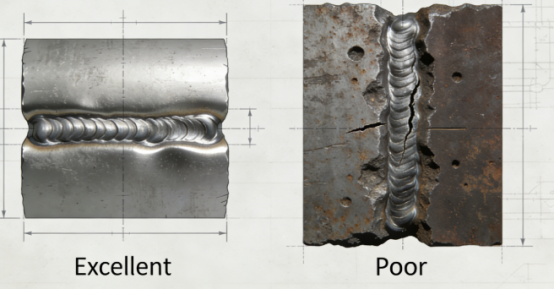
For this reason, weld inspection is critical. The weld points are often the weakest link in a support structure. High-quality welds should appear smooth, uniform, and continuous, without visible pores, cracks, or abrupt transitions. Poor welding quality dramatically increases failure risk. In practice, many seemingly robust supports first show signs of weakness at these weld joints rather than in the main frame itself.

Comparison of the advantages and disadvantages of different welding joints for Jack Stands.

Base design and saddle type: a balance between stability and vehicle protection

Base Design: Choose a base that is wide and sturdy. Triangular or square bases generally offer better anti-tipping capabilities than round bases because they resist lateral forces more effectively. The larger the base area, the less pressure it exerts on the ground, and the less likely it is to sink.

Saddle type: The saddle is the part of the bracket that contacts the vehicle. Its shape must match the correct support points on your vehicle.

  • V-shaped or grooved saddles: suitable for pin welds on monocoque vehicles. These areas typically have reinforcing ribs to withstand concentrated loads.
  • Flat or U-shaped saddle: Frame longitudinal beams suitable for non-load-bearing vehicles (such as trucks and SUVs).
  • Saddles with rubber pads: These protect the vehicle’s chassis coating from scratches and slippage, and provide extra friction.

I want to emphasize again that incorrect placement causes accidents more often than product quality. Even the best jack stand, if misplaced, is tantamount to walking on the edge of a cliff.

Recommendations for different vehicle structures and corresponding saddle selection

Vehicle structure typeCommon support pointsRecommended saddle typeRemark
MonocoquePinch Weld on Side SkirtV-shaped or grooved saddle (preferably with rubber protection)Avoid direct support on the car body panels, as this can easily cause deformation and damage.
Non-load-bearing bodyFrame longitudinal beamsFlat plate or U-shaped saddleEnsure that the longitudinal beams of the chassis are flat and free from rust and deformation.
Partial suspension componentsInner side of the lower control arm (specific situation)Flat plate or saddle with rubber pads (ensure even force distribution without damaging components).It is only suitable for specific repairs and requires consultation with the manual; it is generally not recommended as a primary support point.

Height Adjustment and Locking Mechanism: Reliability Is the Lifeline

The height adjustment system of a jack stand is directly tied to both ease of use and operational safety. More importantly, the locking mechanism determines whether the load remains secure once the vehicle is raised.

  1. Ratchet type: This is the most common design, where a pawl engages with the teeth of a vertical post. The main advantages are fast height adjustment and affordability. However, wear on the pawl or shallow tooth engagement can lead to slipping under load. For this reason, the material strength and engagement depth of the locking components are critical factors in ratchet-style jack stands.
  2. Threaded type: In this design, the saddle is raised or lowered by rotating a threaded screw. The key advantage is precise, continuous height adjustment, and once locked, the structure is extremely stable. The trade-off is slower adjustment speed, which is why this type of jack stand is more commonly found in heavy-duty or professional environments.
  3. Hydraulic type: Height adjustment is achieved through a hydraulic cylinder, allowing smooth and low-effort lifting. While this design offers excellent usability, it comes with higher cost, regular maintenance requirements, and the potential risk of hydraulic fluid leakage, all of which must be carefully considered when relying on a hydraulic jack stand.

Regardless of the design, the reliability of the locking mechanism is paramount. Always verify that the locking pin or engagement system is made from durable material, seats fully under load, and shows no signs of deformation or looseness. A failure at this point compromises the entire support system, regardless of how robust the rest of the structure may appear.

Certification and Standards: Not Marketing Gimmicks, But the Bottom Line of Safety

When purchasing a jack stand, it is essential to ensure it meets industry safety standards. For example, in the United States, ASME PASE-2019 (Portable Automotive Service Equipment Safety Standard) is an important reference. In Europe, CE certification indicates that the product complies with EU health, safety, and environmental standards. These certifications are not merely marketing gimmicks, but represent rigorous quality control in the product’s design, materials, manufacturing, and testing, aimed at minimizing risk.

You can understand the characteristics a qualified jack stand should possess by consulting the details of these standards. For example, The U.S. Occupational Safety and Health Administration (OSHA) has also issued clear recommendations regarding the use of this type of equipment; following these guidelines can minimize liability and risk.

[Don’t know where to find a reliable one ? Check out our carefully selected high-quality Jack stand ]

Best selling products

The “error-proofing logic” for using jack stands: avoiding fatal details and common pitfalls.

Placement: The Vehicle Manual Is Your “Bible”—Without Question

To reiterate, incorrect placement of load points causes accidents far more often than product quality issues. When positioning a jack stand, your vehicle’s manual is the only authoritative source for identifying approved support locations. Always consult it before starting. The manual clearly specifies which lift and support points are structurally reinforced and which areas should never be contacted, such as the fuel tank, brake lines, or drive shaft.

A jack stand placed outside the designated support points may appear stable at first, but the load is often transferred through thin body panels or unsupported components. This can cause sudden slippage, localized deformation, or progressive structural failure once weight is fully applied.

Incorrect placement does not just risk damaging the vehicle; it directly compromises the stability of the jack stand itself, increasing the likelihood of collapse. In my experience, this remains one of the most frequent and preventable mistakes—especially among otherwise careful DIY users who underestimate how unforgiving improper load paths can be.

The state of the work area when using a jack stand.

Collaborative Operation: The Correct “Dance” of Jacks and Scaffolds – Each Performing Its Duty

The correct operating procedure is as follows:

  1. Preparation: Ensure the vehicle is parked on a flat, hard surface. Engage the parking brake and place wheel stops at the diagonal wheel positions.
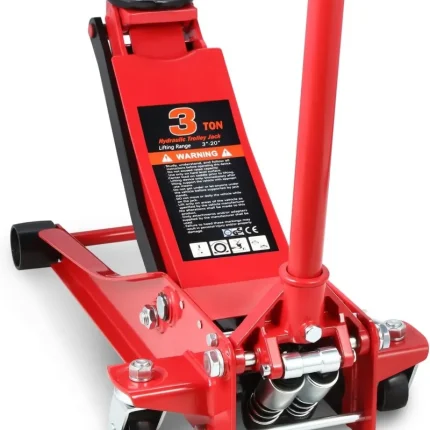
  2. Lifting: Use hydraulic jacks (not the vehicle jacks) to lift the vehicle to the required height. The lifting points of the jacks should also be strictly in accordance with the vehicle manual.
  3. Place the jack bracket: Place the jack bracket under the support point specified in the vehicle manual. Ensure that the bracket base is fully and stably in contact with the ground and that the saddle is securely engaged with the vehicle support point.
  4. Slight descent: Slowly lower the jack until the vehicle’s weight rests entirely on the jack stand. At this point, the jack can remain slightly in contact as a third safety redundancy, but the primary load should be borne by the stand.
  5. Stability test: Gently shake the vehicle with both hands to check if it is stable. If there is any shaking or instability, immediately jack it up again and readjust the support frame position.
  6. Removal: After completing the work, first use a jack to slightly lift the vehicle, remove the support, and then slowly and steadily lower the vehicle.

Remember, the jack is only for lifting, and the support frame is for holding. Each component has its specific function to ensure safety .

Ground conditions, parking brake, and wheel stops: the significance of multiple safety measures

These may sound like common sense, but in my opinion, they are multiple layers of insurance to protect your life.

  • A flat, hard surface: This is the foundation for all safe operations.
  • Parking brake: Pulled up before lifting the vehicle to prevent it from rolling away unexpectedly.
  • Wheel stops: Placed on the front and rear sides of the unlifted wheels to prevent the vehicle from rolling forward or backward.

These measures together constitute security redundancy, with each layer adding to your safety. Don’t skip any step just because it seems “troublesome.”

The Myth of “Short-Time Operations”: Safety Has No Exceptions

“Short-duration work” does not automatically mean lower risk. In practice, I have witnessed far too many incidents caused by a sense of complacency—the belief that “it’ll only take a minute.” Accidents occur in an instant, regardless of how brief the task is.

Whether you are changing oil, swapping a tire, or performing more complex repairs, the moment any part of your body enters the space beneath a vehicle supported by a jack stand, all safety procedures apply in full. There are no exceptions. Time does not reduce risk; improper assumptions do.

A vehicle supported incorrectly—or supported casually—can fail without warning. The presence of a jack stand does not make an operation safe by default; only correct use, placement, and verification do.

Routine maintenance and inspection: extending the life of your tools, and more importantly, protecting your life.

A “safety checklist” before each use: Don’t overlook any suspicious signs.

Metal structures are susceptible to fatigue and aging , making regular inspections crucial. Before each use of the jack stand, please perform the following checks:

  • Cracks, dents, or bends: Inspect the uprights, base, and saddle of the bracket for any deformation, cracks, or severe dents.
  • Rubber pad wear or missing: If the saddle has rubber pads, check them for damage, wear, or detachment.
  • The locking mechanism operates smoothly: Test the locking pin or pawl system to ensure that it can smoothly engage and lock securely without jamming or loosening.
  • Corrosion or rust buildup: Inspect the entire support frame for severe rust, especially at weld joints and moving parts. Severe rust can weaken the metal.

Key points for daily maintenance and inspection of jack stands

  • Inspect all metal parts for visible cracks, dents, bends, or deformations.
  • Confirm that the weld joints are intact and undamaged.
  • Check that the locking mechanism (pawl, pin) can move freely and lock securely.
  • Check if the saddle is intact and if the rubber pads (if any) are worn or missing.
  • Remove all dust, dirt, and grease.
  • Check for severe rust, especially in critical load-bearing areas.

Storage and maintenance: Details determine success or failure, prevention is better than cure.

Storing the jack stand in a dry, clean indoor environment can significantly extend its lifespan. Moisture accelerates metal corrosion and fatigue. Regularly cleaning the stand and applying a small amount of lubricant to moving parts (such as pawls and pins) will keep it in good working order.

FAQ Section

Q1: Can I rely on the emergency jack supplied with my car for repairs?

A: No, absolutely not.

The emergency jack provided with your vehicle is designed solely for temporary tire changes. It lacks stability, has a small footprint, and is not engineered for the prolonged, multi-angle support required for under-car repairs.

Relying on it can lead to fatal slips; always use a dedicated jack stand for safety redundancy.

Q2: How do I choose the right weight capacity (tonnage) for my jack stands?

A: Don’t just look at your car’s total weight. Jack stand ratings are often for “static” loads, but repair work creates “dynamic” forces (like tightening bolts or shifting parts).

A veteran rule of thumb is to choose a stand rating that exceeds the weight of the corner you are lifting, providing a significant safety margin to handle impact loads and center-of-gravity shifts.

Q3: Is it safe to use jack stands on asphalt or a driveway?

A: It depends on the material. Concrete is the only truly safe surface.

  • Asphalt can soften in heat, causing the jack stand base to sink and tilt, which creates a tipping hazard.
  • Never use stands on grass, dirt, or uneven ground.

If you must use them on softer surfaces, you need a substantial, flat base plate to distribute the load, but concrete remains the safest option.

Q4: Which is better: Steel or Aluminum jack stands?

A: Both have pros and cons.

  • Steel is generally cheaper and more resistant to impact loads but is heavier and prone to rust.
  • Aluminum is lighter and corrosion-resistant, making it easier to handle, but is more expensive.

The most critical factor is not the material itself, but the build quality—specifically the weld integrity and fatigue resistance.

Q5: How often should I inspect my jack stands?

A: You should perform a “safety checklist” inspection before every use.

  1. Look for cracks in welds, deformation in the saddle or base, and rust buildup.
  2. If you use ratchet-style stands, ensure the locking pawl engages fully and smoothly.

Metal fatigue is invisible until it fails, so routine visual checks are your lifeline.

The experienced technician’s advice: True safety comes from predictability, not luck.

The value of failure cases: learning to avoid repeating the same mistakes.

Failures are more valuable for learning than successes. I hope everyone can learn from my shared experiences and accident debriefings how to identify risks and avoid repeating mistakes. True safety comes not from luck, but from predictability. By understanding potential dangers and mastering the correct knowledge and operating methods, you can predict and mitigate risks, rather than praying for good luck afterward.

Your “Security Toolbox”: Choose the right ones, not the expensive ones.

On the path of DIY, having the right tools is crucial. But “right” doesn’t mean “most expensive,” but rather the most suitable for your vehicle and usage scenario, while providing sufficient safety.

If you want to minimize the risks of lifting your vehicle and ensure that every undercarriage operation is foolproof, then choosing a jack stand that meets high safety standards and provides sufficient safety redundancy is crucial.

Take a look at our Jack Stands product solutions page , where you’ll find a range of rigorously selected products that meet high security standards.

Users with higher requirements for security redundancy typically focus on product designs and certifications that provide stable support even under extreme conditions. Investing in security is investing in your own and your family’s future.

Remember, you are not alone. If you have any questions about purchasing or using a jack stand, or are unsure whether an operation is safe, please seek professional advice. Safety is paramount, and we should always maintain a sense of awe and respect for safety.

Wishing you a smooth and safe DIY experience every time!

author-avatar

About Gavin Reid

Gavin Reid has been obsessively analyzing garage safety protocols and vehicle support systems for over a decade. After transitioning from a professional service bay to independent safety consulting in 2020, Gavin realized the market was flooded with confusing weight ratings and compromised designs that offered a false sense of security. His Mission: To help DIY mechanics—especially home hobbyists—identify critical failure points in vehicle lifting and ensure every project ends safely. Why Trust Gavin: Engineering Obsessive: He dissects load paths and weld integrity. From metallurgy to geometric stability, he understands the physics that keep two tons of steel from crushing a human chest. Data-Driven Testing: Gavin has stress-tested 40+ models, evaluating lateral stability and locking redundancy rather than just "marketing tonnage." In the Garage: He’s a fixture in local DIY communities, frequently inspecting frame rails for pinch weld placement and documenting metal fatigue on aging gear. Gavin believes that "a lapse in physics is a permanent mistake." He is dedicated to teaching mechanics how to maintain a "zero-trust" relationship with their equipment. Would you like me to provide Gavin’s specific checklist for identifying structural fatigue in used jack stands?