Jack Stands

Summer High Temperatures on Asphalt Driveways: Jack Stands’ Anti-Sinking Guidelines and Safety Strategies

Jack Stands' Anti-Sinking Guidelines and Safety Strategies

The “invisible killer” on the driveway in summer.

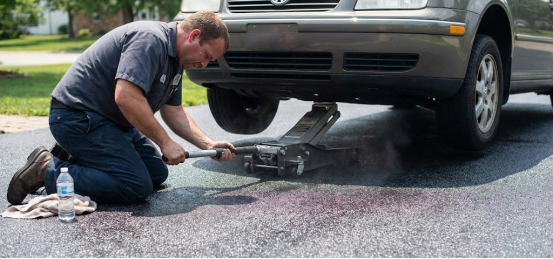
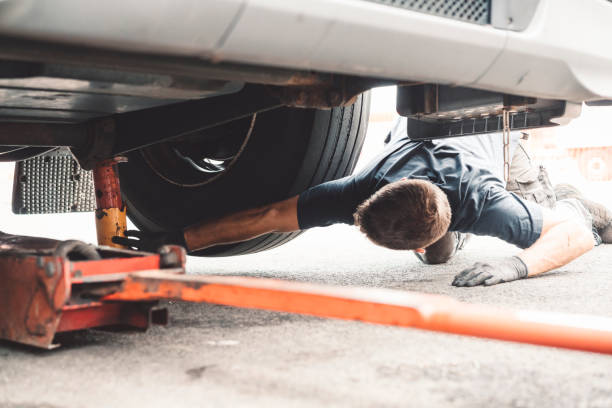
With the summer sun blazing, many car owners choose to perform vehicle maintenance and DIY repairs in their garages or driveways. However, this seemingly ordinary scene hides a significant safety hazard : the asphalt surface softening under high temperatures can become a “hidden killer” for Jack Stands . While you might think the stands are securely supporting the vehicle, the asphalt may be slowly and silently “swallowing” the base of the stands, ultimately causing the vehicle to overturn and leading to catastrophic consequences.

This article will provide an in-depth analysis of the characteristics of high-temperature asphalt from a professional and rigorous perspective, and offer a series of proven anti-sinking strategies and safety procedures to help you reduce the risks of DIY car repair from “luck” to “predictable” safety assurance.


II. Why does high-temperature asphalt “devour” Jack Stands ?

A. Physical properties of asphalt: temperature and viscoelasticity

To understand why Jack Stands got stuck in asphalt, it’s essential to understand the unique physical properties of asphalt. Asphalt is a viscoelastic material , meaning it exhibits properties of both a viscous liquid and an elastic solid. At room temperature, asphalt displays a solid-like hardness; however, as the temperature rises, its viscosity decreases significantly, making it softer and more malleable.

This involves a key phenomenon in materials mechanics— creep . Creep is the phenomenon where a material deforms over time under constant stress. For asphalt, in the high temperatures of summer, solar radiation can cause its surface temperature to far exceed the air temperature, reaching 60°C or even higher. At this time, the molecular chains of asphalt become more mobile, its internal structure becomes looser, and its ability to resist deformation is greatly reduced.

B. Stress analysis of the support structure and the ground: pressure and stress concentration

Jack stands are typically designed with sturdy metal legs that have a relatively small contact area. According to the principles of physics, pressure equals force divided by the area, i.e., P = F/A . When the immense weight of a vehicle is concentrated onto the hot asphalt pavement through the narrow legs of the stand, extremely high localized pressure is generated.

For example, a 2-ton (approximately 4000-pound) support structure would experience enormous pressure per square inch if its four legs had a total contact area of only a few square inches. At room temperature, asphalt can withstand this pressure; however, at high temperatures, the creep properties of asphalt render it unable to effectively resist this pressure. The material structure begins to slowly flow, and the support legs gradually “drill” into the asphalt surface, like a knife cutting through butter, leading to what is known as “sinking.” This stress concentration effect is a direct cause of accidents.

C. Potentially catastrophic consequences: from rollover to personal injury

Once the Jack Stands begin to sink, the vehicle’s center of gravity will shift. Even a slight sinking can cause uneven support points, making the originally stable support system tilt and become unstable. In extreme cases, the sinking of one stand can trigger a chain reaction, causing other stands to become unstable and ultimately leading to the vehicle overturning.

Warning: Many people might think, “I’m only working for a short time, it should be fine.” However, based on my experience in accident debriefings, accidents often happen in an instant, not from prolonged and complex repairs. Asphalt creep is a continuous process; even a few minutes of pressure can cause subsidence. Therefore, “short-term work” does not necessarily mean greater safety. True safety comes from “predictability,” not luck.


Jack Stands on hot asphalt

A. Choosing the right Jack Stands : A wide base is key.

First and foremost, choosing the right tools is fundamental to safety. Remember, load-bearing capacity ≠ actual safety; the stability of a support frame is highly dependent on ground conditions. While your 2-ton support frame may be sufficient to support the weight of a vehicle, on soft surfaces like hot asphalt, the contact area of its base is the key factor determining stability.

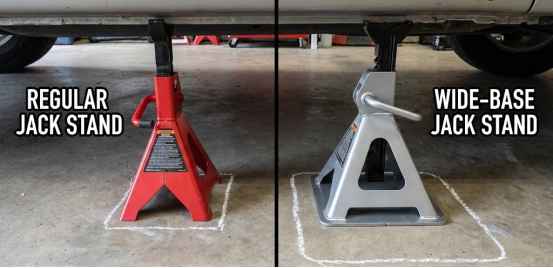
  • Traditional four-legged brackets: Most brackets use a design with four small-area legs, which performs well on hard concrete, but on soft ground, the pressure is concentrated and they are very easy to sink.
  • Wide-base jack stands or tripod jack stands: These designs typically have a larger bottom contact area, distributing vehicle weight more evenly across the ground, significantly reducing localized pressure and minimizing the risk of sinking. These types of products should be prioritized when purchasing new jack stands, especially for users who frequently work on asphalt roads.
Comparing regular and wide-base jack stands safely supporting a vehicle on a concrete floor.

B. Ground reinforcement: A “sinking prevention” solution to distribute pressure.

Even with a wide base support, asphalt can still soften under extreme temperatures. Therefore, the most reliable strategy is to further distribute the pressure using a pad .

  • Key Techniques: Selection and Placement of Thick Plywood
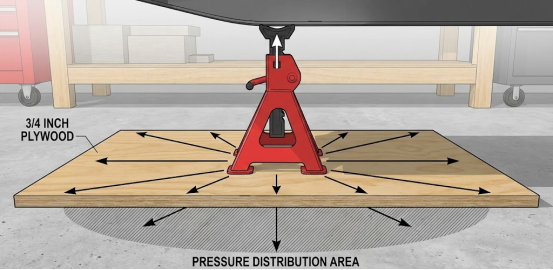
    • Material requirements: Use exterior-grade plywood that is at least 3/4 inch (approximately 19 mm) thick . Particleboard or oriented strand board (OSB) is absolutely not recommended due to its insufficient structural strength and susceptibility to moisture and delamination.
    • Size: Each pad should be large enough to ensure all Jack Stands ‘ feet can rest fully on the pad with sufficient margin at the edges. A size of at least 20×20 cm (approximately 8×8 inches) or even larger is recommended to maximize pressure distribution.
    • Placement principle: Ensure the ground beneath the pad is flat and free of obstructions. If the ground is uneven, consider using multiple layers of pads, staggered in place, to further enhance overall stability and pressure dispersion.
  • Alternative solution:
    • Steel plate: If you have steel plates of suitable thickness (at least 5 mm is recommended) and size, they can also serve as excellent backing plates. Steel plates offer superior strength and heat resistance.
    • Specialized rubber pads: There are also hard rubber pads on the market designed specifically for Jack Stands . They usually have anti-slip and pressure-dispersing functions, but when choosing them, you need to ensure that their load-bearing capacity and size meet the requirements.
Diagram of a jack stand on plywood, demonstrating correct pressure distribution for safety.

C. Strict procedures for vehicle lifting and placement

  1. Site selection and preparation: A flat and rugged working environment is fundamental.
    • Choose the flattest and strongest section of your driveway. Avoid working on sections with obvious cracks, damage, or slopes.
    • Ensure the work area is clean and free of gravel, oil, or other debris that could cause the support to slip or sink.
  2. Correct lifting point: Avoid accidents caused by incorrect placement
    • Always consult the vehicle’s owner’s manual to identify the manufacturer-recommended lift points and support points. These points are typically located on the frame beams, subframe, solid axles, or specialized reinforcement points.
    • Never place a jack or bracket on vulnerable areas such as the oil pan, exhaust pipe, brake cables, fuel lines, plastic parts, or non-load-bearing rocker arm (unless clearly marked and using a dedicated adapter). Incorrect placement is more likely to cause accidents than product quality issues.
  3. Lifting and lowering: Slow and steady, with repeated confirmation.
    • Use a hydraulic floor jack with a rated load capacity greater than half the vehicle’s weight to lift the vehicle. Slowly and smoothly lift the vehicle to slightly above your desired working height and the highest point of the jack stands .
    • Place the pre-prepared pad under the correct support point, then place the Jack Stands on the pad. Ensure that the saddles of the stands are in good and stable contact with the vehicle’s support points.
    • Slowly release the pressure from the hydraulic jacks, allowing the vehicle’s weight to fall completely and smoothly onto the jack stands . Never allow the vehicle to remain solely supported by the hydraulic jacks; the jacks are for lifting, the stands are for supporting.
    • Persona Insertion #2: “Based on my years of experience in garage safety, patience and meticulousness at this step are key to ensuring the safety of subsequent operations. Even a second’s delay in lowering the vehicle could save you a huge amount of trouble.”
  4. Stability test: The last line of defense before getting on the vehicle
    • Before getting under the vehicle, always perform a stability test. Gently shake the vehicle in all directions to ensure it is stable and there are no signs of wobbling, tilting, or the supports sagging. If there is any uncertainty, lift the vehicle back up and check all support points.
  5. Safety Redundancy: An Extra Layer of Protection for Professionals
    • The core of professional operation is safety redundancy . Even with the jacks firmly supporting the vehicle, do not completely remove the hydraulic jacks. Lower them slightly so they no longer bear the full weight, but still serve as an additional support barrier just in case.
    • Be sure to use wheel locks to prevent any wheels that are not being lifted (usually the rear wheels, or if the front is lifted) from sliding. This ensures the vehicle cannot move forward or backward, providing an extra layer of safety.
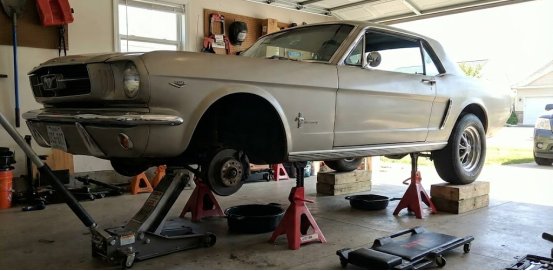
Classic Mustang lifted in a garage, safely supported by multiple jack stands and wood blocks.

IV. Common Misconceptions and Warnings

A. “The asphalt is a little soft, but it’s fine for a short time.”

This “wishful thinking” is one of the biggest safety traps. Asphalt creep is a continuous process; it won’t stop just because you work for a “short time.” At high temperatures, even a few minutes of pressure is enough to leave marks on the asphalt and even cause the supports to begin sinking. Failures are more valuable than successes. Many accidents occur not because of prolonged heavy loads, but because these crucial details are overlooked during “brief, seemingly harmless” operations. Once the supports begin to sink, even slowly, it can reach a critical point without you noticing, causing the vehicle to suddenly become unstable.

B. “Just find any brick to place under it.”

This is an extremely dangerous and common misconception. Ordinary bricks, concrete blocks, and even thin wooden planks can crumble or crack due to stress concentration when subjected to the sharp metal legs of Jack Stands and the immense weight of a vehicle. These materials were not designed for load-bearing; their internal structure is uneven and brittle. Once the pad breaks, the support structure will instantly lose its support, causing the vehicle to overturn and resulting in irreparable damage. Always use sturdy, thick, and specialized pads that effectively distribute pressure.


DIY safety starts from your feet.

Performing vehicle maintenance on a hot asphalt driveway in the summer heat is not impossible, but it should never be taken lightly . As a garage safety consultant, I know the fun of DIY, but DIY is fine; losing control is the problem. True safety does not come from blind confidence or the worship of parameters, but from a deep understanding of risk, strict control of details, and adherence to safety redundancy.

From choosing a wide base bracket to using thick plywood to distribute pressure, and strictly following the lifting procedure, every step is crucial. By incorporating these seemingly minor measures into your operating habits, you can significantly reduce the risk of accidents and ensure the safety of you and your vehicle.

If you want to minimize the risks of vehicle lifting and provide the most stable and reliable support for your car, it would be wise to learn more about Jack Stands and ground reinforcement solutions. After all, the fun of DIY shouldn’t come at the expense of safety.


FAQ (Frequently Asked Questions)

What is the most dangerous situation when using Jack Stands on an asphalt road?

The most dangerous situation occurs during the high temperatures of summer, when narrow-base Jack Stands are placed directly on softened asphalt without any padding to distribute pressure.

In this scenario, the sharp legs concentrate the vehicle’s weight on a tiny surface area, causing the asphalt to “creep” (deform). This leads to the stand sinking rapidly, unbalancing the vehicle’s center of gravity, and potentially causing the vehicle to overturn or fall.

Besides plywood, what other materials can be used to line Jack Stands to prevent sinking?

In addition to 3/4-inch thick high-quality multi-layer hardwood plywood, you can use:

  • Thick Steel Plates: At least 5mm thick and large enough to fully encompass the stand’s base.
  • Specialized Rigid Rubber Pads: Industrial-grade pads specifically designed for Jack Stands. Ensure they have high-density, anti-slip properties, and a verified load-bearing capacity.

⚠️ NEVER use ordinary bricks, concrete blocks, thin wooden boards, or any uneven/fragile materials, as they can shatter under load.

How can I determine if my Jack Stands are no longer suitable for use and need replacement?

Replace your Jack Stands immediately if you notice any of the following:

  • Small Base Area: Older four-legged designs that cannot effectively distribute pressure on soft surfaces.
  • Structural Damage: Cracks in welds, bending or twisting of the support body, or severe wear on adjustment holes.
  • Locking Mechanism Failure: The ratchet or pin does not lock reliably, posing a risk of slippage.
  • Severe Corrosion: Rust that has penetrated the metal and compromised its structural integrity.

Pro Tip: Choose stands with a wide flat base and a double-locking mechanism for maximum safety.

author-avatar

About Gavin Reid

Gavin Reid has been obsessively analyzing garage safety protocols and vehicle support systems for over a decade. After transitioning from a professional service bay to independent safety consulting in 2020, Gavin realized the market was flooded with confusing weight ratings and compromised designs that offered a false sense of security. His Mission: To help DIY mechanics—especially home hobbyists—identify critical failure points in vehicle lifting and ensure every project ends safely. Why Trust Gavin: Engineering Obsessive: He dissects load paths and weld integrity. From metallurgy to geometric stability, he understands the physics that keep two tons of steel from crushing a human chest. Data-Driven Testing: Gavin has stress-tested 40+ models, evaluating lateral stability and locking redundancy rather than just "marketing tonnage." In the Garage: He’s a fixture in local DIY communities, frequently inspecting frame rails for pinch weld placement and documenting metal fatigue on aging gear. Gavin believes that "a lapse in physics is a permanent mistake." He is dedicated to teaching mechanics how to maintain a "zero-trust" relationship with their equipment. Would you like me to provide Gavin’s specific checklist for identifying structural fatigue in used jack stands?