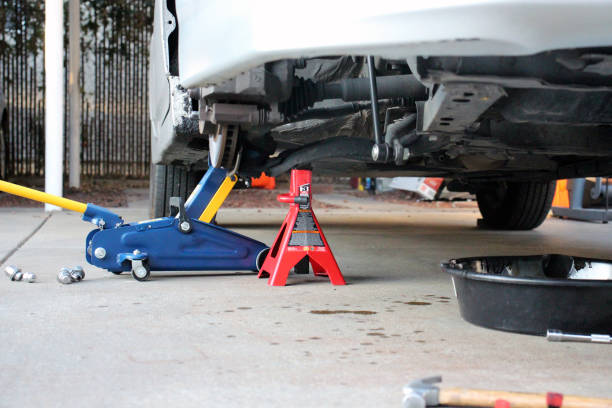
Jack Stands

Safe lifting strategies for low-profile modified cars using jacks and support brackets

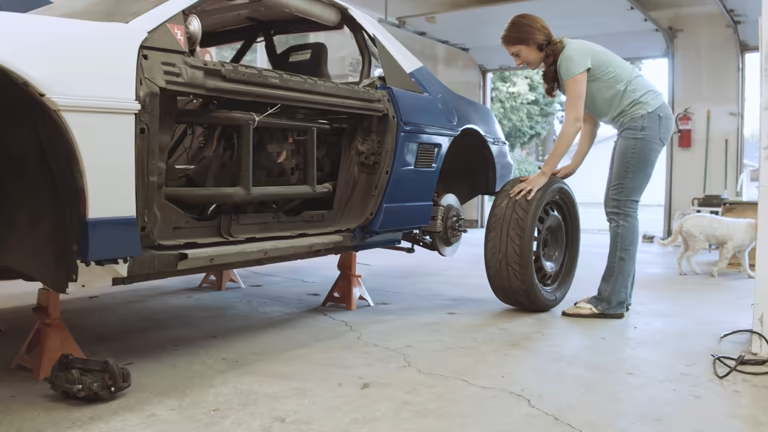
Woman replacing car tire. Car lifted securely using orange Jack Stands.

Sometimes, seemingly minor misalignment can lead to serious accidents.

These accidents often don’t happen in professional repair shops, but rather in the garages of DIY enthusiasts. Especially for vehicles with modified chassis and extremely low ground clearance, simply trying to lift the car with jack stands becomes a real challenge.

I. The “Lift Dilemma” of Lowrider Modified Vehicles—Safety Starts from the Ground

A. Why is it a challenge to even lift a modified car with a low chassis?

If you own a car that’s been modified for a lowrider look, you’ll know all too well how difficult it is to fit a regular jack in. Even if you manage to get it in, insufficient travel or unstable contact can be dangerous.

This isn’t just a matter of tool size; it’s a severe test of the vehicle’s structure, mechanical principles, and operating procedures.

B. More Than Just “Being Able to Lift”: A Professional Perspective on the Philosophy of Safe Lifting

When facing the challenge of lifting a lowrider modified car, we need not luck, but a rigorous and reliable solution.

“This solution is not a mere collection of tools, but a well-thought-out ‘combination punch’ strategy—from initial elevation to precise lifting, and then to stable support, each step is interconnected.”

I will share my professional knowledge and practical experience to help you understand how to build a foolproof lifting solution for your lowrider vehicle.

C. How to build a foolproof lift solution for your lowrider car

In this article, we’ll delve into the engineering challenges of lowrider lifts, providing you with a proven “combination punch” solution, including how to select and use low ramps, ultra-low ramp jacks, and dedicated support brackets. I’ll also emphasize often-overlooked but crucial safety details to help you mitigate potential risks and ensure every under-vehicle operation is safe and efficient.


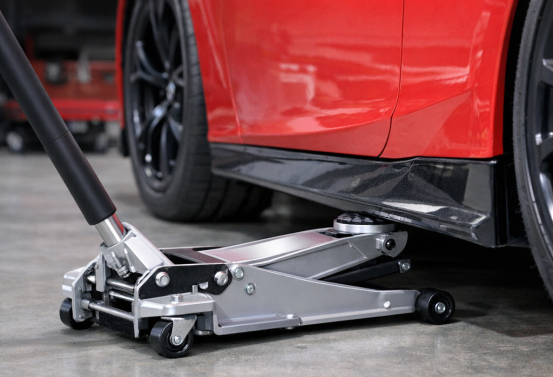
A silver hydraulic floor jack lifts a red car. Always use Jack Stands for safety.

II. Structural and Mechanical Challenges of Lifting Low-rider Vehicles

A. Ground clearance: The most direct obstacle, where to begin?

Lowering the chassis is a common stance for modified cars, but this also brings the primary challenge when lifting the vehicle: insufficient ground clearance.

1. The “uselessness” of traditional jacks and supports

Standard hydraulic jacks and support brackets typically have a minimum height of 10-15 centimeters. However, the lowest point of the side skirts or chassis of many lowrider modified vehicles may only be 5-8 centimeters or even lower. This makes it impossible for traditional tools to reach the designated lifting point of the vehicle. Forcing the use of incompatible tools is not only inefficient but may also scratch the chassis or even damage the vehicle structure.

2. The impact of ultra-low profile modification on chassis stress points

To achieve the ultimate low-slung stance, modified cars often undergo significant adjustments to the suspension system, sometimes even including replacing body kits and side skirts. This can make the factory-set lift points difficult to reach, or in some cases, make the body structure more vulnerable at non-designated points. If the lift point is chosen improperly, such as pressing against the oil pan, exhaust pipe, or plastic parts, it can cause minor damage to components or even lead to vehicle instability and a fall.

B. Center of Gravity and Stability: The Physics Behind High-Risk Operations

Lifting a vehicle is not as simple as just “raising” it; it involves complex center of gravity transfer and stability control.

  • 1. Risk of weight shift and rollover during lifting.When a vehicle is lifted, its center of gravity also rises. The higher the center of gravity, the less stable the vehicle. If the lifting is uneven or the ground is uneven, the vehicle may tilt or even overturn during the lifting process. Especially when lifting one side or a corner of the vehicle, the wheels not being lifted must have sufficient friction to prevent slippage; otherwise, the entire lifting operation will become extremely dangerous.
  • 2. The Importance of Support Contact Area and Ground PressureThe contact area at the bottom of the support bracket directly affects its pressure on the ground. A smaller contact area results in greater pressure, making the bracket more prone to sinking into soft surfaces (such as hot asphalt), potentially causing it to tilt or even fail.I’ve seen too many drivers operate the bracket in their own driveways, only to have it get stuck in the asphalt, leaving their vehicles teetering on the edge.Therefore, choosing a bracket with a wide base and using weight-bearing pads to distribute pressure when necessary is crucial for ensuring stability.

III. Safety Lifting Solution for Low-Parking Vehicles

Now that we understand the challenges, the next step is to build solutions. For lowrider modified vehicles, I recommend a “combination punch” approach that effectively addresses ground clearance issues while maximizing operational safety.

STRATEGY AFirst trick: Clever use of “raising the way”

The strategic application of low-lying ramps or wooden blocks. This is the number one secret to solving the problem of “the jack not fitting in”.

1. Why is initial elevation necessary?

For many vehicles in extremely low positions, even ultra-low position jacks cannot be directly inserted into the designated lifting point. In this case, we need an initial, small elevation to create sufficient clearance. This is like building a “bridge” for the jack.

2. Recommended Solution: Low Profile Ramps vs. Custom Wood Blocks

MethodDetails & Benefits
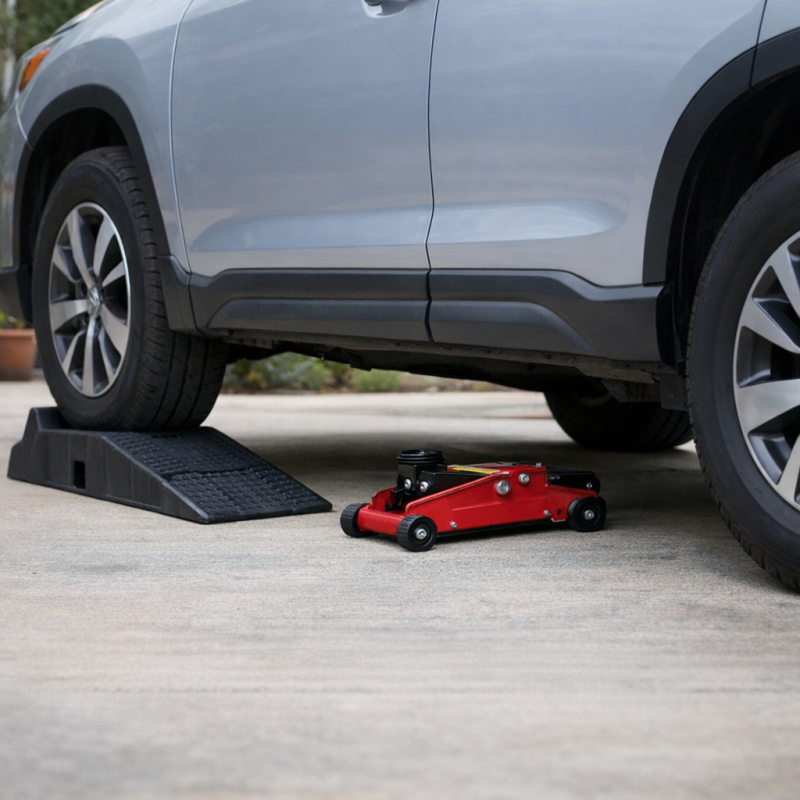
Low Profile RampsMost recommendedDesigned specifically for low-chassis vehicles, they feature a gentle slope and a low starting height.Simply drive the vehicle slowly up the ramp to gain a few extra centimeters of ground clearance, enough for an ultra-low profile jack to easily access the vehicle.Choose low profile ramps made of plastic or composite materials, as they are generally lighter and more suitable for garage floors.[Image suggestion: Side view of a vehicle slowly driving up a low ramp, exposing enough clearance to place a jack. Alt Text: Illustration of a low-slung vehicle driving up a low ramp to increase chassis clearance]
Custom Wood BlocksBudget alternativeIf you don’t have a low ramp, sturdy wood blocks (such as stacked 2×4 or 2×6 strips secured with screws) can serve a similar purpose.Place the blocks in front of your wheels and slowly drive onto them to gain initial elevation.Warning: Make sure the blocks are secure, level, and won’t slide as you drive over them.I’ve seen people use unstable wood blocks, resulting in their vehicles slipping as soon as they got on, which is extremely dangerous.
Silver SUV on a car ramp with a floor jack nearby. Always use Jack Stands for safety.

STRATEGY BSecond Strategy: Precise Application of Force

Selecting and Using a Low Profile Floor Jack. Only after the initial clearance is achieved can the ultra-low position jack realize its true value.

1. The core advantage of ultra-low position jacks

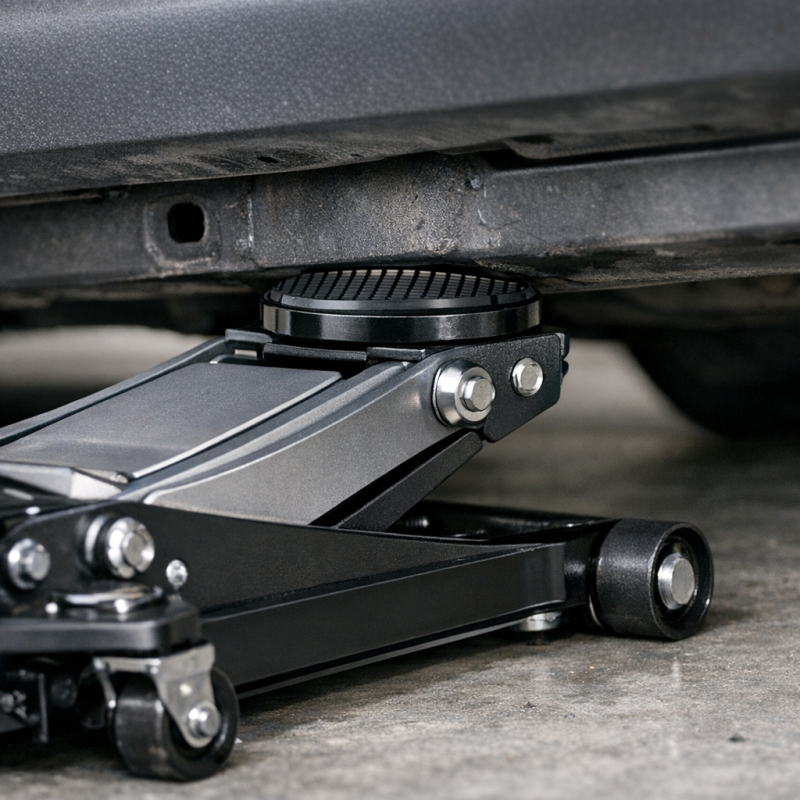
A balance between insertion depth and lifting height. These types of jacks are characterized by their extremely low starting height (usually less than 7-8 centimeters) and long lifting arms, allowing them to reach deep into the vehicle’s chassis and access more inward lifting points. They also typically have sufficient lifting height to meet most repair needs.

2. Lifting point selection: Avoid vulnerable areas and locate the designated load-bearing structure.

  • Consult your vehicle manual: Always prioritize referring to your vehicle’s owner’s manual to understand the officially designated lift points. These points are typically located on the frame longitudinal beams, subframe, or pinch welds with reinforcing ribs.
  • Areas to avoid: Never place the jack or bracket on the oil pan, transmission housing, exhaust pipe, suspension components (unless it is a robust control arm, but caution is still advised), brake lines, fuel lines, or any plastic coverings. These areas cannot support the vehicle’s weight and are highly susceptible to damage or instability.
Close-up of a black hydraulic floor jack lifting a car chassis. Remember to use Jack Stands.

STRATEGY CThe third strategy: Rock-solid stability

Dedicated low-profile jack stands and auxiliary tools. Jacks are for lifting, while support frames are for bearing weight.

I’ll emphasize again: never rely solely on hydraulic jacks to support a vehicle for undercarriage work.

1. Types and selection of support brackets

  • Load Capacity: Choose a bracket with a load-bearing capacity far exceeding the vehicle’s weight. For example, for a 2-ton (approximately 4,000 lb) sedan, even lifting only one end (approximately 2,000 lbs), a bracket with a rated load of at least 3 tons (6,000 lbs) or higher is recommended. Note that the “tonnage” of a bracket usually refers to the rated load of a “pair” or “single,” so be sure to read the specifications carefully. For heavy vehicles such as the F-150, a 6-ton bracket is the minimum recommendation due to its higher center of gravity and the need for greater stability.
  • Wide base: A wide base provides better stability and distributes pressure on the ground, preventing the bracket from sinking into the ground.
  • Dual locking mechanism: In addition to ratchet locking, brackets with extra safety pins (such as Harbor Freight’s Daytona series) provide double protection, effectively preventing accidental slippage. This also serves as a reminder that Harbor Freight recalled 3-ton and 6-ton brackets under the Pittsburgh Automotive brand in 2020 due to product defects. Therefore, it is essential to check the product’s quality and recall history before purchasing and using it.

2. Advantages of Wheel Cribs or Innovative Braces

  • Wheel Cribs: These cradle-shaped brackets, made of high-density foam or sturdy wood, securely support vehicle tires. They offer a larger contact area than traditional brackets, providing excellent stability and making them particularly suitable for long-term parking or situations requiring “loaded” inspections of the suspension system.
  • Innovative brackets (such as MyLiftStand): Some innovative designs allow vehicles to be supported on the tires without removing the wheels, facilitating certain maintenance tasks such as inspecting the suspension system under stress.

3. Placement Techniques

Ensure balanced force distribution at the four support points and adhere to the “redundant support” concept.

  • Flat ground: Always operate on a hard, flat surface.
  • Coaxial lifting: If it is necessary to lift the front or rear of the vehicle, two supports should be used simultaneously on the same axis to ensure that the height is consistent and the force on the vehicle is balanced.
  • “Shaking test”: After slowly lowering the vehicle onto the support, gently shake the vehicle by hand to confirm that it is stable and there is no shaking or abnormal noise before it can be placed under the vehicle.
  • “Redundant support”: When conditions permit, I personally recommend that after the vehicle is fully on the support, the hydraulic jack be slightly raised, but not fully loaded, as an additional safety backup. This “double insurance” concept can minimize the risk of accidents.

IV. Safety First: Key Details That Cannot Be Ignored When Lifting a Low-Profile Vehicle

A. Working environment

A flat, hard surface is the foundation of safety.

Regardless of the tools you use, this is non-negotiable. Grass, gravel roads, slopes, or overheated asphalt surfaces are all highly likely to cause jacks or supports to slip or sink. Concrete is the best choice. If you must work on asphalt, use large, thick planks or steel plates to cushion the supports and distribute the pressure.

B. Parking brake and wheel locks

The last line of defense against rolling.

Before lifting, be sure to engage the handbrake and secure the wheels that are not being lifted with high-quality wheel locks. This effectively prevents the vehicle from rolling accidentally during lifting. This is the last line of defense against vehicle slippage, and I have seen far too many cases where vehicles have slipped because this step was overlooked.

C. “Shaking Test” and Gradual Lowering

Important Steps to Confirm Stability.

After the vehicle is fully on the support stand, do not rush to crawl under it. Gently shake the vehicle with both hands to ensure there is no wobbling or instability. When lowering the vehicle completely back to the ground, do so slowly and in stages. First, use the jack to slightly lift the vehicle, then remove the support stand, and then slowly lower it down.

VI. DIY is fine, losing control is the problem—I’ll protect your garage safety.

As a seasoned technician with years of experience in garage safety, I know that every undercarriage operation carries the owner’s expectations for their vehicle, but also comes with potential risks.

Lifting a lowrider is indeed a unique challenge, but it’s not insurmountable. By adopting the “combination punch” strategy presented in this article, choosing the right tools, and strictly adhering to every safety procedure, you can minimize the risks.

“Remember, tools are inanimate, but people are dynamic. Respect for tools and vigilance regarding safety are the most important ‘tools’ in your garage.”

If you want to minimize this risk, be sure to invest time and effort in learning the correct operating methods and choose reliable safety equipment. Users with higher safety redundancy requirements usually focus on support brackets and lifting devices that have undergone rigorous testing, have dual locking mechanisms, and even have professional certifications.


Frequently Asked Questions

Will a 2-ton jack and a 3-ton support bracket be enough for my vehicle?
It depends on your vehicle’s curb weight. Generally, a 2-ton jack can lift one end of a vehicle weighing up to 4,000 lbs (~1.8 tons). However, for a proper safety margin, I recommend that the jack’s capacity be at least 1.5 times the weight of the section being lifted.

For support brackets (jack stands), a 3-ton rating (usually for a pair) is sufficient for most sedans and mid-size SUVs. For heavier vehicles with a higher center of gravity, such as large trucks, I strongly recommend using 6-ton rated brackets for better stability.
⚠️ IMPORTANT: Never work at maximum load; always leave yourself a safety margin.
Besides jacks and lifts, are there other safer lifting methods?
Absolutely. While professional two-post lifts offer maximum safety and space, they are expensive and require fixed installation.

For home garages, portable lifting systems (like QuickJack) are a great compromise, offering lift-like convenience with better safety. Additionally, wheel cribs and innovative support systems (such as Rennstand or MyLiftStand) provide superior stability when the vehicle needs to be supported for long periods, especially if the wheels do not need to be removed.
What problems might arise from parking my car on a rack long-term?
If the rack is on flat, hard ground and the vehicle is stable, it can technically be supported for months or years. However, you must manage long-term storage issues:
  • Suspension: Prolonged decompression or compression can affect shock absorber seals.
  • Fluids & Battery: Use fuel stabilizers and a battery tender/charger to prevent degradation.
  • Tires: While being suspended prevents “flat spotting,” rubber still ages and cracks over time.
Ensure the rack is free of rust and that the environment is secure from children or pets.
author-avatar

About Gavin Reid

Gavin Reid has been obsessively analyzing garage safety protocols and vehicle support systems for over a decade. After transitioning from a professional service bay to independent safety consulting in 2020, Gavin realized the market was flooded with confusing weight ratings and compromised designs that offered a false sense of security. His Mission: To help DIY mechanics—especially home hobbyists—identify critical failure points in vehicle lifting and ensure every project ends safely. Why Trust Gavin: Engineering Obsessive: He dissects load paths and weld integrity. From metallurgy to geometric stability, he understands the physics that keep two tons of steel from crushing a human chest. Data-Driven Testing: Gavin has stress-tested 40+ models, evaluating lateral stability and locking redundancy rather than just "marketing tonnage." In the Garage: He’s a fixture in local DIY communities, frequently inspecting frame rails for pinch weld placement and documenting metal fatigue on aging gear. Gavin believes that "a lapse in physics is a permanent mistake." He is dedicated to teaching mechanics how to maintain a "zero-trust" relationship with their equipment. Would you like me to provide Gavin’s specific checklist for identifying structural fatigue in used jack stands?