Jack Stands

What happens if the vehicle’s weight approaches the Jack Stands’ rated limits?

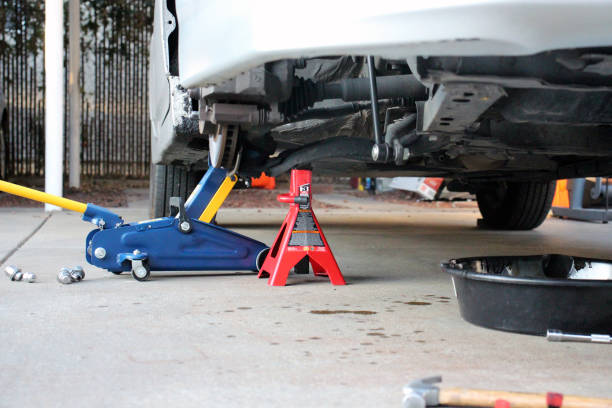
Car lifted with a jack, secured by a red jack stand for maintenance.

Dear DIY enthusiasts, don’t assume that everything is fine just because your vehicle’s weight is “close” to the jack stands’ rated range. This “close” mentality is precisely the breeding ground for many accidents.

When a vehicle’s weight approaches the jack stands’ rated limit, it’s not just a matter of numbers, but the edge of physical limits, and the risks are far greater than you imagine.


The Peril of “Close Enough”: Why Approaching Jack Stand Limits is Dangerous

What hidden risks lie behind the rated capacity?

Many people believe that as long as a part of a vehicle does not exceed the tonnage indicated on the jack stands, it is safe. For example, a 4,000-pound (about 1.8-ton) car seems “just right” with a pair of 2-ton jack stands.

But I want to tell you that this “just right” mentality is dangerous. Rated capacity is not an absolute “safety line,” and once it is exceeded, the risk factor increases exponentially.

Why is “approaching the limit” more deceptive than “overload”? Because overload is an obvious mistake, while approaching the limit gives the illusion of being “still within the safe zone.”

In reality, it pushes the equipment to the edge of its design margins, and may even exceed the limits of material fatigue and stability. This is not a simple numbers game, but a severe test of engineering principles and physical limits.


Deconstructing Rated Capacity: The True Meaning of the Numbers

To understand the rated capacity of jack stands, we must first correct a common misconception.

Misconceptions about rated capacity: Is it “maximum safe load-bearing capacity” or “failure threshold”?

The numbers you see for jack stands, such as “3 tons” or “6 tons,” usually refers to the total load-bearing capacity of a pair of jack stands, not a single stand. This means that if you use a pair of 3-ton jack stands, each stand has an actual rated load capacity of 1.5 tons.

This number does not refer to “absolute safe load capacity,” nor is it a “failure threshold.” It is a design reference value derived by the manufacturer under ideal conditions based on tests conducted according to a range of standards, such as ASME PALD.

More importantly, this rating primarily addresses static vertical load-bearing capacity. However, in actual repairs, vehicles encounter various dynamic impacts: you might need to forcefully unscrew rusty bolts, the vehicle might sway slightly on jack stands, or the vehicle’s center of gravity might shift when disassembling heavy components like the engine or transmission, generating unexpected lateral forces. These dynamic factors cannot be fully encompassed by static ratings.

Engineering Perspective: The Importance of the Safety Factor

Any responsible engineering design incorporates a “safety factor.” Simply put, the safety factor is the ratio of the ultimate load a material or structure can actually withstand to its design working load.

For example, if a component’s design working load is 1000 pounds, and its actual breaking strength is 3000 pounds, then the safety factor is 3. This means that it can withstand the design load while having 200% redundancy to cope with unforeseen circumstances.

Jack stands are designed with a safety factor in mind. Manufacturers ensure that jack stands reach their rated capacity before the material undergoes plastic deformation (permanent deformation) or fracture (failure). This distance is the “buffer zone” provided by the safety factor.

However, when the vehicle weight approaches the rated limits of the jack stands, this valuable buffer zone begins to erode, gradually shifting from elastic deformation (recoverable) to plastic deformation (unrecoverable), potentially leading to structural fatigue and sudden failure.

Why reserve sufficient redundancy? Because the real world is not a laboratory. Material defects, manufacturing tolerances, wear and tear, ambient temperature, operational errors, and sudden impact loads can all cause the actual safe load-bearing capacity to fall below the theoretical value. Sufficient redundancy is the last line of defense against these uncertainties.


The Silent Strain: What Happens Inside Jack Stands Near Their Limit

Material stress and fatigue accumulation

You may not be able to see it, but when the jack stands are nearing their limit, their internal structure begins to experience tremendous stress.

Jack stands are mostly made of steel. Under heavy pressure, stress concentration occurs in the internal crystal structure of steel. If they operate under near-limit loads for a long time or repeatedly, fatigue will accumulate in the material even if it does not fail immediately. Imagine a wire that you bend repeatedly; even if it doesn’t break each time, it will eventually break suddenly at some point. The same applies to jack stands.

Critical areas such as welds, pin holes, and racks are particularly vulnerable. Welds, where two metal parts connect, are prone to cracking if the welding quality is poor or the stress is excessive. The pin holes and racks of the ratchet mechanism wear down under repeated lifting and heavy pressure, leading to increased clearances and even deformation of the locking mechanism, significantly reducing its reliability.

Decreased stability: Challenges of center of gravity and contact surface

Under high loads, the stability of jack stands drops dramatically. Even minor factors can be amplified into potential hazards.

  • Even slight misalignment of the jack stands: When a vehicle is lifted to a certain height, its center of gravity rises. At this point, any slight misalignment or angle deviation of the jack stands’ support points will, under the leverage effect, generate a huge overturning force on the entire structure.
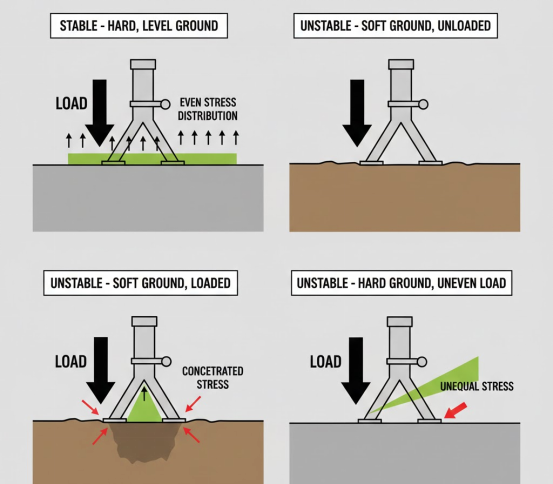
  • Uneven ground and vehicle movement: If the ground is not perfectly flat and hard, such as having gravel or asphalt that softens under high temperatures, the base of the jack stands may sink or slide. Pushing, pulling, knocking, or even a gust of wind while working on a vehicle can cause the vehicle to shake on the jack stands, triggering a chain reaction and ultimately leading to detachment.
Infographic demonstrating safe and unsafe ground for using jack stands.


Beyond the Threshold: Common Failure Modes in Jack Stands

Structural buckling and sudden collapse

One of the most common and dangerous forms of failure is structural buckling. When a slender columnar structure (such as the central support column of a jack stand) is subjected to vertical stress, once the stress exceeds a certain critical point, it will not be flattened, but will suddenly bend and deform, losing its load-bearing capacity, causing the vehicle to collapse instantly. This is more unpredictable and more destructive than material fracture.

Furthermore, under extreme loads, the base of jack stands can also deform, especially those bases made from thin sheet steel. Once the base deforms, its support area shrinks, concentrating the pressure on a smaller point and further accelerating failure.

Failure of the ratchet/pin mechanism

Some jack stands use a ratchet design, supported by a metal claw engaging a rack. Others use a pin that passes through a hole in the support post. Regardless of the type, they can fail due to wear, manufacturing defects, or sudden impact.

Too many problems arise from this detail. For example, in the early years, a well-known brand in the industry had a large-scale recall due to a defect in the ratchet mechanism (I won’t name names here, but I believe some veteran technicians are aware of this). This defect could cause the ratchet pawl to suddenly disengage from the rack under heavy pressure, or the pin to bend or even shear off under impact, causing the vehicle to fall without warning.

Lateral forces and unexpected slippage

Vehicles on jack stands do not only bear vertical loads. During maintenance, you may:

  • Tightening or loosening bolts: This creates torque, causing the vehicle to wobble slightly.
  • Disassembling heavy components, such as the engine, transmission, and suspension, can instantly change the vehicle’s center of gravity distribution and generate lateral forces.
  • Pushing or pulling under the vehicle body: attempting to adjust the position of components can also bring irregular forces to the jack stands.

These lateral forces far exceed the design limits of jack stands. Their structure is primarily optimized for vertical load-bearing, offering very limited resistance to lateral forces. If the lateral forces become too great, the jack stands may slide off their support points or be pushed over, causing the vehicle to fall.


Assessing the Risk: Is Your Car “Near Its Limits”?

Understand your vehicle’s true weight and weight distribution

First, you need to know your vehicle’s curb weight. This can usually be found in your owner’s manual or on the vehicle’s nameplate. But remember, curb weight is the vehicle’s total weight when unloaded. When you’re doing DIY repairs, you’ll usually only lift a part of the vehicle (front, rear, or one side).

For example, the front axle load of a front-wheel-drive car is usually greater than the rear axle load. Therefore, you need to estimate the actual weight of the part you’re lifting. A rule of thumb is that when lifting one end, you should support approximately half to two-thirds of the vehicle’s total weight.

However, this is only a rough estimate. If your vehicle is also carrying tools, a spare tire, or you are unloading heavy objects, the actual instantaneous load may be much higher than you expect.

Check your Jack Stands status

Wear, rust, and deformation are all invisible safety hazards. Always carefully inspect your jack stands before each use.

  • Is there any obvious corrosion? Especially on the base, support posts, and ratchet mechanism. Corrosion weakens the metal.
  • Is there any deformation? Even a slight bend or twist could indicate that the structure has been damaged.
  • Is the base stable? When placed on a flat surface, do all four support points make stable contact with the ground without wobbling?
  • Is the locking mechanism reliable? Are the ratchet teeth worn? Is the pin straight and can be inserted smoothly?

If any abnormalities are found, stop using the tool immediately and replace it.

In my garage security experience, any doubt about the integrity of a tool should be treated with the highest level of vigilance.


Proactive Safety: Avoiding Risks with Jack Stands

Always choose “large enough” rather than “just right” capacity.

This is one of the most important pieces of advice I can give. Always leave at least a 50% safety margin. If you estimate one end of your vehicle’s lift to weigh 1 ton, then you should choose jack stands with a capacity of at least 3 tons (1.5 tons per stand) or even 6 tons (3 tons per stand).

Why? Because 6-ton jack stands typically have a larger and wider base compared to 3-ton jack stands, which means better stability and lower pressure per unit area. They also usually use thicker steel and stronger welds. This “oversized” choice provides multiple layers of protection for your safety, giving you greater room for error in the event of an accident.

Ensure the support point is in good condition with the ground.

This is the foundation of security, but it is often overlooked.

  • A hard, flat, non-slip surface: Concrete is the best choice. Avoid using it on grass, mud, gravel, or sloping surfaces. In hot weather, asphalt surfaces can soften and may cause jack stands to sink. In this case, you can place large, sturdy planks under the jack stands to increase the contact area and distribute the pressure.
  • Protect the pinch welds with jack pads or a wooden block: Many modern cars have pinch welds as their lift points. Supporting them directly with jack stands can damage them. Using dedicated jack pads or a hardwood block (such as a 2×4 block) placed between the top of the jack stands and the pinch welds can protect the car body and provide a more stable contact surface.
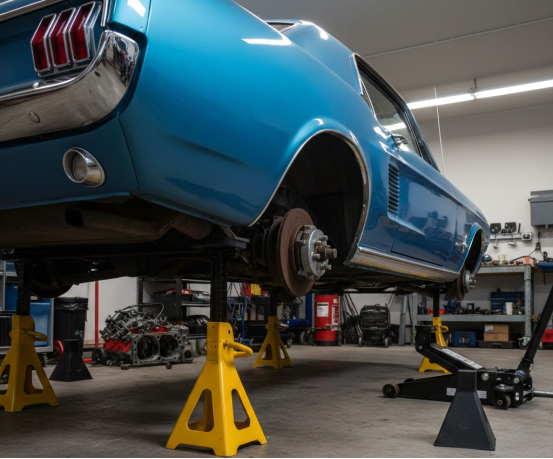
Classic blue car safely lifted on multiple yellow jack stands in a garage.

Double insurance: Jack and Jack Stands used together

This is an advanced safety practice that I highly recommend. After fully lowering the vehicle onto the jack stands, do not completely remove the floor jack. Slightly raise the floor jack so that its top makes only slight contact with the vehicle’s lifting point, but does not bear the main weight. This way, if the jack stands collapse, the floor jack can provide additional support for a short period, buying you valuable reaction time.

At the same time, wheel chocks are essential. No matter which part of the vehicle you lift, place wheel chocks in front of and behind the undisturbed wheels to prevent the vehicle from rolling.

Cultivate the habit of “safety first” in operation

  • Check the equipment before each use: This may sound like a cliché, but it’s the easiest thing to overlook.
  • Slowly lower the vehicle: When lowering the vehicle from the floor jack to the jack stands, the movement should be slow and smooth, allowing the vehicle to “sit firmly” on the saddle of the jack stands to avoid impact.
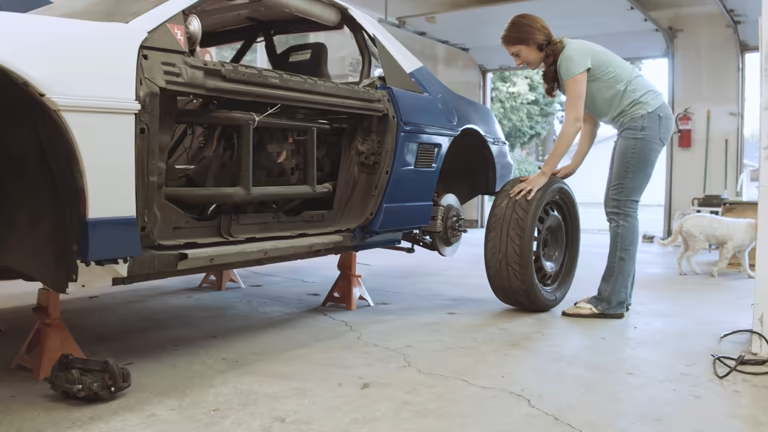
  • Slightly shake the vehicle to test stability: Before going under the vehicle to work, gently shake the vehicle with both hands to ensure it remains stationary on the jack stands. If you feel any instability, readjust immediately.

Say “No” to Safety Hazards

DIY repairs themselves aren’t the problem; the problem lies in loss of control. Investing in a high-capacity, reliable jack stands and cultivating proper operating habits is the greatest responsibility you can take to yourself and your family.

Remember, one moment of negligence can have irreparable consequences. Every time you work under a car, treat it as if it were your first time, with utmost caution. Hopefully, these experiences and suggestions will help you enjoy the fun of DIY while always prioritizing safety.


Frequently Asked Questions

Q1: Is the rated capacity of the jack stands for a single unit or the total capacity?
A1: The rated capacity of jack stands usually refers to the total load-bearing capacity of a pair. For example, a pair of 3-ton jack stands means that each stand has a load-bearing capacity of 1.5 tons.
Q2: What are the most common dangers when a vehicle’s weight approaches its jack stands limit?
A2: When the vehicle weight approaches the jack stands limit, the most common dangers are structural buckling, sudden collapse due to material fatigue accumulation, and unexpected sliding or overturning caused by a significant decrease in stability.
Q3: Besides choosing high-capacity jack stands, what other methods can improve security?
A3: In addition to choosing high-capacity jack stands, you should also ensure that they are used on a hard, flat surface, in conjunction with wheel chocks, use jack pads to protect the vehicle body, and after the jack stands are in place, keep the floor jack in slight contact as an extra safety feature.
author-avatar

About Gavin Reid

Gavin Reid has been obsessively analyzing garage safety protocols and vehicle support systems for over a decade. After transitioning from a professional service bay to independent safety consulting in 2020, Gavin realized the market was flooded with confusing weight ratings and compromised designs that offered a false sense of security. His Mission: To help DIY mechanics—especially home hobbyists—identify critical failure points in vehicle lifting and ensure every project ends safely. Why Trust Gavin: Engineering Obsessive: He dissects load paths and weld integrity. From metallurgy to geometric stability, he understands the physics that keep two tons of steel from crushing a human chest. Data-Driven Testing: Gavin has stress-tested 40+ models, evaluating lateral stability and locking redundancy rather than just "marketing tonnage." In the Garage: He’s a fixture in local DIY communities, frequently inspecting frame rails for pinch weld placement and documenting metal fatigue on aging gear. Gavin believes that "a lapse in physics is a permanent mistake." He is dedicated to teaching mechanics how to maintain a "zero-trust" relationship with their equipment. Would you like me to provide Gavin’s specific checklist for identifying structural fatigue in used jack stands?