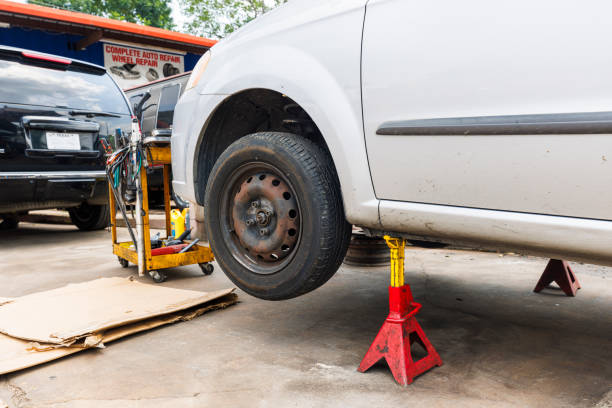
Jack Stands

Is it safe to shake a car on a jack stand to test stability?

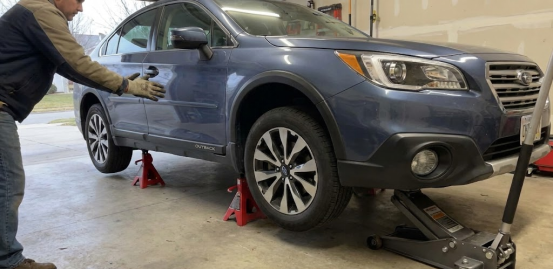
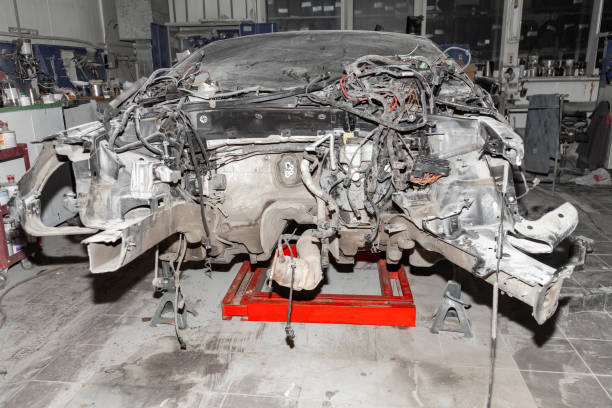
Man checking blue car supported by jack stands and a floor jack in a garage.

Many DIY enthusiasts, after lifting their vehicles onto jack stands, have an almost instinctive action: walking over to the car and shaking it vigorously a few times, attempting to “test” the vehicle’s stability.

They see this as a straightforward and effective way to test jack stand stability. However, too many accidents have been caused by this “taken-for-granted” approach, including serious consequences resulting from improper support.

So, is this seemingly reasonable “shaking test” really safe and effective? Or might it be creating new risks?

This article will provide an in-depth analysis of the actual force principles of a vehicle on jack stands from a professional engineering perspective, revealing the potential hazards of the “shaking test,” and offering a more scientific and rigorous stability verification process to help you truly achieve “DIY is fine, loss of control is the problem.”

Why do we always want to “shake” it?

Instinctive concerns about the security of Jack Stands

It’s perfectly normal to feel a little uneasy when lifting a vehicle weighing thousands of kilograms onto a few metal supports. This unease, especially for first-time DIY car owners, prompts them to seek a simple and intuitive way to confirm: Is my car really stable?

Particularly with SUVs, which have a high center of gravity and are quite heavy, users are particularly concerned about whether the SUV jack stands can provide sufficient support. This uncertainty about the safety of the jack stands is the root cause of the “shaking test.”

In daily life, we’re used to testing the stability of objects by shaking them: a loose chair wobbles, an unstable table sways. This intuition is effective in many situations.

However, the support situation of a car on jack stands is fundamentally different from the objects we encounter daily. The weight, center of gravity, and support point characteristics of a car, as well as the design and load-bearing method of the jack stands, are far more complex than those of a chair.

I’ve seen too many cases where this intuitive misguidance has led to dangerous situations where vehicles actually malfunction during seemingly “safe” shaking. This mentality is common, but unfortunately, intuition is often unreliable when it comes to engineering safety.

The actual forces and stability of the vehicle on Jack Stands

Center of gravity, contact surface and load-bearing limit of Jack Stands

To understand why shaking is not recommended, it’s essential to first understand the actual forces acting on a vehicle on jack stands.

Jack stands are designed to provide static vertical support. This means they are designed to withstand the vehicle’s downward weight and stably transfer these forces to the ground. The vehicle’s center of gravity is a key factor determining its stability; when a vehicle is lifted, its center of gravity rises, thus reducing overall stability.

Furthermore, the friction between the jack stands and the vehicle’s support points (such as jack stands on pinch welds) is crucial for resisting horizontal shear forces.

Insufficient friction can result from uneven or damaged support points (such as car pinch welds) or improper use of jack pads. While jack stands are robust, they are not designed to withstand severe lateral impacts or torques. Their load-bearing capacity is primarily determined in the vertical direction, not the horizontal.

Static support and dynamic impact: Design boundaries of the Jack Stands

We must clearly distinguish between “static support” and “dynamic impact.” When a vehicle is placed stably on jack stands, it bears a stable static load. Even if the vehicle “sinks” slightly due to its own weight, it is a minor adjustment in the vertical direction and is part of the normal load transfer process.

However, deliberately shaking the vehicle artificially creates dynamic impact and lateral shear force. This mechanical effect contradicts the design principles of jack stands.

Sufficient friction is needed between the base of the jack stand and the ground, and between the top of the jack stand and the vehicle’s support point, to resist these lateral forces. If the lateral force is too large, exceeding the friction or the structural stability of the jack stand itself, it may cause the jack stands to shift, tilt, or even suddenly fail.

This is like trying to push a wall with a pencil; it can withstand vertical weight, but it may break with the slightest push.


The Hidden Dangers of the “Shaking Test”: You May Be Creating New Risks

This could cause the Jack Stands to shift or tip over.

The most direct and potentially fatal risk of the “shaking test” is that it could cause the jack stands to shift or tip over.

Imagine that the vehicle’s weight is evenly distributed across the support points. When you shake it forcefully from the side, the vehicle’s center of gravity will shift accordingly, exerting additional lateral thrust and torque on one side of the jack stands.

If the ground is not flat or firm enough (for example, on hot asphalt, jack stands may slowly sink), or if the jack stands themselves are slightly off-angled, this lateral force can easily disrupt the original balance, causing the bottom of the support to slide or the top of the support to slip off the support points such as the pinch welds on the car.

In the accident debriefings I’ve participated in, there was a case where a vehicle was improperly “tested” by being shaken on the jack stands, causing one of the supports to shift, ultimately leading to a serious crushing accident. This is a living lesson that tells us the answer to “should I shake car on jack stands” is: absolutely not.

Damage to the vehicle chassis and the Jack Stands themselves

Unnecessary damage to your vehicle’s chassis and jack stands themselves can occur. While designed to withstand vertical stress, a vehicle’s car pinch welds or other designated support points are relatively vulnerable to lateral shear and torsional forces.

Improper shaking can cause pinch welds to deform, paint to crack, and even cracks to form at points of metal fatigue.

At the same time, jack stands, as tools, also have their service life and design limits. Repeated and irregular dynamic load impacts will accelerate the fatigue of their structure, especially welded points and locking mechanisms.

This may cause the jack stand to suddenly fail during normal use in the future, creating a huge safety hazard.


Correct Jack Stands stability verification process

Since the “shaking test” is not advisable, how should we scientifically check if jack stands are safe? Here is a rigorous procedure recommended by me as a professional consultant:

Step 1: Thorough visual inspection and placement confirmation

After the vehicle is completely removed from the jack and lowered into the jack stands, a thorough inspection is the first step:

  • Ground conditions: Ensure all jack stands are placed on a flat, hard, crack-free surface, such as a concrete garage floor. Avoid operating on grass, mud, gravel roads, or sloping surfaces.
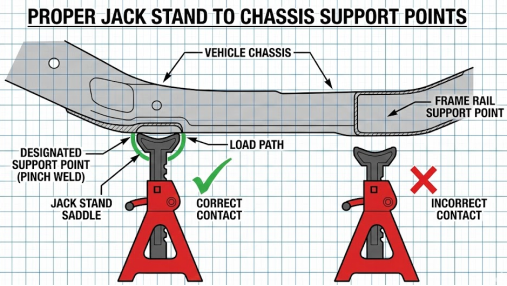
  • Support points: Carefully check that all jack supports are fully and securely in contact with the support points specified by the vehicle manufacturer. These points are typically reinforced pinch weld jack points, frame crossbeams, or suspension components. Be sure to consult your vehicle’s owner’s manual for confirmation.
  • High consistency: Ensure all jack stands used are adjusted to the same height and that the locking mechanisms (whether pin-type or ratchet-type) are fully engaged and locked. Before operation, familiarize yourself with the mechanism for lowering the jack stand to ensure safe unlocking and lowering at any time.
Diagram illustrating proper chassis support points for safe placement of jack stands.

Step Two: “Settlement Verification” – Not “Shaking”

Instead of the harsh “shaking,” we adopted a gentler but more effective “settlement verification”:

  • Slow descent: Lower the vehicle slowly and smoothly using the jacks, allowing its weight to be gradually and evenly distributed across all jack stands. This process should be free of any sudden drops or impacts.
  • Careful observation: During this process, closely observe the vehicle for any unusual shaking or tilting, or any slight signs of displacement in the jack stands. Any abnormalities should be stopped immediately for re-inspection and adjustment.
  • Light pressure confirmation: After the vehicle is fully lowered into the jack stands, apply slight vertical or horizontal pressure with both hands to the tops of the tires or the edges of the chassis. Note that “light” here means to feel for excessive play or unusual looseness, not to push it to its limits. If everything is stable, the vehicle should only exhibit minimal, negligible elastic deformation.
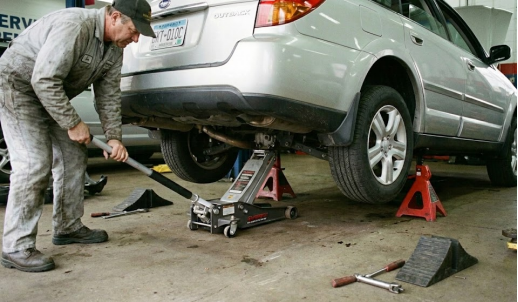
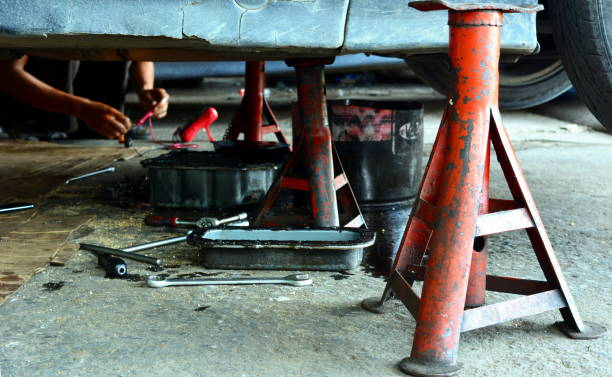
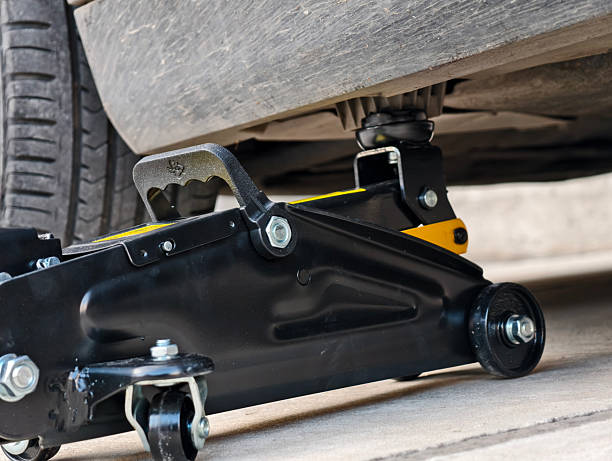
Mechanic lifting a silver car with a floor jack and using red jack stands for support.

Step 3: Multiple security redundancies to prevent problems before they occur.

Safety redundancy is the last line of defense against accidents and is the core of my many years of experience in garage safety.

  • Forced use of wheel locks: Force the use of wheel locks to lock all unlifted tires in front of and behind. This answers the question, “Do I need wheel locks with jack stands?“—the answer is: absolutely. They effectively prevent the vehicle from rolling in extreme situations.
  • Keep the jack as a backup: Consider leaving your hydraulic jack in place, slightly supporting the vehicle, as an extra safety backup. Note that it’s only “slightly supporting,” sharing a small portion of the weight, not bearing full pressure, because hydraulic jacks are not suitable for prolonged heavy-duty operation.

Based on my years of experience in garage safety, you can never have too much safety margin. More preparation means more peace of mind, especially when you need to work under a car.

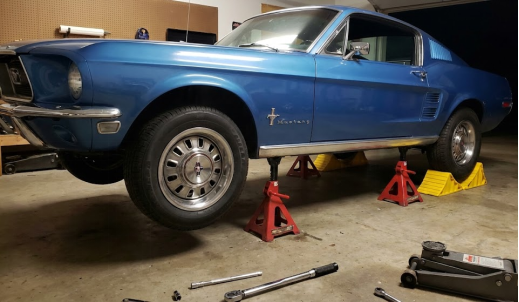
Classic blue Ford Mustang securely raised on red jack stands for maintenance in a garage.

Besides shaking, here are some basic things you need to know about using Jack Stands.

Choosing the right Jack Stands: Capacity and Type

Choosing the right jack stands is the cornerstone of safe use.

  • Capacity Matching: Choose car jack stands of appropriate tonnage based on your vehicle’s curb weight and maintenance needs. For example, a pair of 2-ton jack stands is usually sufficient for most compact and mid-size cars. However, for SUVs, pickup trucks, or heavier vehicles, you may need 3-ton or 6-ton jack stands. Remember that the rated capacity of jack stands usually refers to the total capacity of a pair, but for safety, we typically consider the weight that a single stand can support, allowing for sufficient margin.
  • Type Selection: Various types of jack stands are available on the market, including ratchet, pin, and threaded types. Ratchet stands are easy to adjust, but pin stands are generally considered more reliable. If you frequently repair low-chassis sports cars, you may need to consider low jack stands or low-height jack stands, which provide a lower starting height. Also, be aware of the appropriate pairings with low-floor jack stands.

Protecting your vehicle: The importance of Pinch Welds and Jack Pads

The vehicle’s support point is crucial for the vehicle’s contact with the jack stands.

  • What are Pinch Welds: You may have heard the term pinch welds often, so what are pinch welds on a car? They are usually two metal plates welded together to form a protrusion extending from the bottom of the car body along the side skirts, designed to bear the pressure of jacks or jack stands.
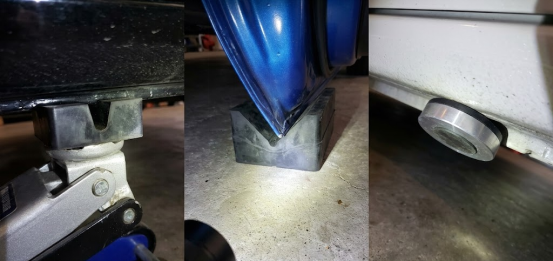
  • The purpose of jack pads: To protect these delicate pinch welds from metal deformation or paint damage, the use of dedicated jack pads is strongly recommended. These rubber or polyurethane pads not only cushion pressure but also increase friction, reducing the risk of slippage when the jack stand is on the pinch weld. This answers the questions “How do jack pads protect my car during lifting?” and “Can jack pads help improve safety when using jack stands?“. They provide a cushioning layer, making pinch welds on the car safer and extending the lifespan of the best jack stands for pinch welds.
Close-up of specialized jack pads and adapters for safe use with jack stands.

Summarize

On jack stands is less a test of stability and more a risky undertaking. This seemingly intuitive “test” can actually disrupt the balance between the vehicle and the support structure, creating unwanted lateral shear forces that increase the fatal risk of the jack stands shifting or tipping over.

True safety doesn’t come from blind intuition, but from a deep understanding of engineering principles, meticulous attention to every detail, and the deployment of multiple safety measures.

As a garage safety consultant, my core belief is: DIY car repair is fun, but safety is the inviolable bottom line.

Learning the correct methods and abandoning wishful thinking are the only ways to truly control risks and ensure every garage job is safe. Next time you’re doing repairs, resist the urge to shake it, follow a rigorous and scientific verification process, and protect yourself and your car.


FAQ

Q1: Why is it not recommended to shake vehicles on Jack Stands vigorously?
Vigorous shaking may generate unnecessary lateral forces on the jack stands, causing the stands to shift, overturn, or cause stress damage to the vehicle chassis and the stands themselves, creating new dangers rather than improving safety.
Q2: Besides shaking, what are some more reliable methods to test the stability of Jack Stands?
A thorough visual inspection should be performed to ensure that the jack stands are correctly positioned and locked at the designated support points (such as pinch weld jack points). Then, perform a slow “settling verification” and confirm stability by applying slight pressure, always using wheel chocks.
Q3: How can I ensure that the vehicle’s pinch welds are not damaged when using Jack Stands?
Be sure to consult your vehicle manual to find the officially designated pinch weld jack points, and use dedicated jack pads or thick wooden blocks as cushioning to protect the car pinch weld from metal deformation or paint damage.
author-avatar

About Gavin Reid

Gavin Reid has been obsessively analyzing garage safety protocols and vehicle support systems for over a decade. After transitioning from a professional service bay to independent safety consulting in 2020, Gavin realized the market was flooded with confusing weight ratings and compromised designs that offered a false sense of security. His Mission: To help DIY mechanics—especially home hobbyists—identify critical failure points in vehicle lifting and ensure every project ends safely. Why Trust Gavin: Engineering Obsessive: He dissects load paths and weld integrity. From metallurgy to geometric stability, he understands the physics that keep two tons of steel from crushing a human chest. Data-Driven Testing: Gavin has stress-tested 40+ models, evaluating lateral stability and locking redundancy rather than just "marketing tonnage." In the Garage: He’s a fixture in local DIY communities, frequently inspecting frame rails for pinch weld placement and documenting metal fatigue on aging gear. Gavin believes that "a lapse in physics is a permanent mistake." He is dedicated to teaching mechanics how to maintain a "zero-trust" relationship with their equipment. Would you like me to provide Gavin’s specific checklist for identifying structural fatigue in used jack stands?