Jack Stands

High-Temperature Paint Repair: A Guide to Rust Prevention and Rebirth for Jack Stands Next to Exhaust Pipes

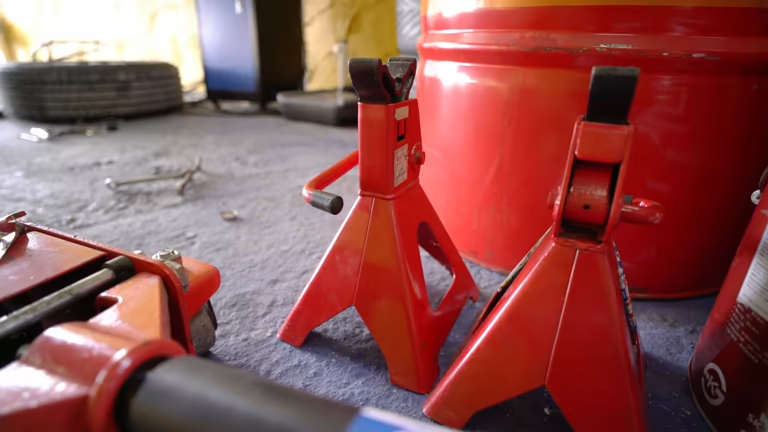
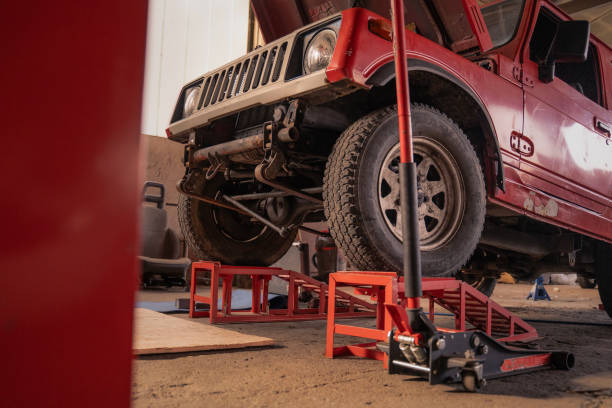
Two red jack stands on a garage floor with a floor jack nearby.

Jack stands in your garage that silently support your beloved car? They are the unsung heroes of DIY repairs, but while you focus on the engine or chassis, they may be enduring “hidden damage” that we easily overlook—the intense heat from the exhaust pipe. When you find that the paint on the jack stands starts to bubble, peel, or even reveal patches of rust, this is not just a cosmetic issue, but a potential rust prevention crisis.

Today, as a garage safety consultant with over ten years of experience in automotive repair safety, I’d like to discuss this detail with you and offer a professional mechanic tool restoration solution that completely resolves the problem using High-Heat Paint.

1. Why do Jack Stands get “baked” by high temperatures? — The “invisible fatigue” of tools.

We often focus on a vehicle’s performance and safety, but rarely examine the “health” of its support equipment. However, the heat emitted from the exhaust pipe has a far greater impact on jack stands than you might imagine.

1.1. The Physics of Heat Transfer: The “Silent Damage” of Exhaust Pipes

When an engine is running, the exhaust system generates extremely high temperatures, especially after the engine has been operating under heavy load. The surface temperature of the exhaust manifold and exhaust pipe can easily reach several hundred degrees Celsius. When your jack stands happen to be placed near the vehicle’s exhaust pipe, this heat will affect its surface in three main ways:

  • Radiation: High-temperature objects radiate heat energy into the surrounding space. Even if jack stands are not in direct contact with the exhaust pipe, they will still receive this thermal radiation.
  • Convection: The air around the high-temperature exhaust pipe rises due to heat, forming convection and transferring heat to the surrounding jack stands.
  • Conduction: If a part of the jack stands comes into direct or indirect contact with a high-temperature component (e.g., heat is conducted through the ground), the heat will be conducted directly to it.

Ordinary jack stands are typically coated with standard anti-rust paint, which usually has a temperature resistance limit of around 80-120°C. If exposed to temperatures far exceeding this limit for extended periods, the organic polymers in the paint will begin to decompose and expand, causing the paint film to lose adhesion and ultimately resulting in blistering, cracking, and peeling. This is the fundamental reason why High-Heat Paint becomes the necessary choice.

1.2. Rusting: Not just an aesthetic issue, but also a structural hazard.

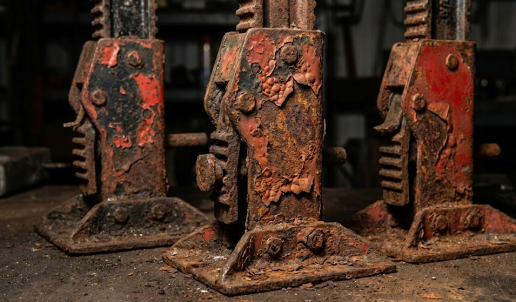
The paint finish is the first line of defense for metal jack stands. Once the paint is damaged and peels off due to high temperatures, the underlying metal substrate is directly exposed to air and moisture. In humid or rainy environments, the metal comes into contact with oxygen and moisture, and a rapid oxidation reaction occurs, forming rust.

Rust formation is not just an aesthetic issue; it severely affects the structural integrity and load-bearing capacity of jack stands.

  • Reduced strength: Rust gradually corrodes metal, making it brittle and reducing the ability of jack stands to withstand stress.
  • Sticking of moving parts: If the height adjustment mechanism of jack stands, such as a ratchet or pin, is rusty, it may jam or fail to lock, which poses a significant safety hazard during operation.
  • Accelerated fatigue: Rust can also accelerate the fatigue process of metals, especially at welds or corners where stress is concentrated, which may lead to premature tool failure.
Three heavily rusted red jack stands with peeling paint, showing significant corrosion.

2. Misconceptions in Traditional Restoration and the Scientific Selection of High-Temperature Paint

Faced with high-temperature damage to jack stands, many people might think of repairing it with ordinary paint. However, doing so is often a mistake.

2.1. Why it’s not suitable for ordinary paint finishes: A “beauty treatment” destined to fail.

As mentioned earlier, ordinary paint has a low temperature resistance limit. Even if you carefully sand and repaint, the chance of recurrence is almost 100% once the jack stands are placed near a high-temperature exhaust pipe again, or used in high-temperature environments during summer. This not only wastes your time and effort, but more importantly, it gives you a false sense of security, making you mistakenly believe that the problem has been solved.

This kind of “band-aid” repair actually masks the potential spread of rust, allowing the problem to continue to worsen in places you cannot see.

2.2. Unlocking High-Heat Paint: The Wisdom of Engineered Materials

A high-heat paint specifically designed for high-temperature environments, such as the commonly available VHT high-temperature paint. These paints are fundamentally different from ordinary paints:

  • Core ingredients: High-heat paint typically uses silicone resin as the main film-forming material, and may also contain ceramic particles or metallic pigments. Silicone resin has excellent heat resistance, flexibility, and adhesion, and can maintain structural stability at high temperatures.
  • How it works: During the high-temperature curing process, the silicone resin undergoes a cross-linking reaction, forming a strong, heat-resistant protective layer. Ceramic particles in some High-Heat Paints further enhance the hardness and abrasion resistance of the paint surface. This means it not only resists high temperatures but also provides long-lasting rust prevention.
  • Durability: Properly cured High-Heat Paint can withstand temperatures up to 600°C or even higher (depending on the product model), far exceeding the temperature limits of ordinary paints, making it suitable for harsh environments near exhaust pipes.

Performance Comparison of Regular Paint vs. High-Heat Paint

FeatureOrdinary PaintHigh-Heat Paint
Temperature ResistanceLow (approximately 80-120°C)High (up to 600°C or even higher)
Adhesion (high temperature)Poor quality, prone to bubbling and peeling.Excellent, forming a strong protective layer
Rust Prevention Performance (high temperature)Loss of paint surface after failureStable paint finish, provides continuous rust protection
Typical ApplicationsBody and interiorExhaust pipe, engine parts, jack stands
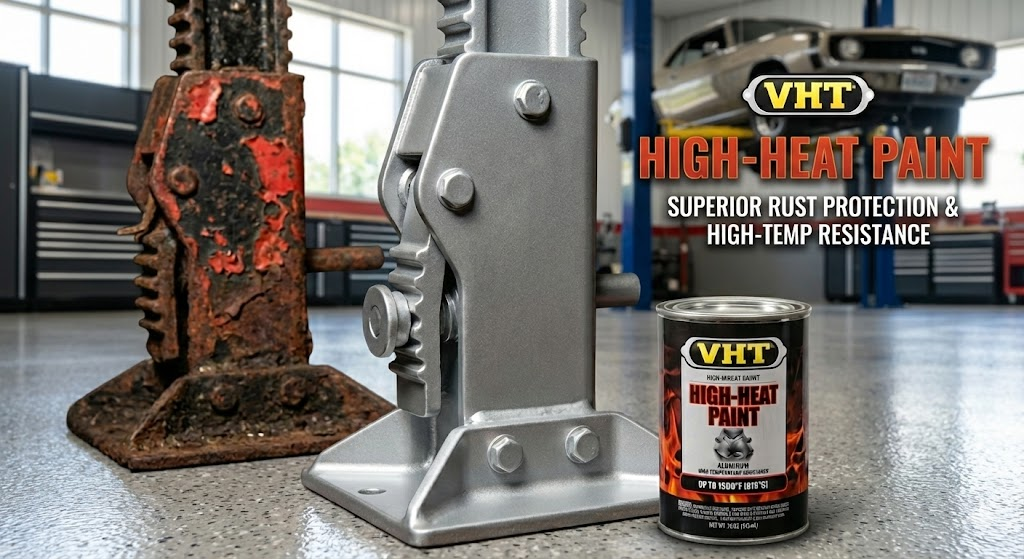
New and old jack stands side-by-side, showcasing VHT High-Heat paint for rust protection.

3. Professional Repair Process for Jack Stands High-Temperature Damage

Now that we understand the problem and the solution, the next step is practical application. Remember, safety should always be the top priority in any mechanic tool restoration.

3.1. Safety First: Preparation and Environmental Requirements

Before commencing any maintenance work, always ensure that your operating environment and personal protective equipment are in place:

  • Flat, stable ground: Ensure that jack stands are placed on a hard, flat surface, such as concrete, and avoid operating on dirt, gravel, or sloping ground.
  • Vehicle securing: Even after the jack stands have been removed from the vehicle, ensure the tools themselves are stable and will not roll or tip over during the repair process. If you are working under the vehicle, be sure to use wheel chocks to secure any tires that are not being lifted.
  • Personal protective equipment: Wear gloves, goggles, and a dust mask. Dust and harmful gases will be generated during sanding and painting.

I’ve always emphasized that DIY is fine, but losing control is. Safety preparation is always the first step in any repair work; it’s not just about protecting your tools, but also about protecting yourself.

3.2. Thorough cleaning and polishing: Removing “lesions” is key.

This is the foundation for a successful repair; any carelessness will result in poor adhesion of the new paint.

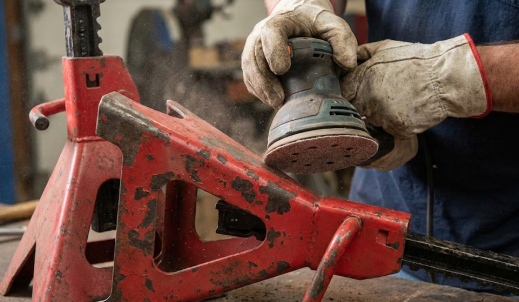
  1. Step 1: Remove old paint and rust. Use a wire brush, sandpaper (80-120 grit for coarse sandpaper, then 220 grit for fine sandpaper), or an electric sander to thoroughly remove all loose, bubbly layers of old paint and visible rust. The goal is to expose a clean metal surface. For hard-to-reach corners, a wire brush head mounted on a drill can be used.
  2. Step Two: Clean the Surface. Thoroughly wipe the sanded surface with a degreaser (such as a professional automotive degreaser or industrial alcohol) to remove oil, wax, and dust generated during sanding. Ensure the surface is dry and clean. This step is crucial for the adhesion of the painting jack stands under high heat.

Why is thorough rust removal crucial for rust prevention tools? Residual rust is like cancer cells; it continues to spread under new paint, eventually causing it to peel off again. Only by completely removing the “lesions” can the durability of the repair be guaranteed.

Person sanding old red paint off a jack stand with an orbital sander for restoration.

3.3. Proper Spraying Techniques for High-Heat Paint

Choosing a high-quality high-heat paint is important, but the correct application method is equally crucial.

  • Layered spraying: Shake the paint can well, maintain a distance of 15-20 cm, and apply the “small amount, multiple times” principle. Spray a thin layer each time, wait 10-15 minutes for it to dry slightly before spraying the next layer. This will prevent sagging and ensure a uniform paint film with strong adhesion.
  • Uniform coverage: Ensure that all exposed metal areas are uniformly covered, especially the various support surfaces and adjustment mechanisms of the jack stands, which are susceptible to high temperatures and rust corrosion.
  • Curing process: High-Heat Paint requires an important step to achieve its full performance—curing. This usually means heating the painted jacks at a specific temperature for a certain period of time. Please strictly refer to the product instructions for your High-Heat Paint product for specific curing temperatures and times. Some paints can cure naturally, but heat curing generally achieves better heat resistance and hardness.

High-Heat Paint Spraying Precautions

  • Ensure that you operate in a well-ventilated area to avoid inhaling paint mist.
  • Shake the paint can thoroughly before spraying to ensure the pigments are mixed evenly.
  • Maintain a spraying distance of 15-20 cm for even coverage.
  • Apply a thin layer each time, and wait 10-15 minutes before applying the next layer to avoid excessive paint thickness, which can cause sagging.
  • Follow the product instructions strictly for curing to maximize the heat resistance and durability of the paint finish.

3.4. Detailed Inspection and Post-Repair Maintenance: Ensuring Longer Repair Durability

Do not use the product immediately after spraying.

  • Inspect the paint finish: After the paint finish is completely dry and cured, carefully inspect every corner of the jack stands to ensure that the paint finish is even, without any omissions, and without any runs or bubbles.
  • Regular inspections: Before each use of jack stands, quickly inspect their paint condition, especially the area near the exhaust pipe. If new scratched jack stands marks or paint damage are found, promptly touch up the scratched jack stands to prevent rust from developing.
  • Proper storage: When not in use for extended periods, store jack stands in a dry, well-ventilated indoor environment, avoiding prolonged exposure to damp or harsh outdoor conditions. This will effectively extend their lifespan.

Conclusion: Small investment, big security – The “rebirth” of Jack Stands

By repairing high-temperature damaged jack stands with High-Heat Paint, you’re not just giving your tool a makeover; you’re making a significant investment in its safety and lifespan. This reflects our attention to detail and our respect for safety.

It allows you to work more confidently and safely in your garage.


FAQ

Do all jack stands need to be repaired with High-Heat Paint?

Not all jack stands require this. It largely depends on their environment. If your jack stands are frequently placed near the vehicle’s exhaust pipe or other high-temperature components, causing the original paint to blister and peel due to heat, then repairing them with High-Heat Paint is highly recommended.

If your jack stands only have ordinary wear and rust and do not involve high-temperature exposure, then regular rust-preventive paint may be sufficient, but High-Heat Paint offers greater protection and durability.

Besides high exhaust pipe temperature, what other factors can cause damage to the paint on jack stands?

Besides high temperatures from the exhaust pipe, the following factors can also cause damage to the paint:

  • Mechanical wear: Friction or collision with other tools or the ground, resulting in scraped surfaces or paint peeling.
  • Chemical corrosion: Contact with automotive oils, brake fluids, and cleaning agents.
  • Environmental factors: Long-term exposure to dampness, rain, and direct UV radiation.
  • Improper cleaning: Using strong solvents or abrasive tools for cleaning.
Is heating necessary for the curing process of High-Heat Paint? Can it be air-dried naturally?

Most professional high-heat paints strongly recommend curing to achieve their claimed high-temperature resistance and durability. Curing promotes a complete cross-linking reaction of the silicone resin within the paint film, forming a stronger, more heat-resistant protective layer.

While air drying may result in a seemingly dry finish, the paint’s heat resistance and adhesion are far from optimal, and it may still fail at high temperatures.

Crucial: Carefully read the instructions for your high-heat paint product and follow the recommended temperature and time for curing to ensure a successful repair.
author-avatar

About Gavin Reid

Gavin Reid has been obsessively analyzing garage safety protocols and vehicle support systems for over a decade. After transitioning from a professional service bay to independent safety consulting in 2020, Gavin realized the market was flooded with confusing weight ratings and compromised designs that offered a false sense of security. His Mission: To help DIY mechanics—especially home hobbyists—identify critical failure points in vehicle lifting and ensure every project ends safely. Why Trust Gavin: Engineering Obsessive: He dissects load paths and weld integrity. From metallurgy to geometric stability, he understands the physics that keep two tons of steel from crushing a human chest. Data-Driven Testing: Gavin has stress-tested 40+ models, evaluating lateral stability and locking redundancy rather than just "marketing tonnage." In the Garage: He’s a fixture in local DIY communities, frequently inspecting frame rails for pinch weld placement and documenting metal fatigue on aging gear. Gavin believes that "a lapse in physics is a permanent mistake." He is dedicated to teaching mechanics how to maintain a "zero-trust" relationship with their equipment. Would you like me to provide Gavin’s specific checklist for identifying structural fatigue in used jack stands?